
For What is Life Without a Dream? Inside Langhorne Slim’s ‘The Dreamin’ Kind’
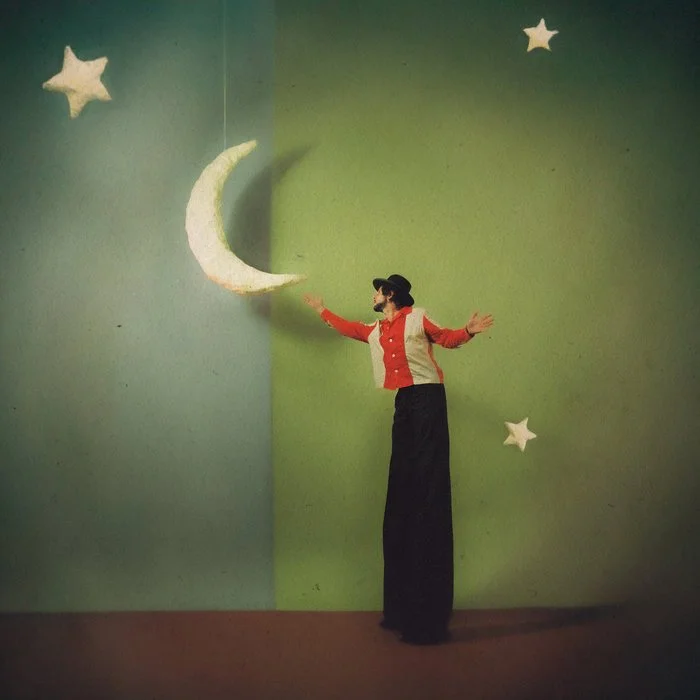
Cover art for The Dreamin’ Kind
For nearly two decades now, Langhorne Slim has occupied a comfortable, somewhat weathered, corner of the Americana canon. A singer-songwriter whose previous work used the simple snap of nylon strings in a warm, wood paneled room, has pushed his sound far beyond that usual intimacy. On his seventh studio album, The Dreamin’ Kind, he departs from his acoustic foundations and embraces a new stretch of sound. Under the production of Greta Van Fleet’s Sam Kiszka, this record finds a way to wrap Slim’s tobacco-stained vocals in a thick, electric warmth.
The first track, “Rock N Roll,” arrives with the fuzzy weight of a vintage amp warming up in a garage at dusk. Moving away from his usual acoustic yearning, Slim leans into a gritty, Springsteen-esque vocal style to navigate the roller coaster of the human experience. Through his lyrics “We might even lose our minds at times / But gettin’ lost it ain’t a crime,” he treats life’s trauma and imperfection not as a failure, but as a necessary part of the ride. That momentum carries into “On Fire” where a seductive, serenading guitar intro establishes a mood that feels almost noir in its coolness. This song fills a vital space in the tracklist, prioritizing rhythm over all else and setting it apart from the rest of the record.
After the high-voltage energy of the opening tracks, “Dream Come True” feels like a soulful homecoming. It’s a grounded, acoustic piece that strips everything back to Slim’s roots—just a man and his guitar. His voice is exactly what it needs to be, sweet and intimate, with just enough of that weathered croak to make you feel the weight of every word. The real standout here is the fiddle, which transcends the simple guitar strums with a beautiful, crooning melody. The song feels like a prayer for a wish to finally reach the light. It’s a reminder that while having a dream is easy, the labor of seeing it through is a heavy, daily burden. Slim captures that friction perfectly: “To live a dream it can be hard to do / But without a dream, you can’t have a dream come true.” It’s an honest look at how dreams keep us human, even when they’re hard to carry. After all, what is life without one?
"Stealin’ Time” opens with a fiddle line that feels like a sharp intake of breath, immediately signaling a shift into the album's most vulnerable territory. The lyrics tap into the raw, unpolished yearning of a heart that isn't ready to let go.“Oh! Can we be friends?/ How does a heart open and then close again?” This question anchors the song in a state of permanent nostalgia. It feels like a montage of a life you no longer own, and as those flashes of memory roll by, the nostalgia becomes overwhelming, spilling out of the speakers and rolling down your face in a moment of quiet, rock-and-roll catharsis.
The momentum returns in full force on “Engine 99,” a track propelled by a rushing acoustic strum and a beat that refuses to quit. The song opens with Slim’s vocals sounding distant as if he’s calling out from the cabin of a moving train. True to its title, the song has a locomotive quality. It feels like a frantic, unbridled run through the hills, where the intensity never wavers and the rhythm never lets you catch your breath. Similarly, “Haunted Man” pulses with a frantic quality that feels distinctly reminiscent of a Greta Van Fleet song, particularly in its reliance on massive, echo-drenched percussion. This is where Sam Kiszka’s fingerprints are most visible; he takes the cinematic, 1970s-soaked scaffolding of his own band and finds a way to make it work on The Dreamin’ Kind.
Throughout this record, Langhorne Slim tears down the walls of the folk house he built and provides a new stretch of sound that is just as sonically jarring as it is emotionally resonant. At its core, The Dreamin’ Kind is a meditation on the stubbornness of the human spirit, embracing a heartfelt narrative about the importance of holding onto one’s dreams, no matter how big or small they may be.
