
Why Hallpass’ Debut is this Year’s Best Slow-Burn
In an era where debut albums often feel like a collection of disparate singles aimed at playlist placement, Hallpass has delivered something increasingly rare: a cohesive, atmospheric journey. Their debut LP, Spillway, is a record that demands to be heard in a single sitting, preferably through a pair of high-quality headphones or on a long, solitary drive. Over twelve tracks, the band explores the liminal spaces between indie-rock tension, shoegaze expansion, and intimate folk-tinged vulnerability.
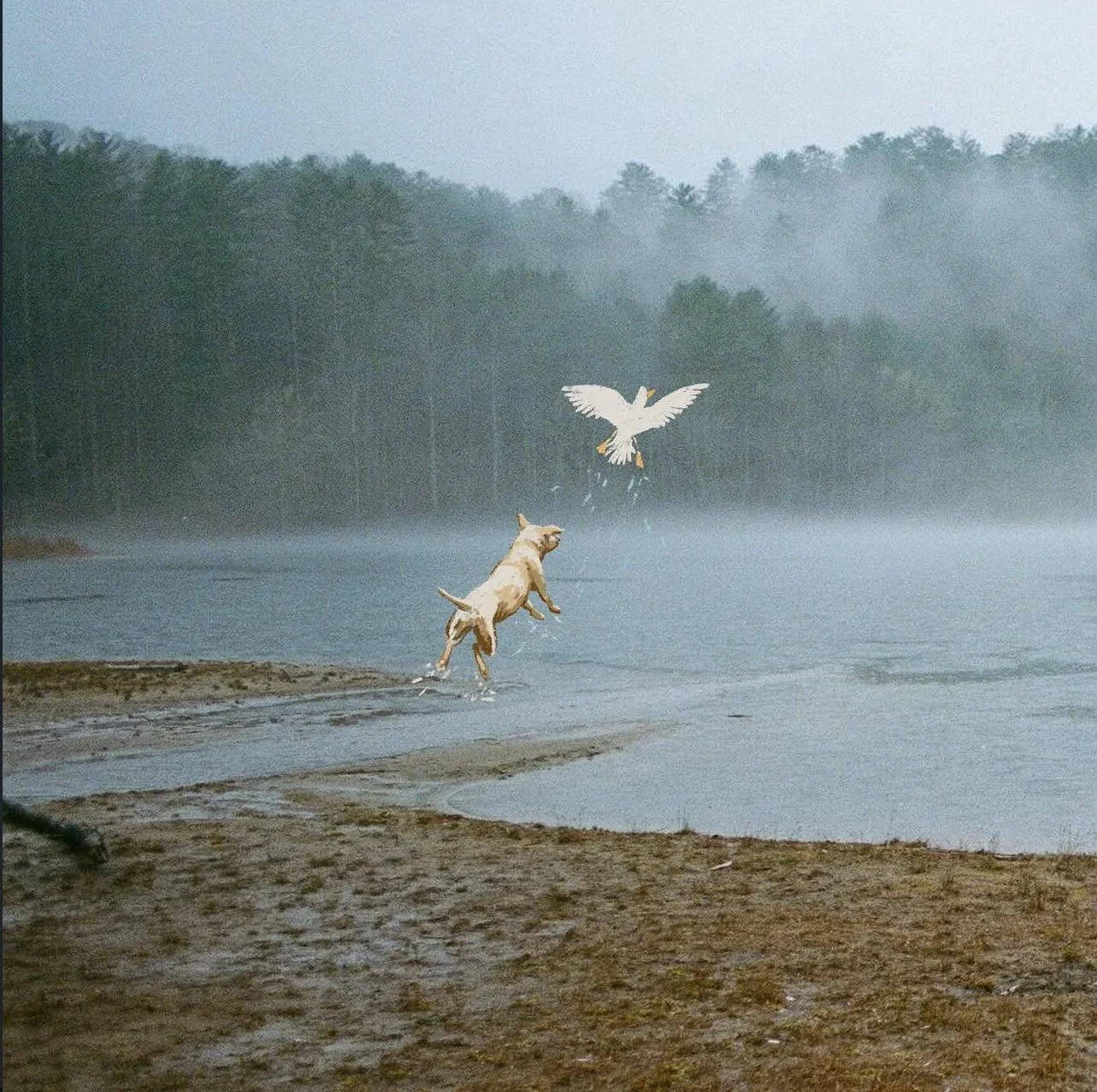
Art by Micah Ln
The album opens with "Quarter," a track that functions as a slow-burn invitation. It establishes the band’s sonic signature—sharp, interlocking guitar melodies underpinned by a rhythm section that feels both heavy and remarkably fluid. It’s a song about the smallness of change, the titular quarter representing the literal and metaphorical currency we spend trying to move forward.
This leads seamlessly into "Useful," perhaps the most driving, radio-ready moment on the record. Here, the production shines, capturing a grit that feels authentic rather than manufactured. The vocal performance is urgent, questioning self-worth in a world that prioritizes utility over humanity.
The mid-section of Spillway is where Hallpass truly finds their stride, leaning into more expansive song structures. "Locomotive" and "Rain" act as a powerful duo. The former mimics its namesake, building a rhythmic chug that eventually explodes into a wall of distorted sound, while the latter offers a meditative, melancholic reprieve. "Rain" isn't just a mood piece; it’s a showcase for the band’s lyrical prowess, using elemental imagery to describe the erosion of a relationship.
Then comes "Poke," a jagged, rhythmic experiment that serves as the album's wake-up call. It’s uncomfortable in the best way possible, utilizing dissonant chords to mirror the irritation of a persistent, nagging memory. It’s followed by "The Park," a nostalgic, shimmering track that feels like the golden hour of a summer day—beautiful, but tinged with the sadness that the light is about to fade.
As the record progresses, Hallpass begins to take bigger risks. "Habits" is a gritty exploration of cyclical behavior, featuring a bassline that crawls under your skin. It’s the dark underbelly of the album, contrasting sharply with the ethereal beauty of "Aurora."
"Aurora" is the record's deep breath. It’s an ambient-leaning track that showcases the band’s ability to create space. It doesn't rush; it simply exists, swirling with reverb-drenched guitars that feel like light hitting ice.
This transition into "Home" is one of the record’s most effective pivots. While "Aurora" is vast and cold, "Home" is warm and claustrophobic, exploring the idea that the places we belong are often the places that stifle us most.
The climax of the album arrives with the back-to-back punch of "Stressor" and the title track, "Spillway." "Stressor" is high-anxiety indie rock at its finest. The drums are frantic, the vocals are pushed to the edge of a break, and the lyrics capture the modern condition of being always on.
"Spillway" is the release. In hydraulic engineering, a spillway is a structure used to provide the controlled release of flows from a dam. Musically, Hallpass embodies this perfectly. The song starts as a whisper and builds into a monumental crescendo, a literal opening of the floodgates. It is the emotional center of the record, a moment of pure, unadulterated catharsis where the tension built up over the previous ten tracks is finally allowed to wash away.
The album concludes with "Who We Are," a somber, acoustic-driven coda. After the sonic violence of the title track, this closer feels like surveying the wreckage. It’s a quiet, philosophical end to a loud journey, posing a question rather than providing an answer.
Spillway is a remarkably confident debut. Hallpass has managed to balance technical proficiency with raw, bleeding-heart emotion. They aren't afraid of silence, and they aren't afraid of noise; they understand that one gives the other its power. While some might find the middle stretch a bit dense, the payoff provided by the final three tracks is more than worth the investment.
In a landscape of fleeting trends, Spillway feels like a permanent landmark. Hallpass hasn't just made an album; they've built an environment. It’s a haunting, beautiful, and occasionally jarring world that you’ll want to revisit as soon as the final notes of "Who We Are" fade into silence.
