
‘Maitreya Corso’ is Maya Hawke’s Masterclass in Living and Loving with Sincerity
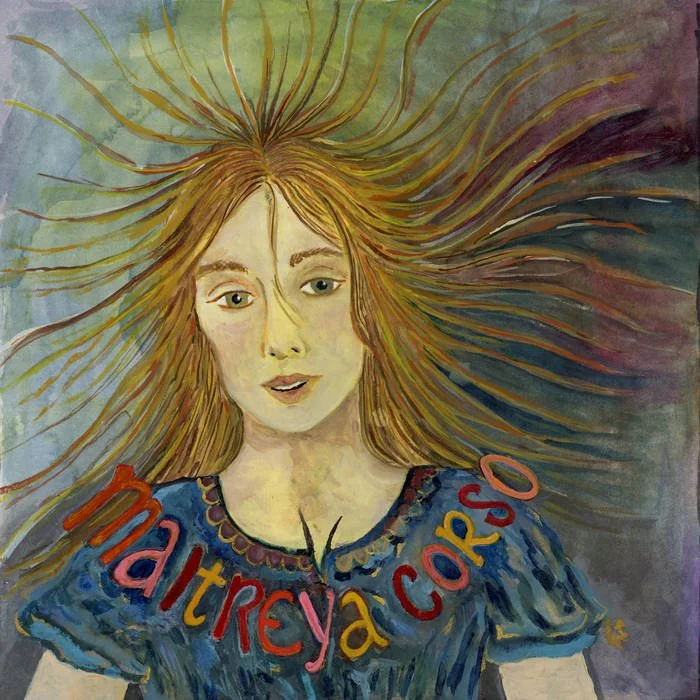
Cover art for Maitreya Corso.
“I reached heaven and it was syrupy / It was oppressively sweet,” writes Beat poet Gregory Corso in “Transformation & Escape,” a deeply existential poem that grapples with mirages of faith and virtue. Like much of Corso’s work, the poem approaches the world with a sense of cynicism that can only be rectified by eschewing convention and questioning ideals. This voracity that he wrestles with exemplifies why Maya Hawke’s fourth album is partially named after him: Maitreya Corso is a story of ambition. Yet, the record’s greater theme of being in love — with someone else, oneself or with life in general — is perhaps why “Corso” takes a backseat in the title to “Maitreya,” the spiritual embodiment of enlightened compassion in Buddhism.
This dichotomy of harsh reality and profound acceptance is exactly what makes Maitreya Corso so compelling. It follows our titular heroine’s fantastical journey through the very real questions of what it means to pursue passion — romantic and beyond — and meets listeners in the middle to provide a ruminative escape through folk pop.
The record arrives at a formative time in Hawke’s life. Following her marriage to musician and long-time collaborator Christian Lee Hutson and the end of her tenure in the Stranger Things franchise, Maitreya Corso unravels the idea of want.
On its most tangible level, Maitreya Corso is a reckoning with success and what it means to want it. She acts as a critical observer in “Last Living Lost Cause,” begging anyone who will listen not to sacrifice compassion for career. The tense finger picking of the track’s verses gets traded for a more spacious soundscape in the choruses as Hawke’s narrative moves from scrutiny to possibility: “You deserve to be the person I thought you were.”
She flips the mirror in “Lioness,” a track with artfully clanky, heavily-textured production that reflects getting everything you’ve dreamt of, but still wanting more. “At the bottom of it all there’s a big dream / Grass growing back through the concrete,” Hawke sings in her sleek alto. As the album’s third single, “Lioness” sees Hawke leading with the sort of confidence she knows can be her downfall: “I’ve signed things that I haven’t read / Only good has come of it,” she asserts in the first verse.
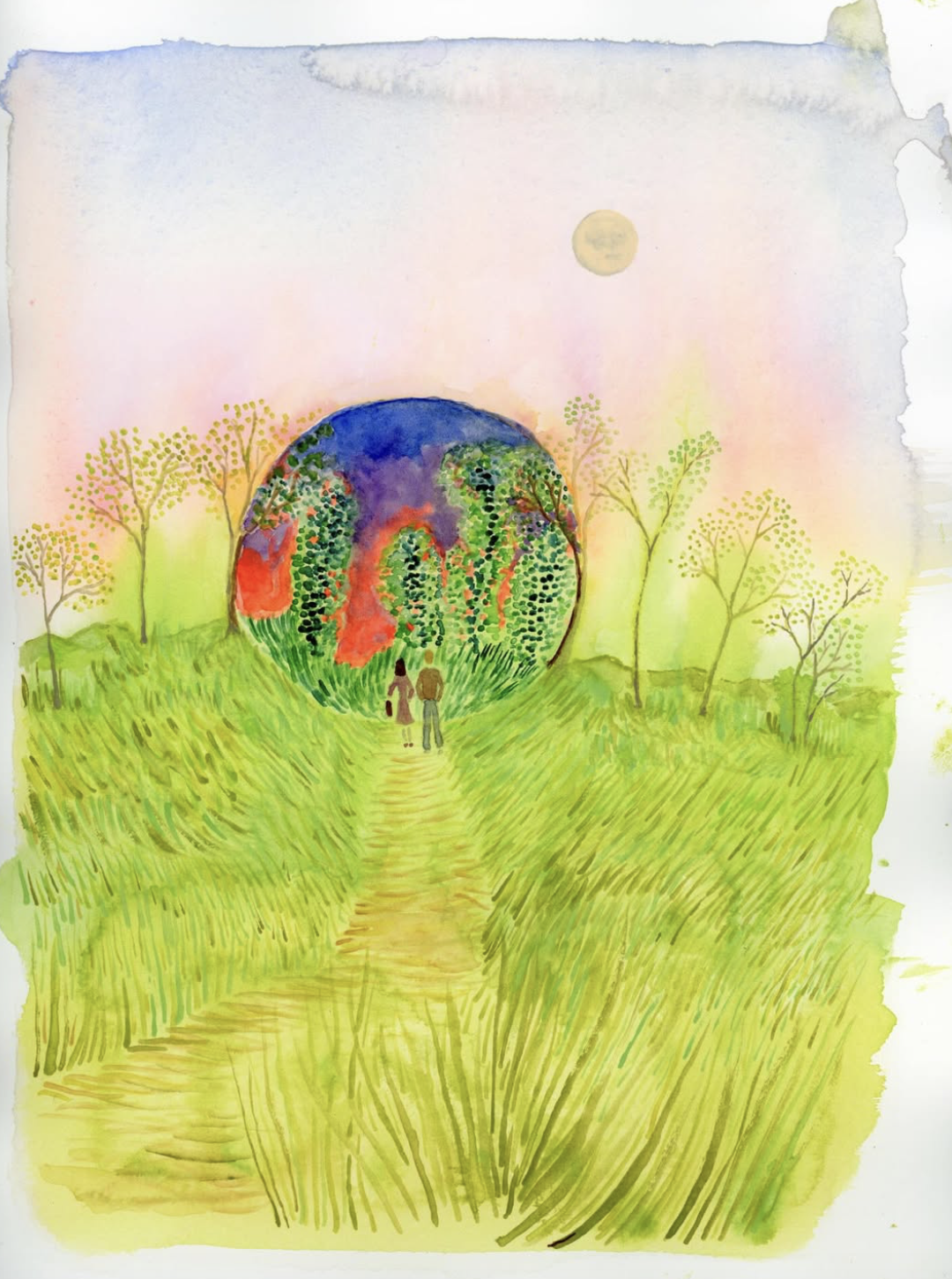
A watercolor Hawke created for Maitreya Corso. Via @maya_hawke on Instagram.
Yet it wouldn’t be a Maya Hawke record without providing self-assurance that acts as affirmation to listeners. “‘You’re so ambitious,’ she spit at me like a curse / What made it worse is that she was right,” she recalls in lead single “Devil You Know,” the self-deprecation pouring out of her as she rapidly speak-sings the verses. But by the bridge, the phrases get elongated and you can almost feel Hawke’s heart rate slowing as she sings, “It takes failure, it takes patience / To deal with the devil you know.”
These reckonings with ambition shape the way matters of the heart are treated in Maitreya Corso; to be in love is to want. Aptly, she sings, “What if I got what I wanted? / In love with a person who’s in love with me,” in the rousing, honeymoony opening track, “Love of My Life.” The record’s love story materializes with sincerity in following tracks like the lullaby-esque “Bring Home My Man,” twangy “Slacker in the Rye” and fantastical “Maitreya and the Way Back,” which, besides leaning into a fairy tale atmosphere with soft arpeggios, strings, wooshing sounds and ethereal harmonies, directly calls back to “Love of My Life:” “I wanted you then / Now I want you more,” she croons in the outro. The romantic tale culminates with “Dream House,” a closing track that embraces a certain twee sound and closes the record’s loop. Hawke — and Maitreya — got what she wanted. Now the dream turns into blitheful fantasies of living on a hillside and getting a house cat.
Maitreya Corso sees Hawke continuing to flex her muscles of folk prowess while breaking free of much of the misery present in her previous records. It’s hard to imagine her humorously singing, “I talk to my toughest critic / Saying, ‘join the club, you’re one of us now,’” on MOSS or Blush, yet she delivers the line with such ease on the gorgeously atmospheric “Heavy Rain.” Hawke’s progression as a musician feels as natural as Maitreya Corso feels tender — and perhaps some tenderness is exactly what the world needs most right now.