
Blondshell’s ‘Violins’ Finds Freedom On the Other Side of Loss
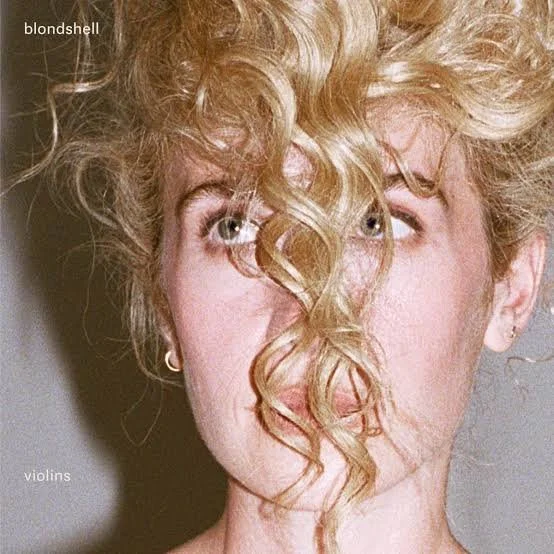
Violins, courtesy of Dana Erickson/Grandstand.
Love is a gamble. Betting on another person and yourself is a risk. But for Sabrina Teitelbaum, the grunge-pop-rock artist known as Blondshell, love is no longer about being rescued. On her third album Violins, she reckons with what happens when love changes, disappears or fails. Violins is a journey about growth, and the perfect soundtrack for the summer transition into fall.
“I really believe in love,” Teitelbaum tells The Forty Five in an interview. “When I was growing up, I believed romantic love was a thing that would rescue me. Now I believe it’s a feeling and a purpose and a living thing.”
Across the album’s 11 tracks, Teitelbaum doesn't treat heartbreak as something to simply overcome. Instead, she examines what losing someone can teach you about yourself and how painful change can become a part of building a life that feels fulfilling on your own terms.
The opening track, “Violins,” immediately establishes that tension. Its pop-rock guitars give Teitelbaum's voice somewhere to spill its frustration, turning what could have been a reflection on heartbreak into something more restless. The song doesn't sound like someone peacefully accepting the end of a relationship; it sounds like someone trying to convince herself that she can.
The album's tracks feel as if they’re speaking to one another, gradually moving through different stages of letting go. In “Lucky” and “Sea Legs,” Teitelbaum begins imagining what a life beyond loss might look like. There is still uncertainty, but the songs carry a sense of movement, as if she is learning how to exist without the person she once imagined her life around.
There’s a nostalgic feeling that runs throughout the album, rooted in its ‘90s pop-punk sound; loud yet restrained drums are paired with twangy guitar tones and occasional fingerpicked passages. Even when the tracks are heavy, there’s a brightness embedded in the instruments, giving the songs enough lift to keep the album from becoming weighed down by sadness.
That tension between musical lightness and emotional vulnerability is especially effective on “New Shape,” the album’s fifth track. Built around acoustic guitar and exposed vocals, the song strips away much of the propulsion found elsewhere on the record. Teitelbaum’s voice occasionally catches at the ends of her phrases, adding an unpolished quality that makes the song feel less performed than confessed.
“You slip out beneath the thumb of my understanding / Every time I think I know you, you shift to a new shape,” she sings, describing the disorientation of watching someone become increasingly unfamiliar.
The repeated image of “begging in silence / begging for attention” complicates that realization: even as she recognizes that the relationship has changed, she remains emotionally tethered to it. “New Shape” captures the peculiar grief of losing someone who is still physically present, the distance between knowing a person is changing and being ready to accept what that change means.
“Knotted” marks another turn in that progression. Where “New Shape” is consumed by uncertainty, “Knotted” begins to establish limits. The song considers the exhaustion of giving to someone who cannot or will not reciprocate, turning the act of setting a boundary into its own form of release. Its arrangement mirrors that shift — piano and synths soften the edges of Teitelbaum’s pop-rock palette, creating a more subdued atmosphere while retaining the melodic immediacy that runs throughout the album. There is tenderness in the song, but it is no longer indistinguishable from surrender.
The overall image and feeling of this journey reaches a kind of culmination in “Stone Fruit,” where Teitelbaum brings together many of the album's central contradictions: vulnerability and strength, softness and assertiveness, femininity and masculinity. Rather than treating those qualities as opposites, she allows them to coexist with each other. The song becomes an articulation of self-definition, particularly in its insistence on being heard and taking one’s own emotions seriously.
Across the album, Teitelbaum turns heartbreak into something more expansive than a collection of songs about what was lost. Violins is interested in the instability of becoming someone new after a relationship has reshaped your sense of self.
Blondshell will kick off the scaring strangers tour this winter in Amsterdam.
