Modern Woman Never Loses Steam In Debut Record, ‘Johnny’s Dreamworld’
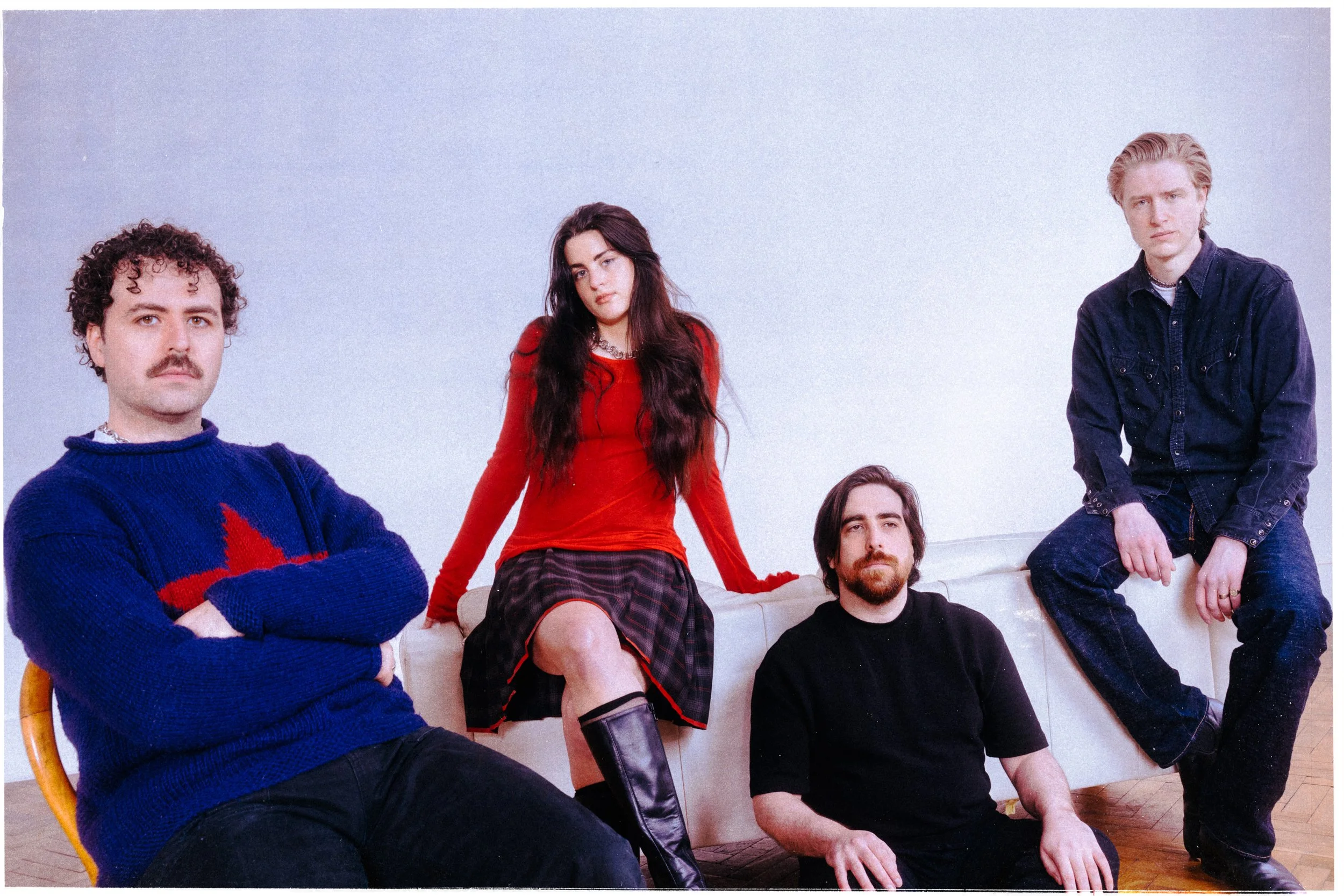
Photo credits to Sal Redpath.
Modern Woman’s debut album, Johnny’s Dreamworld, is fundamentally daring in all the right ways.
At just over thirty minutes, the nine-track record is a scrappy serenade that proves to be bold for a typical rookie year. But Modern Woman is in a league of their own, pushing the boundaries until they become blurry lines. The record is ultimately a study of conflicting sonic structures rooted in an art-rock, avant-garde, and folk foundation, and its brilliant fusion to create controlled chaos.
Sophie Harris is behind the driver's seat, steering the band with vocal shapeshifting to get to the places she wants to go, all while adapting to Juan Brint-Gutiérrez’s rumbling bass lines, Adam Blackhurst’s shuffling drums, and David Denyer’s expertise in strings. Without missing a beat, she works to excavate the nuances of the female experience and translates them into visceral lyricism that sweeps you off your feet. Together, the members of Modern Woman coalesce into a mesmerizing tapestry of riveting melodic textures that would unravel without each of its key threads.
At track one, “Johnny’s Dreamworld” arrives with clenched fists and gnarled teeth that might come across as menacing at first glance, until you motion it to sit in the seat next to you. You’ll quickly notice that the plummeting riffs and battered drum kicks mean no harm, but rather invite you to watch the brawl. “You can be my god / If you wanted to,” Harris snarls, and it’s less of a question and more matter-of-fact. Every turn is unpredictable, but well-calculated. From Harris’ spoken poetry to Blackhurst’s blistering drum hits, there was a clear precedent for the rest of the record.
Head thrashing is warranted in “Neptune Girl,” which brings heaven into view. Closing the gap between Neptune and New England, seething guitars bubble up to the surface just to drop right back down to Harris as she screeches over the loss of a loved one. She pleads to a higher power to swap their places in her refrains, “So I deserved it” and “Why choose you?” while a dialed-down “Daniel” sits at the head of the tombstone, forcing you to feel the negative space. Harris' voice alone hits a register that ignites something spiritual, reminiscent of Kate Bush’s vocals, which tower over her tracks as the dominant instrument, while Denyer’s violins prance in the background.
Leaning into a yearning-fueled “Offerings,” Harris’ ink-stained palms can be traced back to the hungry declarations she pens. “Oh to hold his clothes to touch my lover's fingers / I left offerings as if he's a royal,” she spews with desire. But whose siren song does it belong to, really? Who is taking and who is giving? Listen closer, and the deceptive bass lines bury a lyric that might’ve met its match: “Give me a hum from the lie that vibrates from his lips.”
“Killing a Dog” feels like three different songs in one, every verse like emotional whiplash, while “Blessed Day” is a steady throughline of Harris’ howling and hammering chords that never loses steam.
“Dashboard Mary” is the wind-down, but on Modern Woman’s terms. It belongs in the end credits scene where the main character jumps in the getaway car without thinking twice. A sense of liberty is found in Harris’ drawn-out, incantatory choruses: “I’m not coming home.” Every instrument seems to be played at full force until the scrapes of fingers gliding on the guitar neck and the collision between Blackhurst’s foot and the drum pedal become noticeable, crucial indicators of the track’s raw nature.
In “The Garden,” Harris’ voice takes on one final form –– the whistling of the wind that raps on your windows at night. Lifted by Deyner’s elegant organ work, her wispy vocals creep up and around tree branches and rose bushes without the intent of being caught.
Modern Woman’s debut album is a poetic masterpiece that doesn’t strive to be just one thing. With a foothold in curiosity and a sense of assuredness in the band’s aptitude for experimenting across genres, their approach pushes each track not only to the edge of the cliff, but dives straight into the chasm.