Unearthing ‘The Gem’ Became Julia Jacklin’s Hardest Feat
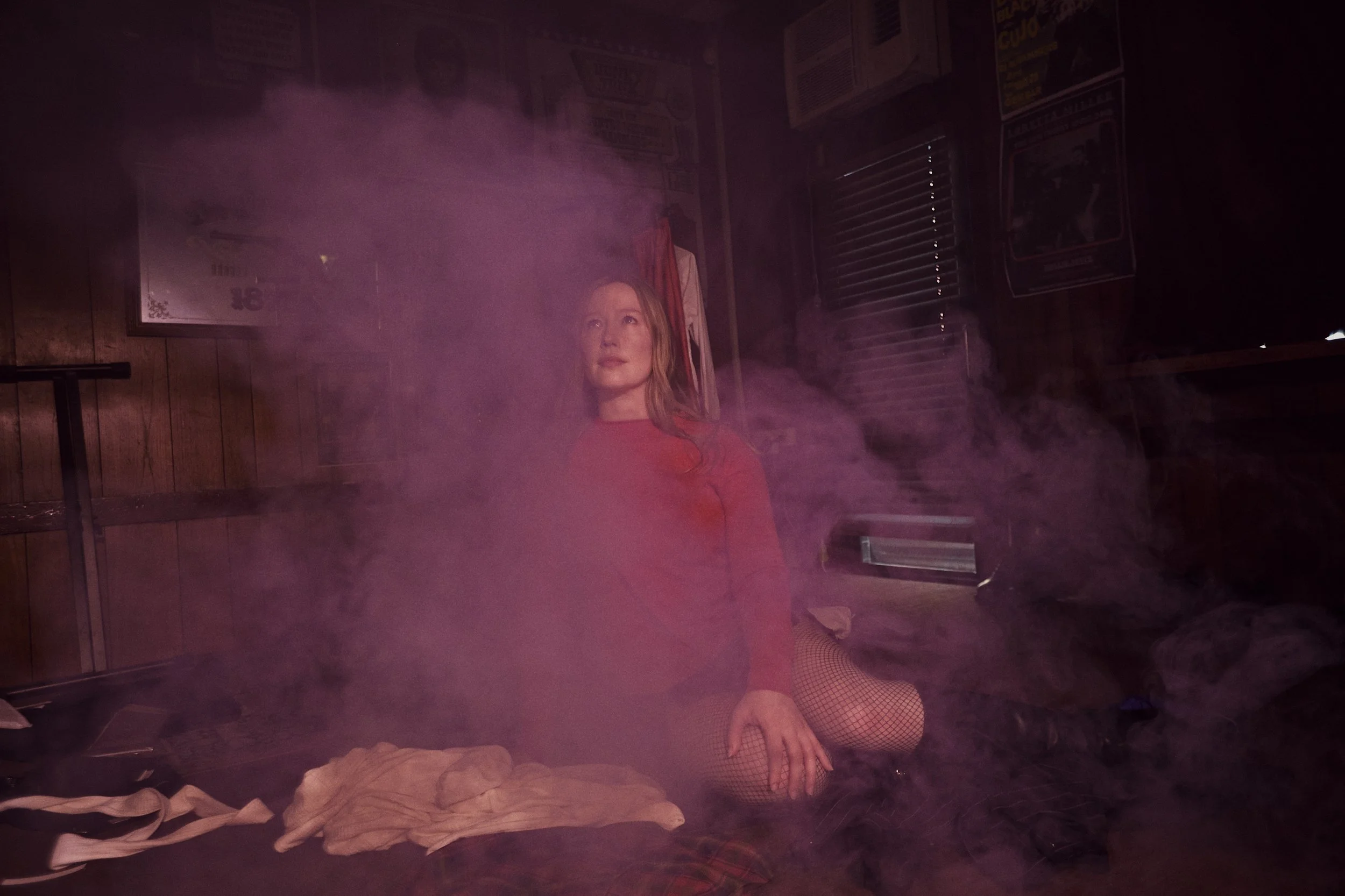
Photo by James J. Robinson.
“I’m free, now let me be brand new,” Julia Jacklin insists in The Gem’s opening song, “Brand New.” Her fourth studio album arrives on the scene after a four-year hiatus, keen to unveil what’s been learned since her last record, PRE PLEASURE. Echoes of her previous projects linger in the guitars alone, but something immediately sits differently about the tone. At a monotonous register, Jacklin seems to swallow down a darker truth than what she lets on: “Today I’ll put down the knife / Can’t afford to have an inner life.”
The Australian singer-songwriter decided to return to Melbourne to write the album, the city she called home back in 2017 after a move from Sydney. At that point in her career, music led her to hang around a local spot where bands would play for the bargoers that lingered. Little did Jacklin know, her fourth album would be recorded back where it all started — above her favorite pub, The Gem.
Converting the upstairs studio into a room, the singer released all inhibition and thrust herself back to her roots within familiar walls. But the process didn’t come as easily as she imagined. “The Gem felt like a metaphor for the whole process, because a lot of it did feel like digging,” she reflects about the album. “I felt like I was doing it almost in the dark, just trusting I was going to find something.”
And Jacklin did just that. The Gem finds beauty and healing in its ability to retrieve answers by letting go of what we think we know, and doing that two times more.
“God Sometimes” startles the singer with the danger of standing fixed to the ground. Distorted, fizzy guitars soar alongside Jacklin’s outstretched hands towards the sky in question, only to come to the conclusion that she must piece together her future: “Yeah you have to be a god sometimes / Force the moment to change / Flip the table then rearrange.” “If I Had The Hand of God” and “Angel Vision” continue to tinker with the idea of divine intervention and lean into otherworldly lexicon. In “If I Had The Hand of God,” she hovers over her life and the people in it. This time, she removes the burden of control on herself and questions an outside force: “If I had the hand of god / Would the god whose hand I have / Know not to leave you alone / When you say you’re feeling sad?” “Angel Vision” lands on lighter feet, delicate in both Jacklin’s vocals and lullaby-like strums as she realizes her relationship was fueled by clever deception. A trusted figure disguised as a god.
Exploring the folds of Jacklin’s brain might uncover both the good and the ugly, or perhaps the unprocessed grief and trauma that contradicts it. But one thing is clear about the singer’s discography: she knows how to pair vulnerability and tension with dance-worthy, folk-rock compositions. Hazy figments of Jacklin’s dream world haunt the narrative in “Real Life,” where the intangible becomes tangible, and the line separating imagination and reality becomes difficult to decipher. “Had a dream that I treated you well, it felt like real life,” she confesses under a skippy tempo. It’s no question how the end of her story went, but the temptation to succumb to her mind’s logic nearly pulls her in: “Felt so real so is it even my fault?”
Her vocals ebb and flow against the punchy, laid-back riffs in “The Hardest Thing,” a track about a relationship collapsing underneath itself, whereas “Get Away From Me (I Think I’ll Love You Soon)” debates ushering the very same love back in its choruses. She’s aware the nature of the desire is fleeting and volatile, but her certainty remains in the inevitability of its return: “I’m just trying to ready myself for what’s coming my way.”
It’s an effortless transition into the chilling “Walk On Me,” where Jacklin treads behind the shadows with only a reverberating guitar to back her. Glittering chords hum through the track similar to those in her 2019 record, Crushing, but with added maturity in its inflections. Her vocals glide along in no hurry as she not only surrenders to the darkness, but extends an invitation to it: “Walk on me if you like / I’ll eat the fruit unripe / Don’t want anyone else to see / What is happening to me.”
“I Wish” closes the album on a high and hopeful note with a stripped-down, acoustic number wrapped in melting harmonies from Elsie and Maggie Rigby of The Maes. The journey back to herself is far from over, but Jacklin’s signature trills shine like a true light at the end of the tunnel, and you can tell she’s soaking in every ray: “Oh, the days they were turning black / Could not believe the light would come back.”
Jacklin’s brilliant return with The Gem proves her lyrical eloquence remains rejuvenating and generational. She’s unafraid to continue yielding to the throes of past heartache in an effort to fully restore herself, even if it means sinking before swimming to shore.