
An Interview with Cardinals at Kilby Block Party
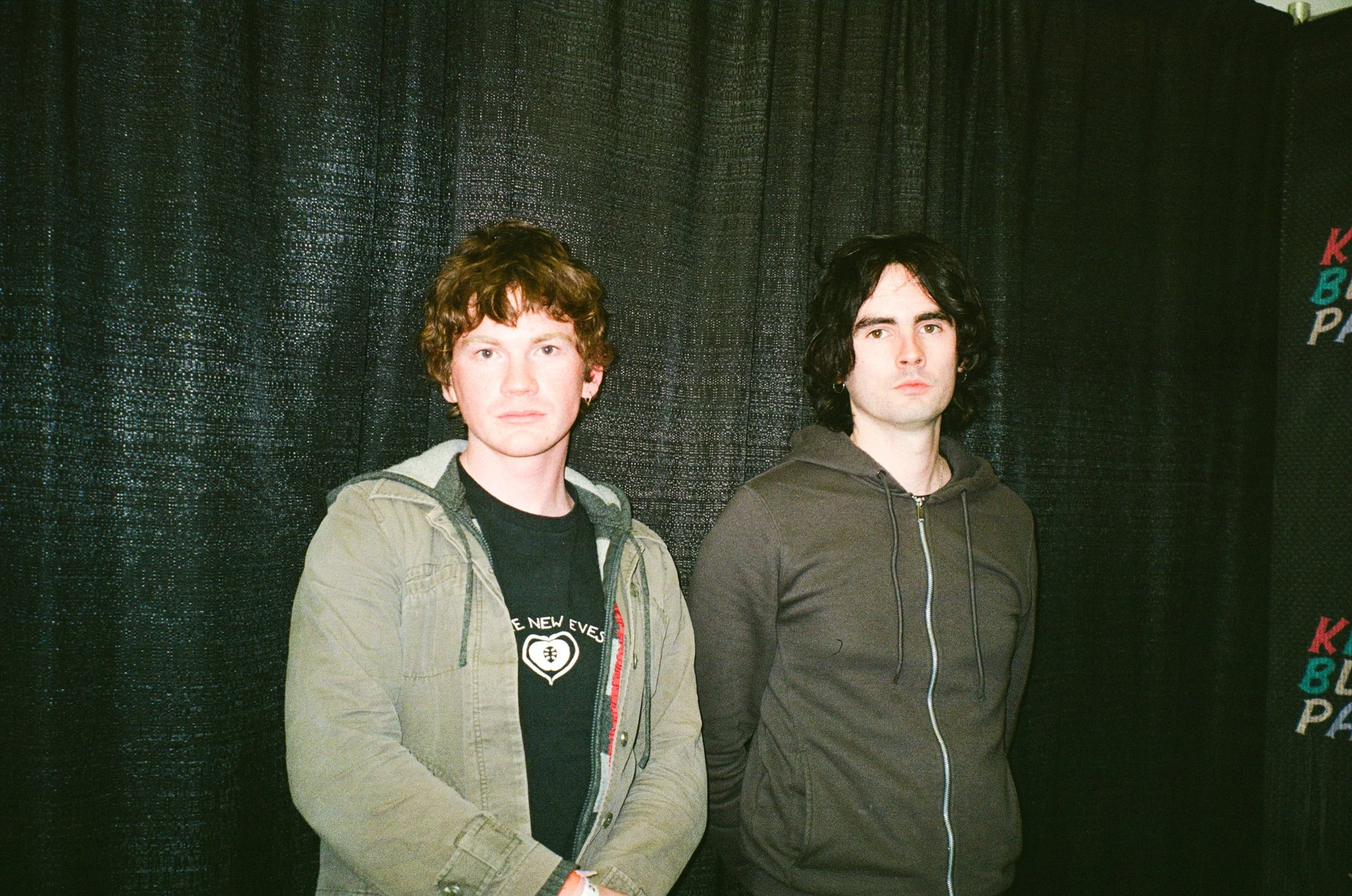
Irish indie band, Cardinals, stopped at Salt Lake City’s Kilby Block Party festival this last weekend, marking the end of their “Masquerade” Live in the USA tour. Like many Irish artists, the past five years have been a period of major growth for the band, with the release of their debut album, Masquerade, back in February marking the culmination point. The group has been called everything from experimental to an homage to classic indie rock, but no matter what you want to call them, they certainly put on one hell of a show. We had the chance to sit down with Cardinals members, Euan and Aaron, to talk about their recent release, the Irish scene, and their relationship with the modern music industry.
The Irish music scene has made it quite big in recent years, with acts like Fontaines D.C. and Kneecap growing on massive scales. How has this impacted you as artists? Is there a general sense of camaraderie amongst Irish artists? I know in the States we struggle a bit with competitiveness, especially in indie subgenres.
Euan: I guess it's good, yeah. I wouldn't say they've impacted us much as artists, so much as they've probably impacted people's perception of Irish artists and Ireland as a nation, you know? Art-wise, we're just doing our own thing, as much as you can do that.
Is there a strong music scene of local independent venues in Ireland? I've never been.
Euan: Oh, yeah. There was when we were coming up, especially when we started writing. There were good, small venues that we got to take advantage of. It was a good time.
Last year, you opened for Fontaines D.C. at Finsbury Park. That was one of the best independent lineups I've seen. How was that experience? That was a massive crowd. Correct me if I'm wrong, but maybe the largest crowd you've ever played to. Do you have to adjust to playing on scales like that, or like here at Kilby, for instance? What do you do differently? How does that impact the overall performance for you?
Euan: You usually just get a line check, so overall it impacts it in a bad way.
Aaron: It’s kind of like being thrown into a swimming pool as a baby. You don't have any preparation whatsoever. You're not playing these big stages all the time. You just get one every few months, so if you're not happy with it, you're gonna think about it for a while. You can’t really adjust to it that quickly.
Do you like playing festivals, though, as a whole? You can get some great crowds.
Euan: I don't really like festivals.
Aaron: I like the free food. Free drinks. It's a nice schedule, too. That's what I like about it. Other than that, though, I don’t like the stages as well.
Yeah, definitely, I get that. You guys just kind of finished up a few headline dates here. I know that was only the first or second time you’ve been over here. Were there any cities that you had never been to before? Any you particularly enjoyed?
Aaron: We had never been to Philadelphia or Seattle, and then of course, here in Salt Lake City either. It’s great here.
I love Seattle. The Seattle punk scene is really wonderful. It’s a great music city, though I’m sure you didn’t get a chance to fully experience that.
Euan: Unfortunately, we were only there for a day, yeah, but I’ve heard good things.
All right, next. Your discography kind of morphs back between true indie rock and experimental post-punk. How do you balance all of your forms of inspiration when making a new album? Is there a direction you're kind of hoping to settle into in the future? Is there some type of plan when you're in that writing process, or do things just kind of develop on their own?
Aaron: I don't think it's ever intentional. I don't think we sit down before writing a song, and say, “We should sound like this, or do something like this,” you know? Euan usually comes forward with the chords and the lyrics, but beyond that, we all have such different music tastes. We all bring forward our parts and our different things, and naturally, it becomes this cocktail of influences. We are never premeditative.
Absolutely, that makes sense. I always ask a question like this next one because I think the modern music industry and its influence on and by social media is very interesting. Especially with bands like you that differ a bit from the norm. Your social media feed is very curated and aligns with your artistic image. A lot of times these days, people dilute things, just trying to push themselves in the algorithm. As a photographer myself, I know how important it is to maintain that image. Who leads that creative direction when you are planning albums and planning the imagery that aligns with them? How does that process work for you?
Euan: We talk about it a lot, for sure. It just starts with someone seeing something that they think is sick and bringing it forward. Then everyone kind of talks about it and decides whether we like it or not. For this album, though, there was kind of a path of aesthetics that we found ourselves travelling down, but different people brought different things. Darragh found the album cover this time, which is a big part of the look of this era. I think it’s important, though, to have a sense of oneself through your photos and videos. Slopping it up with videos just to get into the algorithm is not our vibe, but all due respect to those who want to do that.
For sure. I think that is something that fans can appreciate, too. Would you say that social media has impacted you, in general, or would you kind of say that you try to avoid it as much as you can?
Euan: It definitely has. I don't think you can deny the effects of social media on artists and bands. Although I find myself continuing to have more and more respect for people who just totally reject it, rather than the people who are really leaning into it. I think the main thing is just to take total control of yourself and not let outside forces try to have their say. Don’t listen to people who try to tell you how something should look or what you should post, you know?
Aaron: When we first made our Instagram page, it was a lot different. It just acted as a billboard to advertise shows on, so we're slowly trying to adjust to things, even though I'm not sure we want to.
You just released your debut album, Masquerade, incredible, by the way, back in February. Releasing a full album can be intimidating. Were there songs that were particularly hard to finish, or any that came really quickly?
Euan: The last song on the album, “As I Breathe”, took me a really long time to write. I kind of isolated myself to write the chords and lyrics before I brought it to the room. Once everyone heard it, they were like, “Oh, some of it's okay, but there's a good chunk that needs to be cut out”. After that, though, it happened really fast when everybody got their hands on it. Many hands make light work, as they say, so that was it, really.
Of course. Last question! I know that this band is a family affair for you guys. How does being related and close friends impact you artistically? Do you find that communication and the flow of making music come more easily, or does it become more difficult when you have those relationships?
Euan: I think it definitely helps us to be more open with each other, which is important, you know? You need to be able to shoot down each other's ideas as much as you need to be able to pick them up.
Aaron: That’s an important part of the creative process: being brutally honest.It’s definitely hard to do that with people you don’t know.
Absolutely. Okay, I don’t have any more questions, so thank you for taking the time out of your busy schedule to meet with me! I look forward to seeing you guys play again soon!
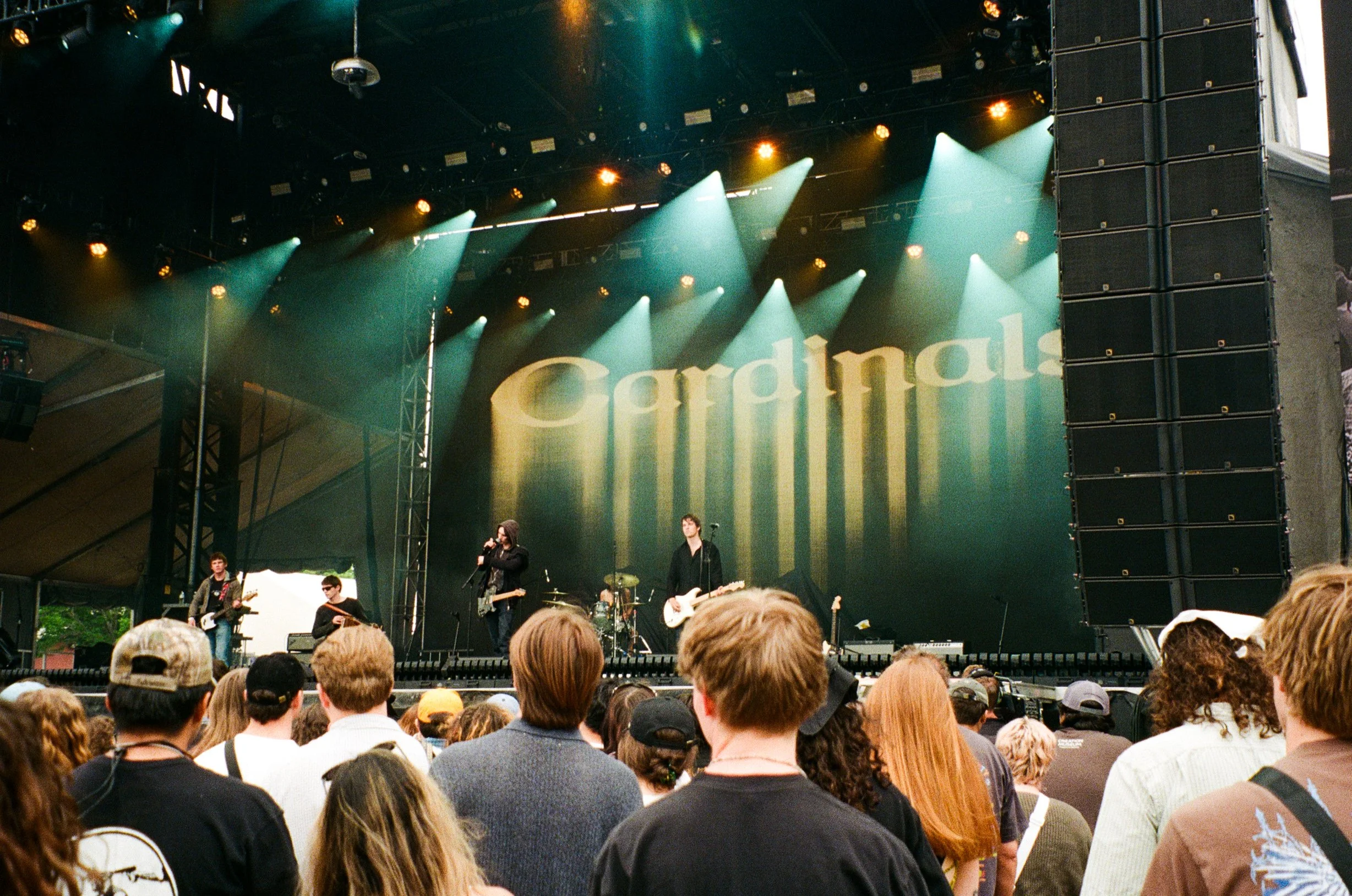
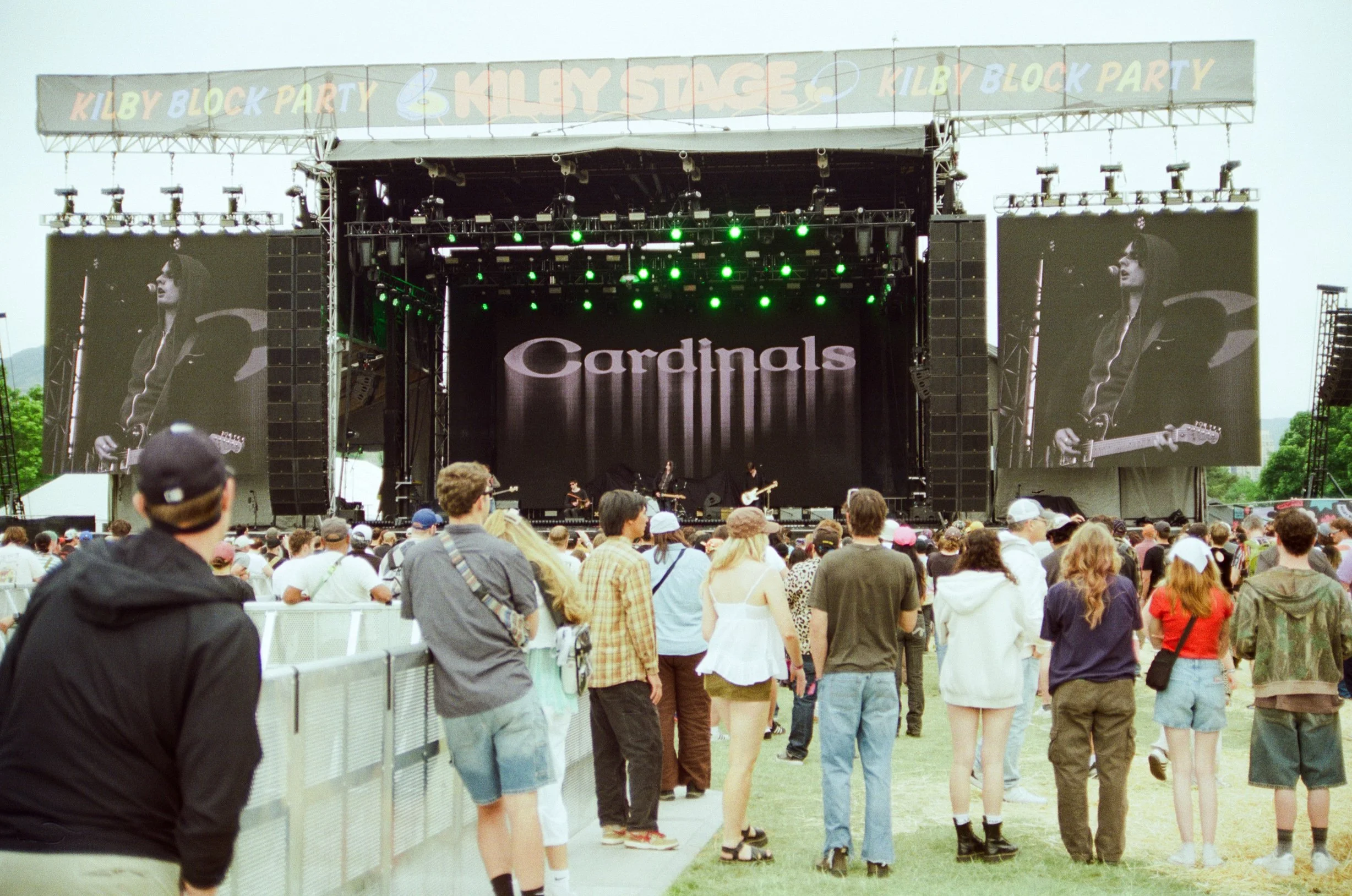
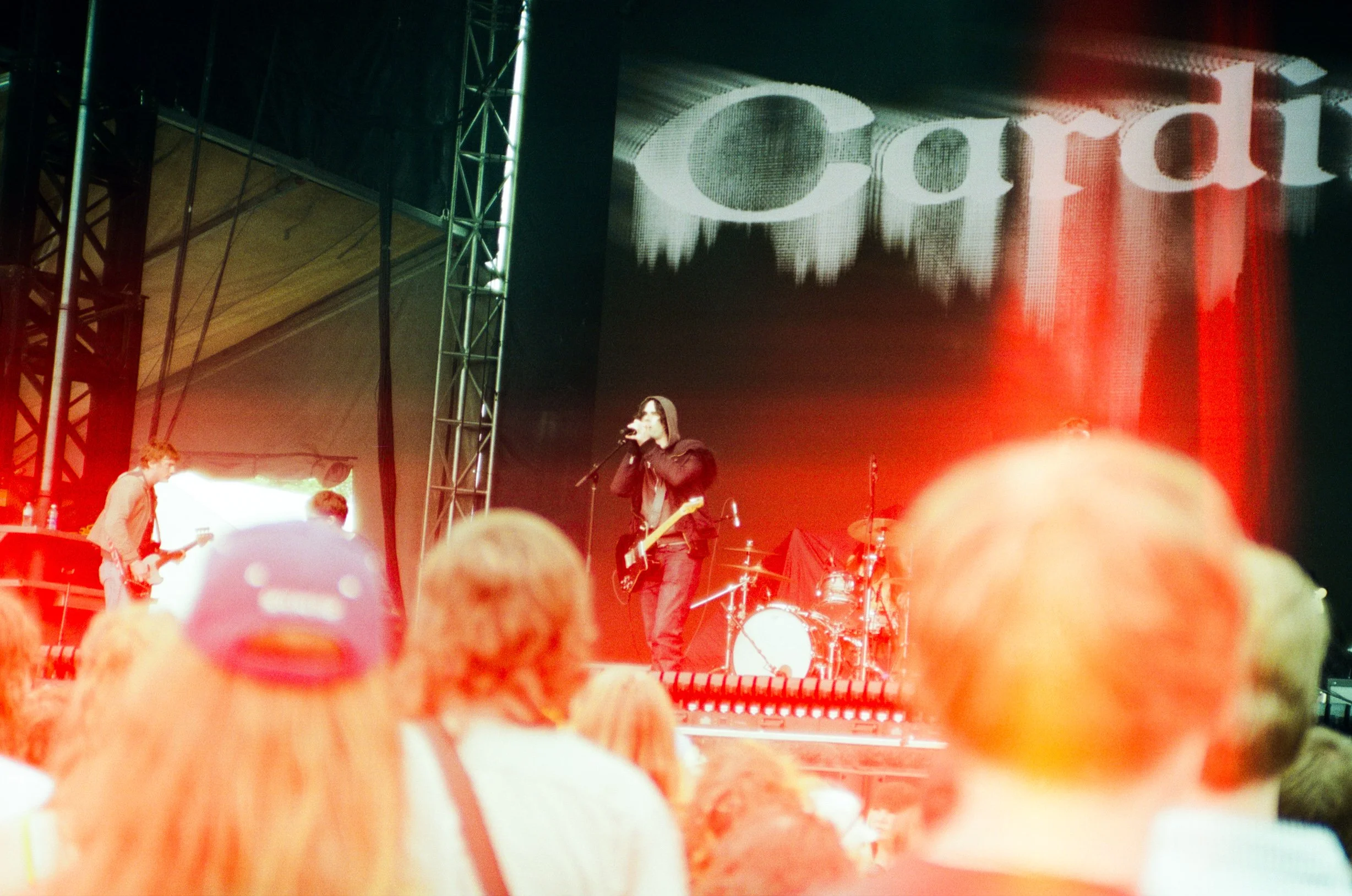
If you haven’t had the chance to catch them live yet, Cardinals will be back in the U.S. in the fall for a full run of headlining dates. At the rate they’re going, they won’t be playing in intimate venues for long, so catch them while you can!
