
Hannah Cole is More Confident Than Ever
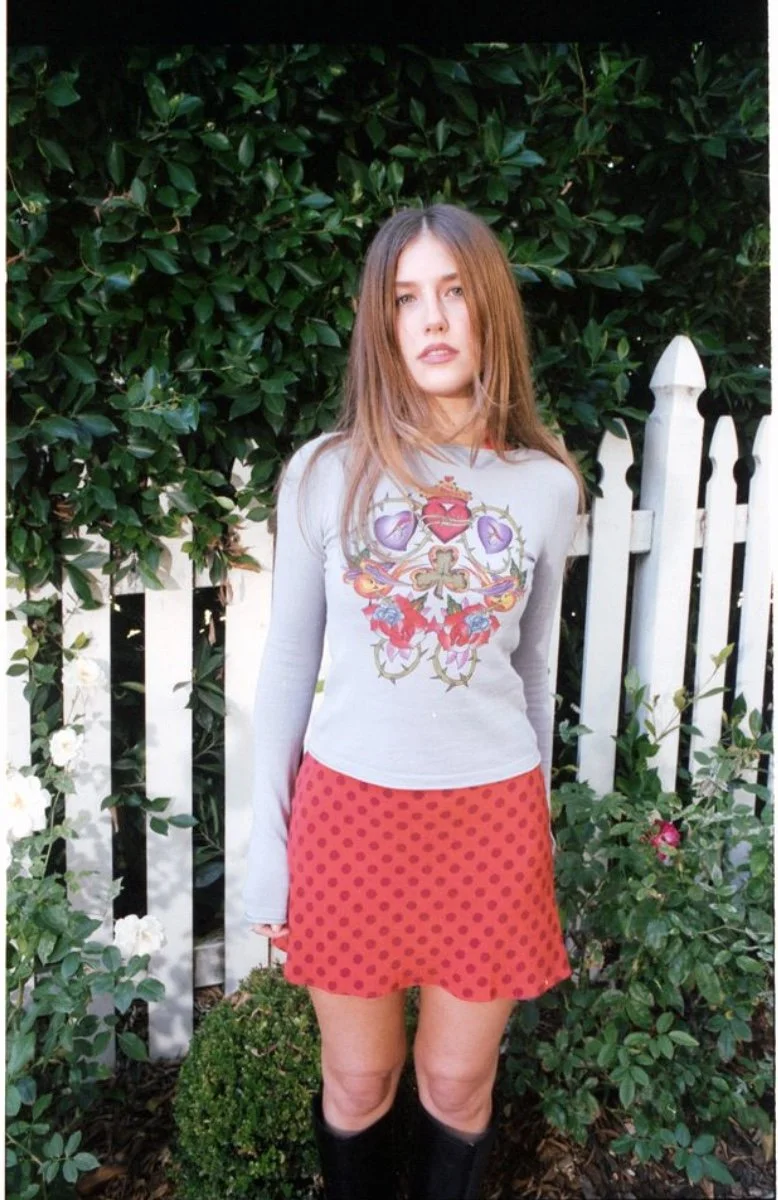
Hannah Cole. Photo by Adam Alonzo.
Hannah Cole knows that a path to success in the music industry is anything but straight, but that doesn’t stop her from bulldozing obstacles to confidence.
Hailing from small town Louisiana but now calling Nashville home, Cole starting self-releasing music in 2020, experimenting with the sort of dreamy bedroom pop she grew up on. Yet since adding more small Nashville shows to her live music diet, her sound has slowly gotten heavier, with distorted guitars and bubblegrunge inspirations making their way into popular tracks like “Massachusetts” and “Nuisance.” Now freshly signed to indie label Tight Knit Records, Cole is dropping her debut album, Switchbacks, with her feet fully planted in the alt-rock ground and her resolve unwavering.
Ahead of the record’s Sept. 4 release, Off the Record caught up with Cole to discuss the threads hidden throughout Switchbacks, her relationship with Music City, and her evolution as an artist.
Musicians only get one chance at debut albums, and yours, Switchbacks, drops this week. How are you feeling about it being out in the world Friday?
I am so excited. I feel really, really confident about this record — I think more confident than I've ever felt about any music I've made in the past. Every artist hopes for that with every new release, but I truly just feel so confident. I love the record. I think it's a record that people can listen to top to bottom over and over again, and that's really what I wanted to do, and when I was making this record I went back and listened to a lot of full-length records that I thought were perfect records, and I was like, “I want to do that,” so yeah, I'm just feeling really good about it. I just played the whole record live last week in Nashville and I think that made me 20 times more excited because it's fun to play live, and yeah, I think people are gonna really like it, I hope.
Tell me more about that Nashville show.
I was so nervous because I actually hadn't headlined a show or played a show in Nashville in two years, so it was a really long time. I don't think I'd played a show in general in maybe over a year just because we'd been working on the record for so long, but it was really, really fun. I usually get pretty nervous before going on stage, but I think once we started playing the music, I was like, “Wait, this is my favorite thing to do and my favorite songs that I've ever gotten to sing,” and so I had a lot of fun. I felt like the crowd was really, really great this time around. You never know with Nashville. Sometimes you can get a little bit of a … I wouldn't say moody, but just kind of a quiet, still [crowd]. Good listening, but maybe not the most engaging crowd. But I think with this music, it's kind of impossible not to move around. Me personally on stage, I noticed in the past it's been harder to dance or move around and really perform, and I felt like with these new songs it was so much easier to move around, to dance. I kind of realized how danceable the record is, which was cool. So yeah, I had a lot of fun. It was great.
You mentioned that you’re feeling really confident about this record, more so than you have about previous releases. Is there a particular reason why you’re feeling more confident with this one?
Yeah, a couple things. I knew I really wanted to make something that had variety, but was still obviously cohesive, and I feel that this album has so many details that were intentional in the production process, in the writing process. For me, I wrote every lyric on the whole record and had a much bigger hand in the production as well, and I think that the record really sounds like me and sounds unique to me and my personality. Even people who know me very well, who I've showed the record to, have said, “Oh my gosh this is you in a record. This sounds like you, this encapsulates who you are and your personality.” I really wanted people to be able to hear that unique perspective.
Lyrically, it just all really flows together. I think that in some moments, I took a step back from more narrative writing and wanted to explore a more poetic, image-based writing that still shows a story, but I wanted the album itself to take you through a journey rather than each song being its own particular journey. Songs like “Mosquito Hawk” would be an example of something that maybe is more in one song, a kind of full narrative, but I think that the album as a whole just kind of takes you through this journey of my pursuit of success and the complex emotions and experiences that come with pursuing a career in music or for anyone just pursuing a career with something you're passionate about and you've been passionate about since you were a little kid. I think that can bring a lot of ups and downs or questions like, “Am I really supposed to be doing this?” or “Should I have a team? Do people respect me?” There can be a lot of confusion there, but I felt like each time I wrote a song, it opened a new door to a new experience to write about.
I think that's why I feel really confident about this record, because there's a lot of meat there, but there's also those threads that tie everything together. There are details with words or lyrics throughout the album that I hope people see that connect the songs together, and also production moments that make each song discernible. And yeah, I just felt like I had so much creative control over this record, which makes me really happy.
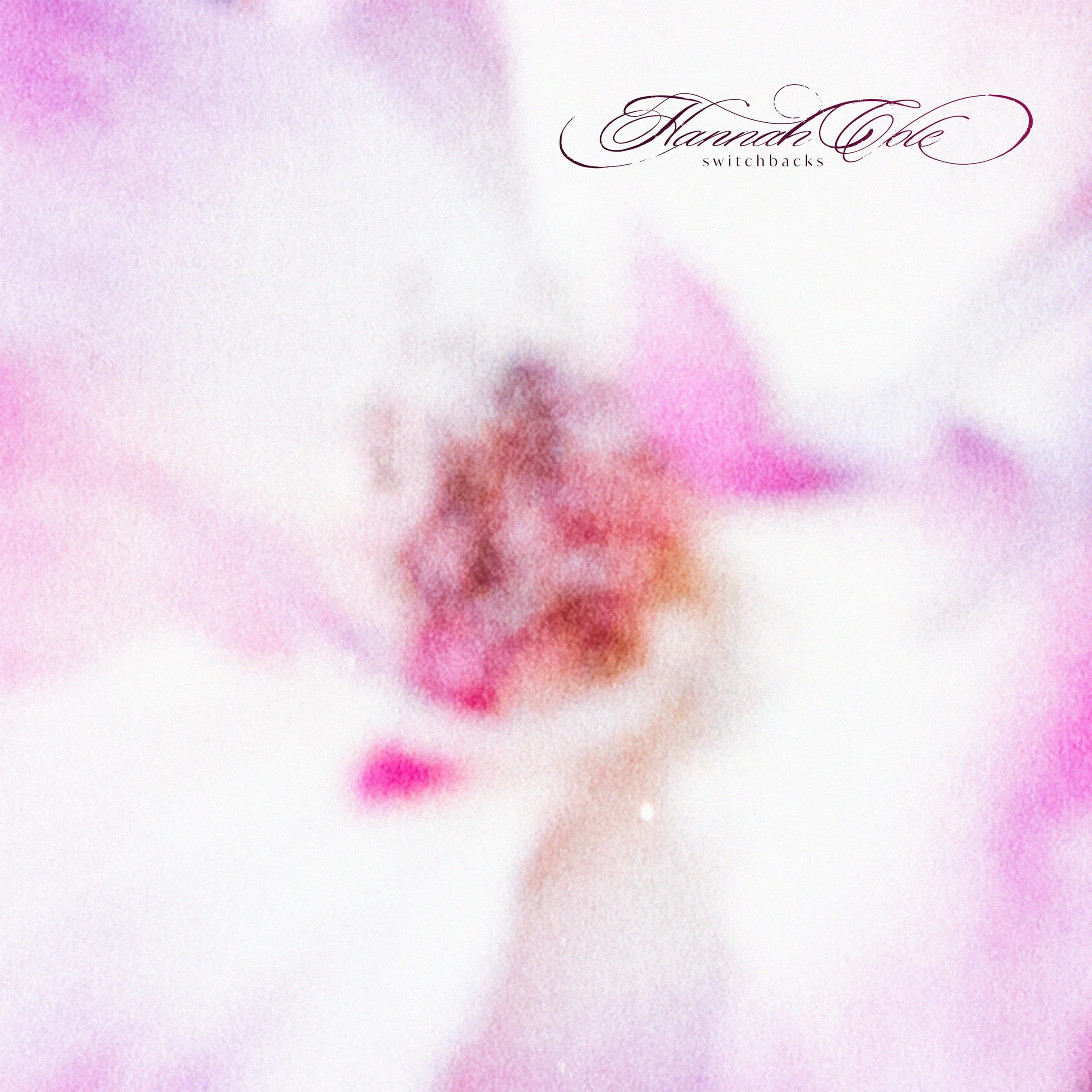
Cover art for Switchbacks.
It’s interesting you mention that, because when listening to Switchbacks, I couldn’t help but notice those certain threads that connect tracks together. You have lyrics in “Mosquito Hawk” tying to “Dancing” and juxtaposing references to “spinning” in “Mechanical Bull” and “Every New Day,” for instance. If you had to choose three words to describe the record’s themes, what would they be?
I would say dreams, reality, and dancing.
Dancing does appear a lot in the album, and I think that this concept of dancing, or entertaining, or putting on a show is a big part of the record. I think that even ties into the whole dreams versus reality thing, because I know for me, with this record and just with pursuing a career in music in general, people often get this kind of identity crisis and it's hard when you're putting forth this kind of brand or accentuated version of yourself. I think it's easy to slip in and out of reality.
I also think with dreams, with this album, it's not only a dreamy album production-wise, but it also focuses a lot on my dreams of the future, my goals, and how that connects with the dreams of my past, the memories that are in your head. It's interesting to me. And it sounds kind of cheesy, but for me, when I think about dreams, I think about these memories that are filed away in your head, that when you go to sleep at night, they come up but in mismatched ways. Kind of like the back rooms. That's kind of how I see dreams, and I think that with the pursuit of success and this journey that I'm writing about on this record, in order to go forwards and pursue your dreams of the future, you have to go back into the past and back into your memories and peel back all of the distorted things and see something beautiful at its core, why you started. For me, why I started music in the first place.
So, since your first single in 2020, “Clothes,” your music has steadily transitioned from dreamy bedroom pop to heavier alt-rock and Switchbacks seems like a firm arrival point in that genre, marked by lots of distorted guitars and a denser sound overall. Can you talk about what propelled that transition?
When I first started putting music out, it was the height of the pandemic and I was kind of just exploring whether or not I really wanted to do music or put out music. It was, at the time, pretty experimental for me. Obviously, everyone was home to themselves, and my producer, who’s now my partner, wanted to work on that song remotely — my first song, “Clothes” — and I just had so much fun making that. I’ve always had a love for hooky pop music. It’s what I grew up on honestly. But I think that as I went to more shows in Nashville, got exposed to more music … I don’t know if you know the artist Bully. She’s awesome. She’s a Nashville-based artist and band, and I remember seeing her live in Nashville a couple times and being like, “Whoa, I feel connected to that.” After, it just has evolved with me as a person.
In the beginning of putting out music, I was just exploring different styles and seeing what connected with me most. I hadn't played a show ever until I was about 21, and at that time I'd released singer-songwriter pop stuff, and there was always a rock thread through the previous projects, but definitely not as much as now. It wasn't until I started playing live where I was like, “Okay, I see people really connect with this,” but I always want to be a songwriter, too. I never want to put that tool down when making heavier music. I was on stage and I was just thinking I want to play music that’s a little bit more fun to play live. I want people to have that reaction where they feel like they can move around. Movement’s always been really important to me.
How do you see your music continuing to evolve in the future?
I think as I learn more instruments it will become a little more interesting. I've played piano and guitar my whole life — I actually don't play anything on stage, which is an interesting choice, but that's how I feel most comfortable — but I have always written songs on guitar, piano. Recently, my boyfriend Jos, who's also my main collaborator, has been teaching me bass and drums. I’m not some crazy instrumentalist at all, but it has really opened my eyes to having more of a producer's mindset. I was able to co-produce this debut record, but I think going forward having that experience and also dabbling with new instruments will just help in terms of producing the songs. I think in the future I hope to make something that's even more cohesive than this record. I never want to make an album that's, you know, every single song sounds the same, but I definitely think I want to try to make something even more cohesive than this one.
I feel like I’m in a similar place now to when I was making Switchbacks, which is like, “Oh my gosh there’s this huge thing in front of me,” because I want to make another record. I go back and forth, but I’m in the writing process now. It’s definitely going to be similar genre-wise. Just maybe a little bit heavier, a little bit faster. People can expect that for sure.
If you could learn any other instrument, what would it be?
I think any string instrument. Cello, violin … I just think it’s such a beautiful instrument. I love the way it’s used in alternative rock music today. Like, Alex G is one of my favorite artists. He has a lot of fiddle throughout his records. I just think it’s a cool instrument. Could be really useful.
I’d love to dive into specific tracks on the album, starting with “Pitcher.” With imagery like “sitting water,” “overflowing,” and “heavy hitter, need a pitcher,” you employ both meanings of the word “pitcher,” which I think is a great example of your songwriting style and partially why it’s my favorite on the album. Can you talk about the meaning of this track and how it came to be?
I appreciate you picking that out because that was definitely intentional. But yeah, that track for me is all about being stagnant. Whenever I was at the beginning of making this record, I was just standing in front of this huge beast being like, “Okay, I don't know what I'm doing. I don't know if this is even worth it. There are so many things I have to do, so many steps that I have to take, that I feel just frozen,” you know? It's kind of like the fight, flight, or freeze response, and I would just freeze. And at the time, I was like, “What about me is not reaching people? Do I need to change something about myself? What can make me more marketable? Is my personality type just not fit? Is my taste not fit for this music thing?” I was just really frozen, and the only thing that got me through that was writing about it. So that's what “Pitcher” is about.
Similarly, you also touch on politics of the music industry in tracks like “MMA” and “Give.” What was it like to go from studying music business in college to being an active member on the artist side of the business?
That’s a good question. I feel like with any job or any field of study, you go to college and you learn a lot about this career, but you don’t really know anything until you step into the actual workforce. It really is the same with music business.
I think I had a good foundation. I learned a lot, but, of course, didn’t experience how it worked until I was out of college, being an artist, going to so many meetings and doing a lot of publishing, professional songwriting, co-writes, and meetings with A&Rs, and playing shows, and meeting with labels. I didn’t really understand how the music industry worked until I experienced all these different things.
I am a little bit cynical about it. I think that comes across on the record, but I think it's because — and I think a lot of people feel this way — the music industry is just not very kind to artists. I’m seeing friends that started working at labels or at publishing companies, and being on the artist side of things, I’m wondering, “Okay, all these people at this company are benefitting from the product: me and my music or someone else and their music.” But why are we not giving artists healthcare? I can understand that a person is a brand and a product. Does that diminish someone’s dignity a little bit? Yes. But I can accept it and move forward and understand this is a business, music is a product. But artists … you still don’t get the benefits of working at a company, which I just find interesting because I’m sure with any other company, when you’re someone that’s making a product, you’re probably getting all the benefits from that company where artists really aren’t.
I've had so many experiences as a woman in the music industry that are harrowing. I touch on this with “Mechanical Bull,” especially, like, I think the industry likes to claim to be a very progressive, maybe even feminist, place where everyone can belong and everyone is happy and where we're pushing for progress. I might see that on an artist level, like artists advocating for those things. I don't know if the industry itself is rooted in those values. I think “Mechanical Bull,” for example, I say something like, “I look up just to see you watching from a balcony / Extending your hand, but we both know that you'll never reach,” which is me saying, “I see you looking at me from above and you might be putting your hand out, being like, ‘Oh, I'll help you,’ but you're not actually going to help me. You're not actually reaching down to help me.” And I think it can feel that way a lot of times as an artist, trying to get people to respect you as a woman, trying to get people in the industry to respect you.
But overall, I feel really happy with my awareness of the industry now. I'm a lot more aware what all of the moving parts are, what all the jobs are. I haven't quite cracked the code of how to be the most successful person ever, but seeing how much success is manufactured these days has been really interesting. Whether that's right or wrong, I'm not quite sure. I think it's neither. I think it's just kind of the way it is.
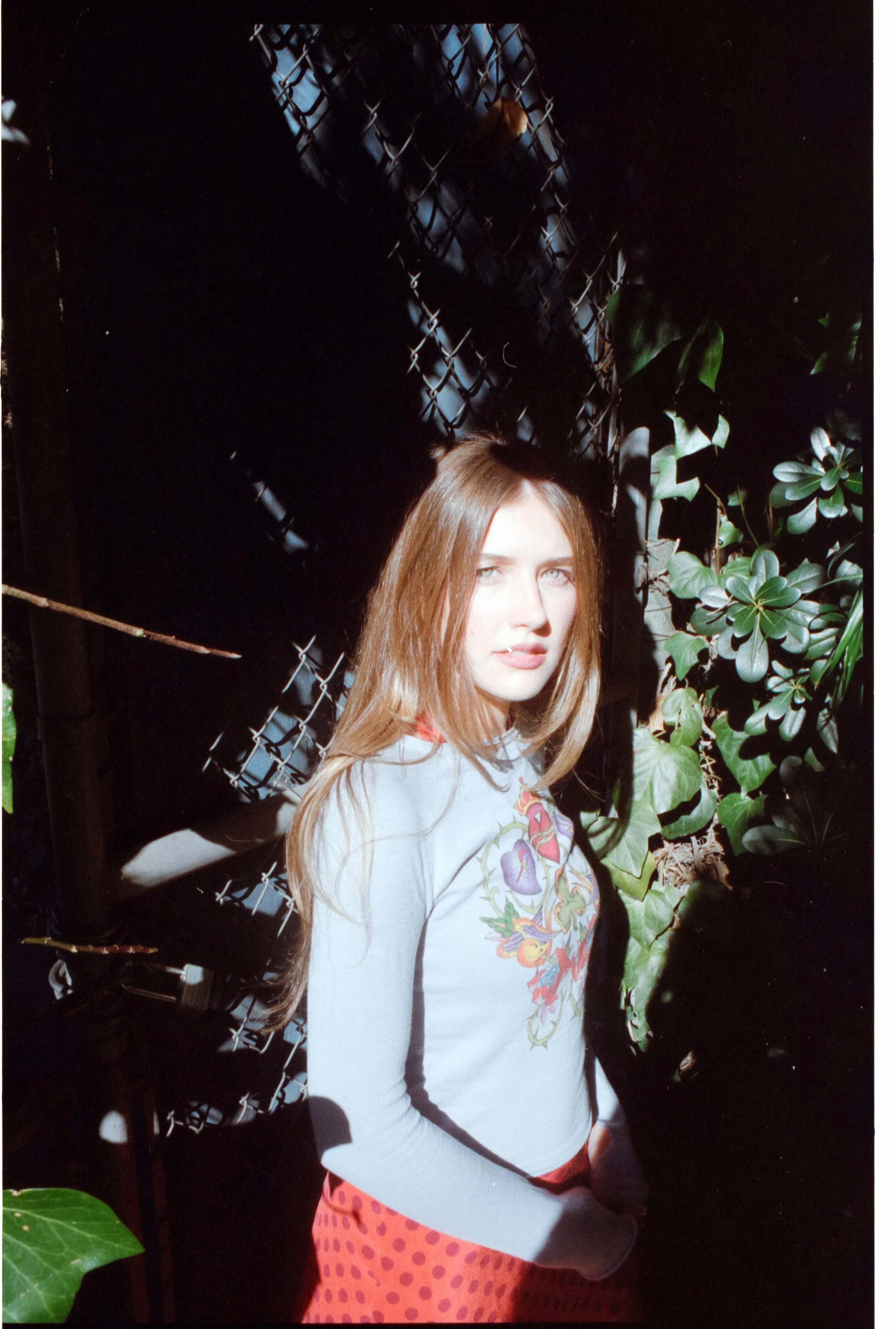
Hannah Cole. Photo by Adam Alonzo.
How has your time in Nashville shaped your songwriting?
I think just being surrounded by a lot of music all the time. I also studied songwriting in college as well, so I was having to write all the time, get all the horrible songs out of the way, hopefully. Not only that, but meeting my partner, Jos, working with him, that's been the best thing that has come out of Nashville, for sure. But meeting so many talented people, that's really it. I have so many talented friends. I can name 100 people, but seeing people play and being like, “That inspired me to go home and write a song,” that's one of the best feelings ever. And I think just having the access to so much music here is crazy. I didn't grow up with that. I didn't go to small shows or anything. I am from a small town outside of New Orleans, and people sometimes came through New Orleans if they were huge pop acts, but we didn't really have that niche music scene in my hometown. It's been cool to be able to experience that in Nashville.
Which song on the record took the longest to flesh out?
Either “Mechanical Bull” or “Mosquito Hawk.” “Mosquito Hawk” had a couple of versions. So did “Mechanical Bull.” Those might be the most opposite songs on the record, and maybe that’s why … I wanted the whole record to be pretty dynamic, but with [“Mechanical Bull”] I wanted something that was pretty chill throughout until that big bridge towards the end. And then “Mosquito Hawk,” I kind of went back and forth. I was like, “Okay, is this supposed to be a slow-core moment?” which is what it ended up being. I knew I didn’t want it to be necessarily folky, but I was trying to find an in-between realm.
“Mosquito Hawk” turned out as a kind of breather. I know you mentioned before that was less narrative than you’re used to.
Yeah, “Mosquito Hawk” is supposed to be a reflection of Switchbacks in reverse; the journey goes in reverse. You hear this reverse tape in the beginning of “Mosquito Hawk” that is supposed to signify going back into a memory, to when music was simple and fun and sweet.
Someone pointed this out to me recently — I was like, “Yeah, that’s totally intentional” — but how “Mosquito Hawk” is probably the slowest song on the record, it’s this breather moment, and how there’s a slowdown at the end of “Switchbacks,” the first track, where I say, “I’m ready to go home,” and the song slows down. There’s this interesting parallel on the record and how the times it slows down are when things are simpler.
You’re hitting the road for a Midwest/East Coast tour this fall. Which track from Switchbacks are you most excited to play live and why?
I had a sneak peek of this because we did play the album last week, but I love — and I think every else loved— my song “100 Bucks” into “Shooting Star.” Those songs are connected and it's so interesting because I was like, “Okay, how's this gonna work?” We ended up having tracks when we played it and we had the program drum tracks in the back to connect the songs and that was so much fun to play live.
Besides this upcoming tour, what’s next for Hannah Cole?
Well, I hope more tours. In the spring we'll probably do some West Coast shows, but I would love to go on some crazy support tour or something when the album comes out.
And then just making more music. I'm just getting back into writing sessions for another album, so I might even be revisiting some songs that didn't make this album and trying to make those better. Last time I was a little bit directionless and it was through the process of making music that I discovered what I wanted the album to be about, and I think this time I want to have more of a clear vision going into the album. So yeah, hopefully more music.
Pre-save Switchbacks here, available on streaming platforms Sept. 4.