
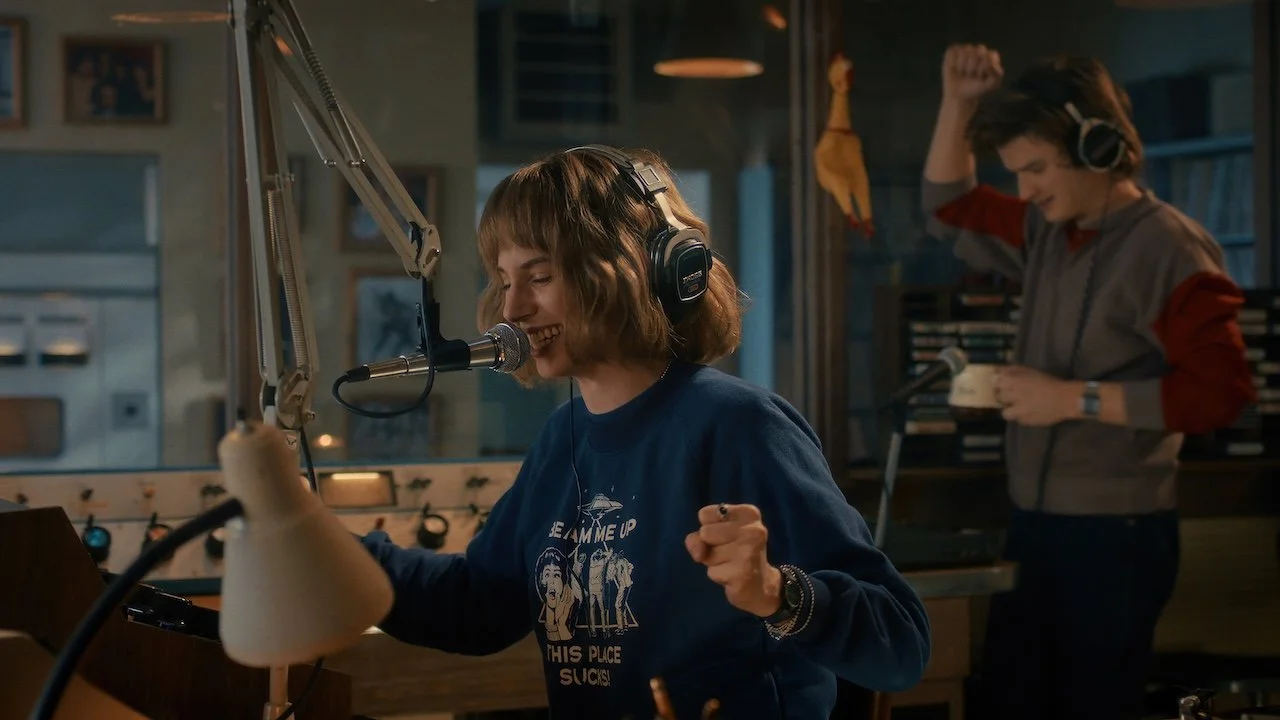
Season five photo via Netflix.
With the end of “Stranger Things” comes the end of a show that saw us crawl through alternate dimensions in space and time to fight gnarly Demogorgons and the Mind Flayer, become friends with an unlikely gang of imaginative and adventurous outsiders, and find the courage within ourselves to embrace the unique qualities that make us who we are. “Stranger Things” has already fast-tracked its way to becoming one of the most culturally significant shows of the twenty-first century for a myriad of reasons. Underneath impressive visual and practical effects, beautiful character arcs, and writing that captivated audiences for the show’s decade-long run — turning us upside down as we threw our wildest theories at the wall and grew mad with anxiety over the fate of our beloved characters — lies a story of friendship, loyalty, and the power of embracing our differences. Viewers of all ages instantly connected with the show’s core themes of standing by our friends and using our quirks as superpowers in the most unlikely of scenarios. Connecting every little detail is the music of “Stranger Things.” The carefully-picked soundtrack not only lent the show rhythm and painted a nostalgic 1980s landscape, but evolved into a plot point of its own; it became a tether for heroes to escape evil, a secret code for sharing intel, and an outlet for connection, showcasing the real power music holds over us.
A nostalgic, groovy, and rock-heavy soundtrack curated from the 1980s, complemented by a whirring and moving electronic instrumental score, pulses through the show’s veins, breathing life into a story already bleeding with charisma and heart. With a plethora of timely hits from the Clash, Queen, Metallica, Journey, the Beach Boys, Talking Heads, the Police, the Cramps, Madonna, Diana Ross, Duran Duran, and the Bangles — just to name a few — it is difficult, if not impossible, to argue that the soundtrack isn’t unmatched.
With each new season and its accompanying time jump comes a new musical sound to reflect the dynamic sonic landscape of the 1980s. To match a distinctly eerie small-town sci-fi mystery that pulls inspiration from the odd and mystical environments of media like “Twin Peaks” and E.T., season one pays homage to the grungy and unfiltered rock scene of the early 1980s. Compared to later seasons, the music in season one is noticeably more grounded and character-driven. Almost every track from the show’s first run, aside from songs like Peter Gabriel’s rendition of David Bowie’s “Heroes” and “Raise A Little Hell” by Trooper, is diegetic, meaning it comes from within the story, played on radios, televisions, and loudspeakers that characters can hear. This creative choice helps build the world of Hawkins and the Upside Down, tying characters and viewers to a reality that feels natural and familiar, making the integration of monsters and fantasy elements feel more authentic and believable.
“Heroes” by Peter Gabriel played in season one of “Stranger Things.”
Roughly one year after Will’s disappearance and precarious return, we are sent back to Hawkins for season two, where the music remains dark and ominous, but integrates the growing popularity of a pop-rock blend. Songs such as “The Ghost In You” by the Psychedelic Furs and “Girls On Film” by Duran Duran introduce the beginnings of early synth experimentation, but more traditional rock songs like “Shout at the Devil” by Mötley Crüe and “Clean Cut American Kid” by Ill Repute keep the show’s classic rock and roll heartbeat strong and steady. The evolution of music from season one to season two helps establish the subtle shifts in music tastes of the time, thus making the “Stranger Things” world more tangible, and is one of the more obvious instances that we see music play a role in characterization. With the arrival of integral characters Max and Billy Mayfield in Hawkins comes a shift in the show’s character dynamics, and thus the show’s dynamics as a whole. Heavy rock and roll music is quickly associated with Billy’s rebellious and aggressive behavior as he often blasts screeching guitar riffs while working out and while speeding in his Chevrolet Camaro.
As the show’s plot thickens and reaches new heights — both story- and popularity-wise — so does the musical scale. We see an explosive jump in season three as a more colorful visual landscape and bubblegum-pop soundtrack reflect the characters’ carefree summer attitudes and the time period’s economic and technological boom. The music is especially essential in season three as it helps the characters and viewers step into an environment that, up until season three, had been left unexplored, as seasons one and two both take place during the fall. Tracks like “Material Girl” by Madonna, “Wake Me Up Before You Go-Go” by Wham!, and “American Pie” by Don McLean lend the season a campy attitude, almost allowing the audience to forget that a Mind Flayer-infected Billy is turning half of the Hawkins population into a grotesque, flesh-like monster.
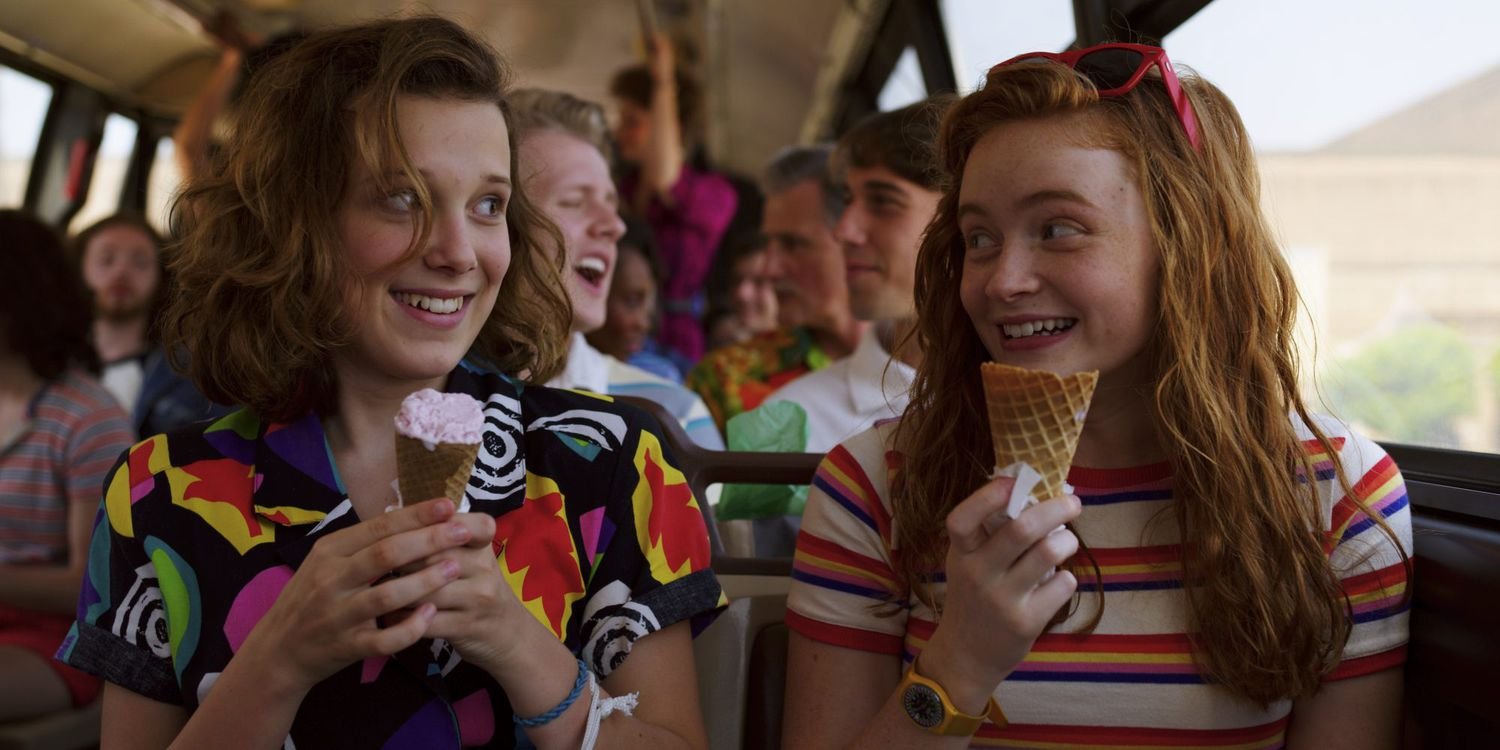
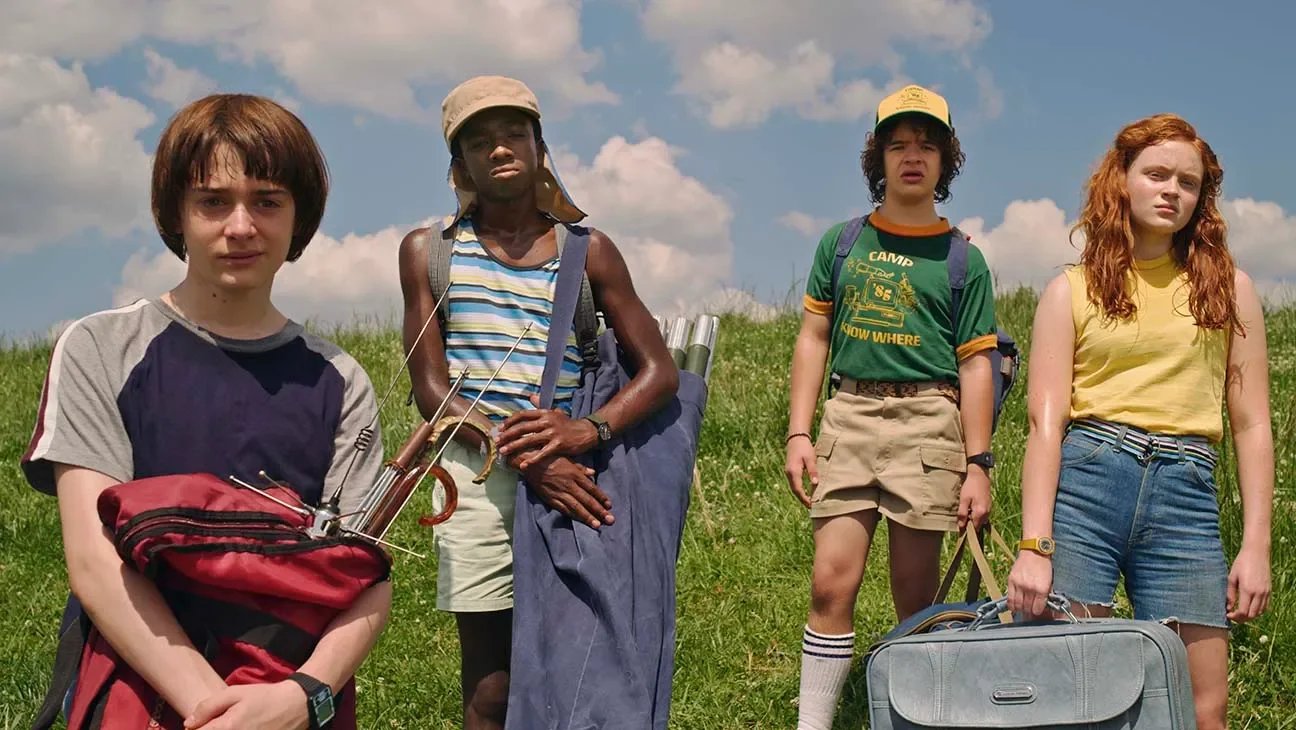
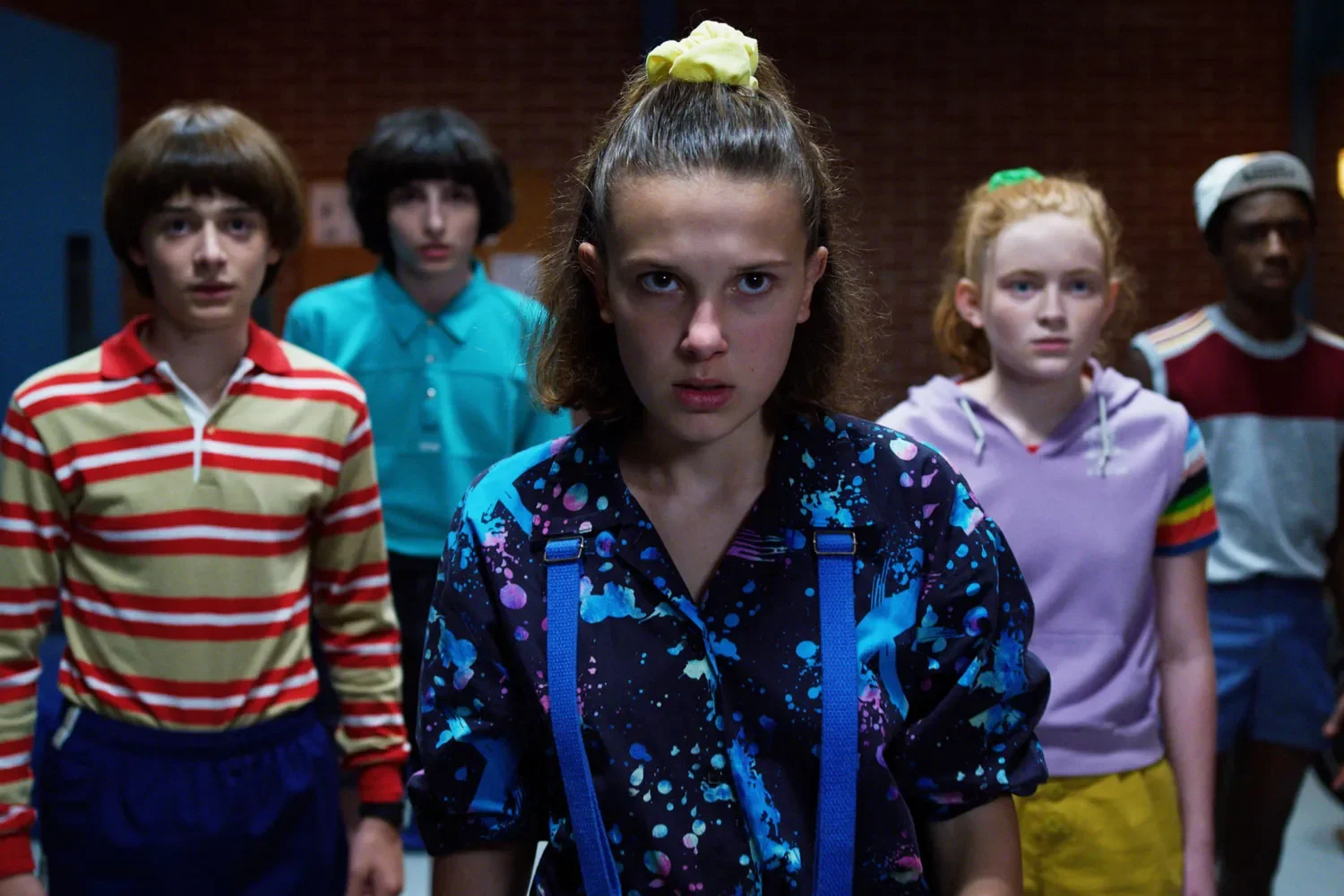
Season three photos via Netflix.
As is evident by the first three seasons, “Stranger Things” has always integrated music into its plot, not just for the sake of having a fun soundtrack, but to build a believable world and cast of memorable characters. Music acts as a bridge within the story for our characters, and for the audience, as music helps draw specific emotions out of us. For many younger “Stranger Things” viewers, the 1980s represent a magical, faraway time that their parents and generations before them speak of fondly, laughing at ridiculous fashion trends such as exaggerated shoulder pads and voluptuous perms, and gushing over flashy music videos that premiered on MTV. But with a curated playlist of the decade’s greatest hits, and plenty of more niche selections, “Stranger Things” fans — regardless of age — are swept up and sent back in time at the drop of the first needle. Not only has “Stranger Things” introduced younger generations to some of music history’s most talented artists, but those who haven’t had any direct experience living through the 1980s suddenly can feel as if they had. And, for the generations of viewers who carry their own memories of the decade, “Stranger Things” sends them back into a nostalgic landscape in which they embodied a wilder sense of reckless abandon and wonderment, which is only strengthened by the show’s use of time-period-appropriate music. Music is one of the show’s most powerful tools for allowing viewers to not only enter a different time period, but to enter Hawkins and fight inter-dimensional monsters. The music allows viewers to escape and forget their realities, but also ties us back to our individual realities and memories, much like how music becomes an emotional and practical weapon for the characters in the show. In “Stranger Things,” songs acting as a way for characters to literally escape death and send secret signals through Rockin’ Robin’s radio broadcast becomes a physical reminder of the role that music, and art in general, plays in our everyday lives.
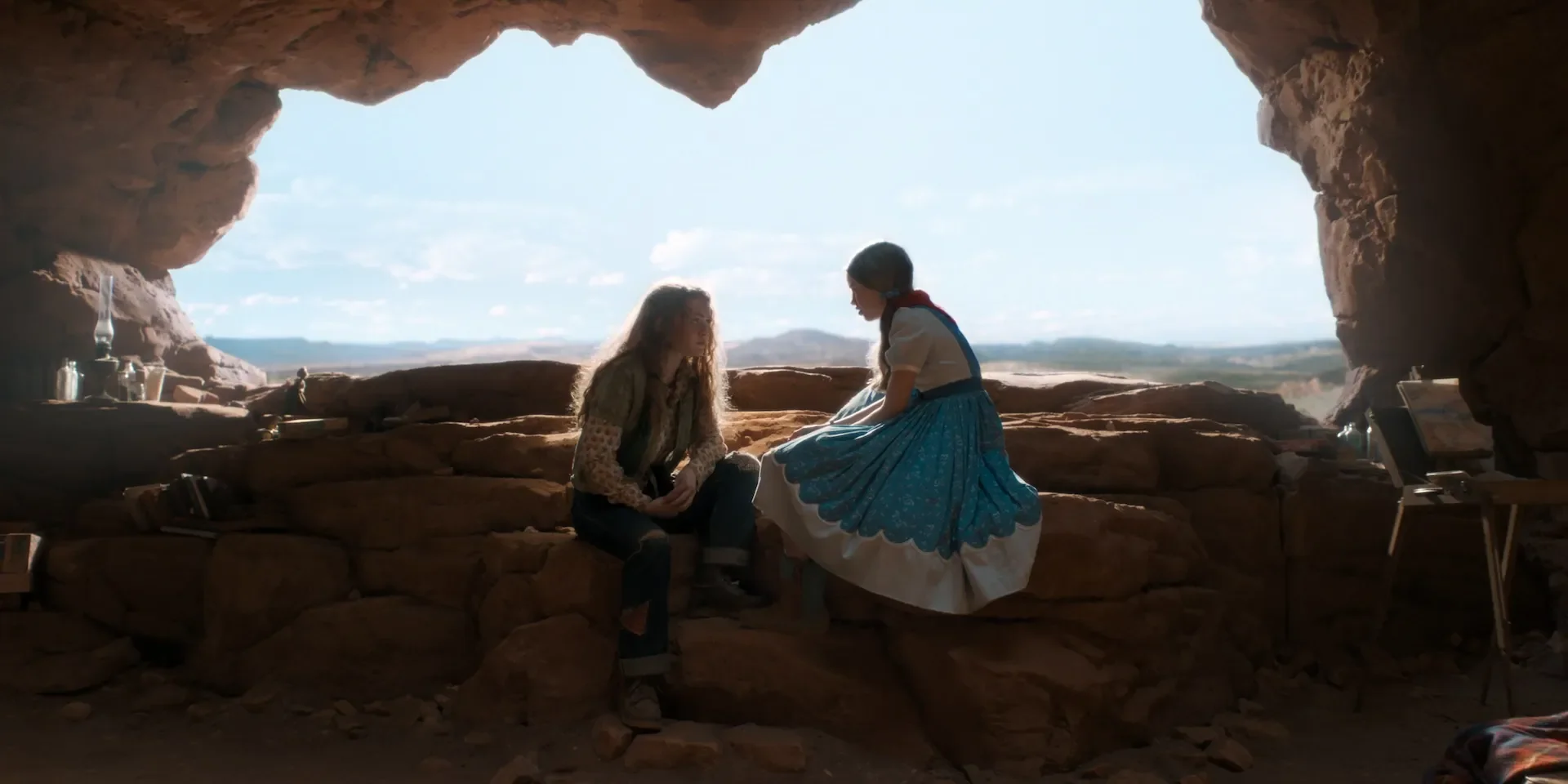
Season five photo via Netflix.
Music as escapism is nowhere near a revolutionary tactic when it comes to film and television. However, “Stranger Things” has always highlighted music’s inherent emotional and physical force over the human mind, and music is at its most powerful in the final two seasons. By seasons four and five, music not only supports the show’s emotional ups and downs, but becomes a device for necessary character development and is revealed to have been a weapon against evil the whole time. Take Max in season four, for example. While grieving the gruesome and violent death of her brother, Max finds a sense of peace in Kate Bush’s vivid and haunting “Running Up That Hill (A Deal With God),” which she plays on a loop on her Sony Walkman and quickly discovers is the key to avoiding our antagonist Vecna’s fatal curse. When Vecna takes hold of her in the critically acclaimed fourth episode of season four, “Dear Billy,” Bush’s iconic lilt drives her to race through a portal and escape Vecna, returning to her physical body and the warm embrace of her friends. In season five, as Max and Holly Wheeler are seconds away from fleeing Vecna’s twisted fantasy world, Max realizes that while Kate Bush surely inspired her motivation to escape, it was the memory of her friendships and relationship with Lucas, stirred by “Running Up That Hill (A Deal With God),” that allowed Max to avoid death in the first place. “Stranger Things” turns both the connection between music and memory and the idea of music as escapism into tools for overcoming physical battles. Just as music allows us to discover who we are, find our way back to the light, and escape reality, Max and Holly must navigate through Vecna’s dark maze of memories before they can physically escape and return to their human form.
“Running Up That Hill (A Deal With God)” by Kate Bush played in season four of “Stranger Things.”
Much like how “Running Up That Hill (A Deal With God)” keeps Max just barely out of Vecna’s reach and demonstrates music’s role in “Stranger Things” to keep characters safe and grounded to who they are, “Should I Stay or Should I Go” by The Clash is also used as an important plot device that creates a satisfying through line between seasons. The song serves a similar purpose for Will as he hides in the Upside Down during season one, fights the Mind Flayer in season two, and as he begins his journey towards self-acceptance, driving home one of the show’s main themes of finding connection through our differences. The track is first introduced to Will by his older brother Jonathan in season one during a flashback to their parents fighting. To drown out the noise, Jonathan puts on The Clash and encourages Will to discover his own tastes outside of societal pressure to conform to what is popular: “You shouldn't like things because people tell you you're supposed to. You should like what you like because you like it,” Jonathan tells Will. This remains an ongoing theme throughout the show’s run, as the main team, composed of Will, Mike, Lucas, and Dustin, is always teased for enjoying math, science, and all things Dungeons and Dragons. By the conclusion of the series, we see the characters fully embrace who they are and rebel against the status quo as Dustin calls out the division that toxic conformity creates in his valedictorian speech at their high school graduation. For Will, “Should I Stay or Should I Go” represents one of the first real connections he forms with himself, and inspires him to follow his own path, away from the judgement of middle school bullies and negativity. The song ties him to his creativity, wild imagination, family, and friendships, which are the elements that ultimately allow him, and the rest of the gang, to defeat Vecna and the Mind Flayer once and for all.
In season two, as the gang of heroes is fighting against time to keep the Mind Flayer from fully consuming Will, they turn to “Should I Stay or Should I Go” to keep Will tethered to reality and to buy enough time for Eleven to close the gate to the Upside Down. One by one, as the track plays in the Byers’ backyard shed, characters take turns recounting memories they share with Will. During season five, in a flashback to season one, we watch Will nervously sing “Should I Stay Or Should I Go” as he hides from a Demogorgon in the Upside Down. Even in an alternate dimension, Will uses the power of music and memory to remain brave in the face of danger. By sticking to what he enjoys, regardless of what others encourage, Will, with the help of his friends, eventually returns from the Upside Down and the Mind Flayer’s grasp. By season five, Will’s confidence, stirred by childhood memories of becoming friends with Mike and playing fantasy in his backyard, manifests into physical powers that save his friends from being killed by Demogorgons and Vecna.
“Should I Stay Or Should I Go” by The Clash played in season two of “Stranger Things.”
As promised by the Duffer Brothers, the series finale, titled “The Rightside Up,” delivers one of the most iconic needle drops of the entire show, or I should say two of the most iconic needle drops. Hopper and Murray quite literally time a bomb to explode and destroy the Upside Down once and for all with Prince’s 1984 album Purple Rain acting as the countdown. “When Doves Cry” ushers our heroes back to safety through the gate between the Upside Down and the real Hawkins, as a not-so-welcome home greets them on the rightside up, while “Purple Rain” sets forth an emotional collage of Mike and Eleven’s journey together, as Eleven traps him in her mind to stop him from running into the Upside Down after her and to wish him one final goodbye. The moment brings the themes of memory and nostalgia full circle for both the characters and the audience, as Eleven uses her powers to highlight the life-changing impact that Mike and his friends have had on her journey to freedom. Via her power to float in and out of people’s memories, her and Mike briefly relive their first interaction together and several other key points in their relationship throughout the years. “Purple Rain” emphasizes the bittersweet feelings shared among the entire team as they witness Eleven’s abrupt disappearance. However, much like the themes of the passionate and bellowing twist of vocals and instrumentals in the song, there is an echo of hope for a brighter future, despite the pain and heartbreak in the moment. Not only does “Purple Rain” reflect the shift in dynamics that the characters will experience after Eleven is gone, but it also brings a sense of comfort to audiences who have been watching “Stranger Things” for a decade, and are experiencing both devastation and gratitude for this chapter of their lives coming to a close.
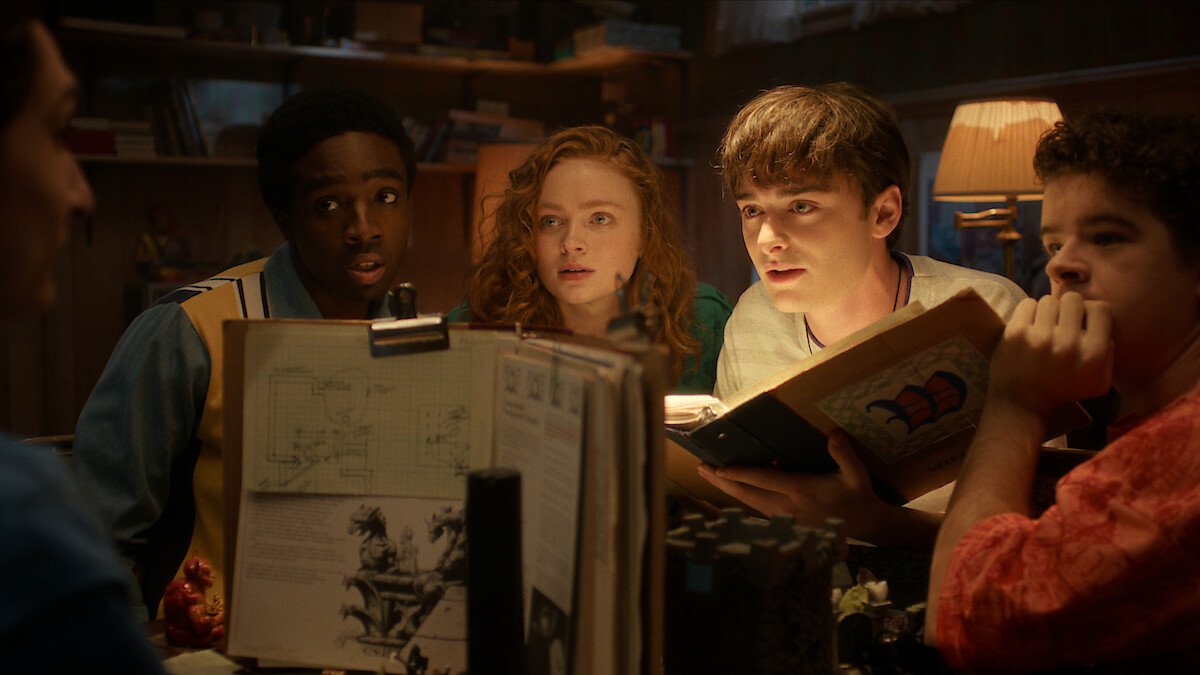
Season five photo via Netflix.
Music and memory often, if not always, go hand in hand, regardless of whether we are aware of it or not. Music stirs up feelings we would not recognize otherwise, reminding us of specific periods and people in our lives, offering us comfort in sad times, and allowing us to relive different versions of ourselves over and over again. What began as a way for “Stranger Things” to pull audiences into its world, became a key element in the show’s success and the strong emotional impact the series has had on people’s lives. Wether it was the themes of friendship and community that kept audiences coming back, or the racing plot lines that brought us through multiple dimensions and Music takes us on some wild journeys, but it is music that allows us to find the way back to ourselves. Or as our favorite zoomer Max said herself, “Music has a way of finding you, even in the darkest of places.”
To reminisce on the music that has helped make “Stranger Things” a cultural phenomenon, we curated a playlist of the show’s greatest rock-heavy hits. Let yourself listen freely and be sure to turn the volume up, just as the artists intended, and allow the music to take you on a journey upside down and rightside up through a world of your own creation. Over and out.
