
As the mercury rises and the first chords of festival season begin to echo in the distance, a familiar cinematic ghost begins to haunt the playlists of music lovers everywhere. Cameron Crowe’s Almost Famous isn’t just a movie; it is a seasonal mood. With the warm weather around the corner, there is no better time to revisit how this semi-autobiographical masterpiece fundamentally reshaped the music industry, inspired a generation of rock journalists, and romanticized the "Band Aid" lifestyle for a modern era.
At its core, Almost Famous is a love letter to music journalism. Through the eyes of the young, wide-eyed William Miller, we see the transition from being a passive listener to an active participant in the narrative of rock and roll. The film arrived at a time when the industry was shifting toward digital consumption, yet it reminded us that the soul of music lies in the “uncool” sincerity of a well-crafted review.
For writers, the film served as a manifesto. It taught us that to write about music is to capture a feeling — to be "honest and unmerciful," as Lester Bangs famously advises in the film. It inspired a wave of writers who sought to move beyond mere critique, aiming instead to translate the electricity of a live performance into the written word.
For fans, the influence of Almost Famous is most palpable in the front row of a concert. The film immortalized the Stillwater experience: the sweat, the tension, the communal “Tiny Dancer” sing-alongs on a tour bus, and the transcendent moment when a guitar riff makes the rest of the world disappear.
In an age of TikTok clips and live-streamed sets, the movie remains a powerful argument for the physical presence of live music. It champions the idea that the true industry isn't found in a boardroom, but in the vibrations of a speaker cabinet and the shared breath of a crowd. It gave fans permission to be “obsessed,” turning the act of following a band into a legitimate pilgrimage.
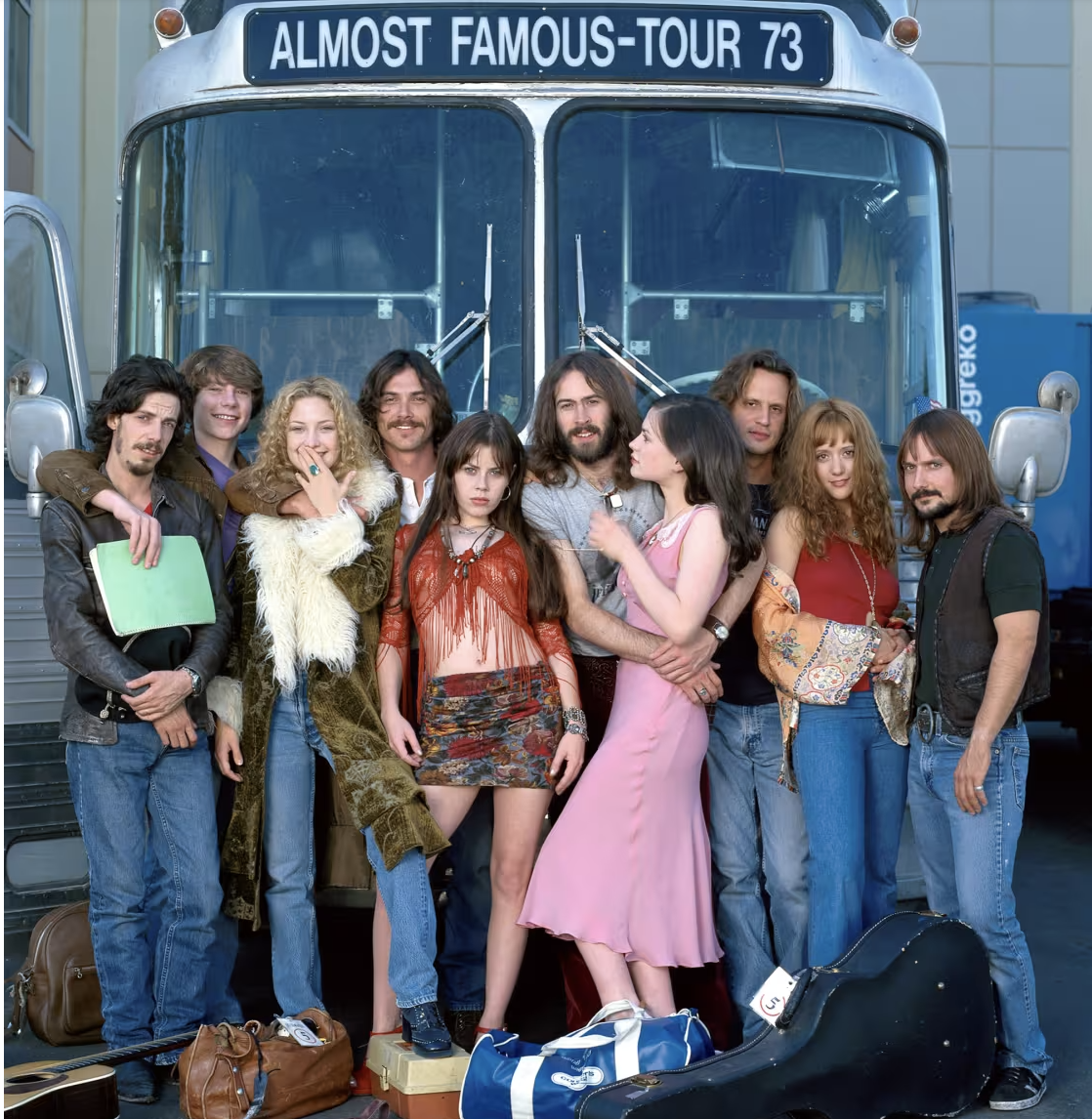
The cast of Almost Famous
Perhaps the most misunderstood legacy of the film is the concept of the “Band Aide.” Unlike the derogatory term “groupie,” Penny Lane and her crew redefined the role as one of emotional stewardship. They weren't there for the fame; they were there for the music and the people who made it.
In this day and age, being a “Band Aide” has evolved into a sophisticated form of fandom. It’s seen in the dedicated communities who travel across state lines for a three-night run, the archivists who keep the flame of indie bands alive, and the fans who provide the emotional infrastructure that artists need to survive the grueling reality of modern touring. To be a Band Aide today is to be a protector of the “vibe” — to love the music so much that you want to be the person making sure the artist feels seen and supported.
As we step into the sun-drenched months of outdoor stages and late-night drives, the spirit of Almost Famous feels more relevant than ever. It reminds us that while the industry changes, the human connection to a melody remains constant. Whether you are holding a notebook, a camera, or just a cold drink in the middle of a mosh pit, you are part of that lineage.
So, as the lights go down on the first show of your summer, remember Penny Lane’s wisdom: “It's all happening.” If you're there for the right reasons, it always is.
