Cameron Winter Trades Volume for Vulnerability at Rockefeller Chapel in Chicago
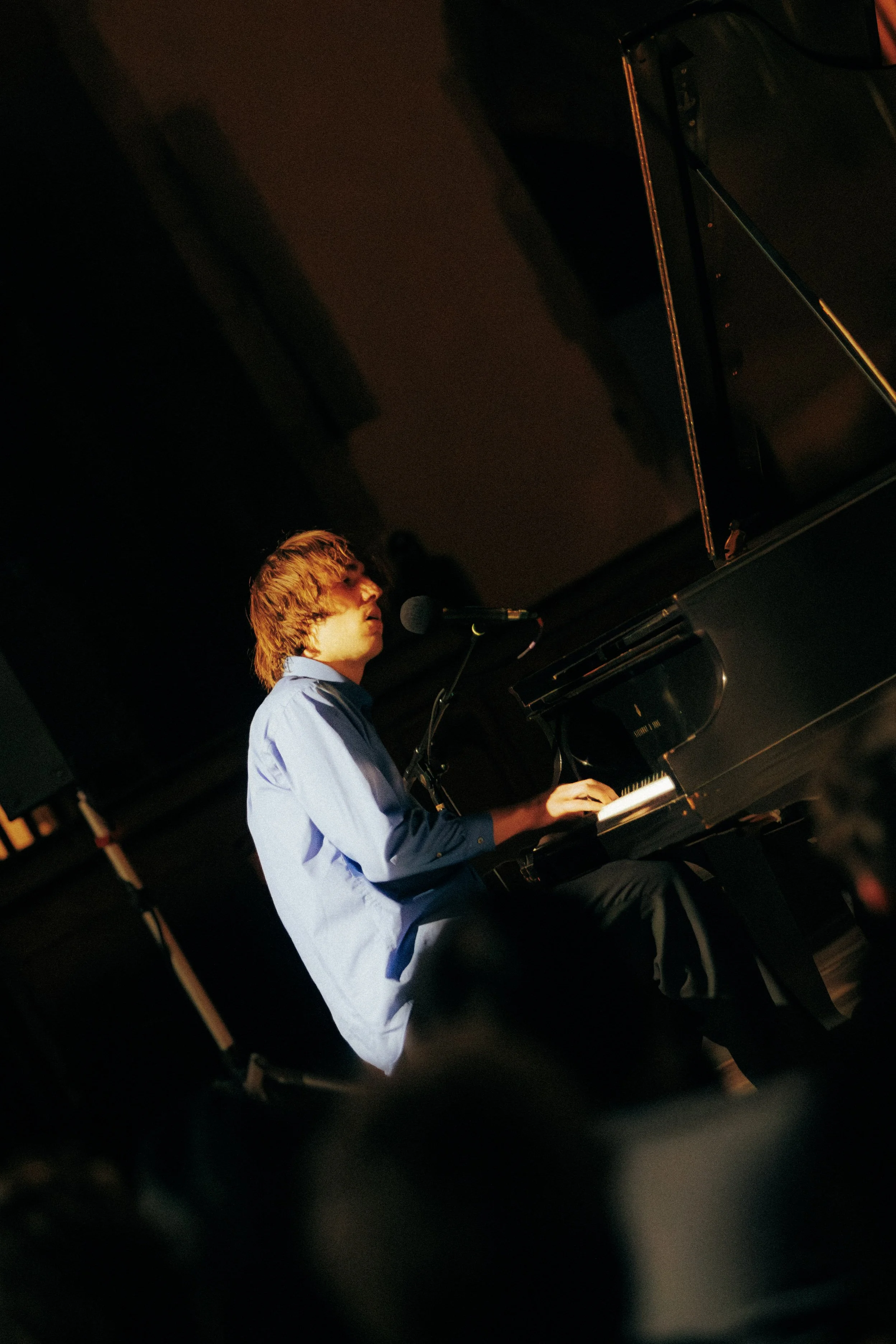
Photo by Sloane Johnson.
For the most part, you’ll find Cameron Winter as the frontman of Geese, an electric young rock band that spent two nights tearing through Chicago’s Thalia Hall in October. That part of Cameron Winter thrives in volume and forward momentum. But for a moment in December, all of that is pushed to the side and the other face of the Cameron Winter coin is unveiled.
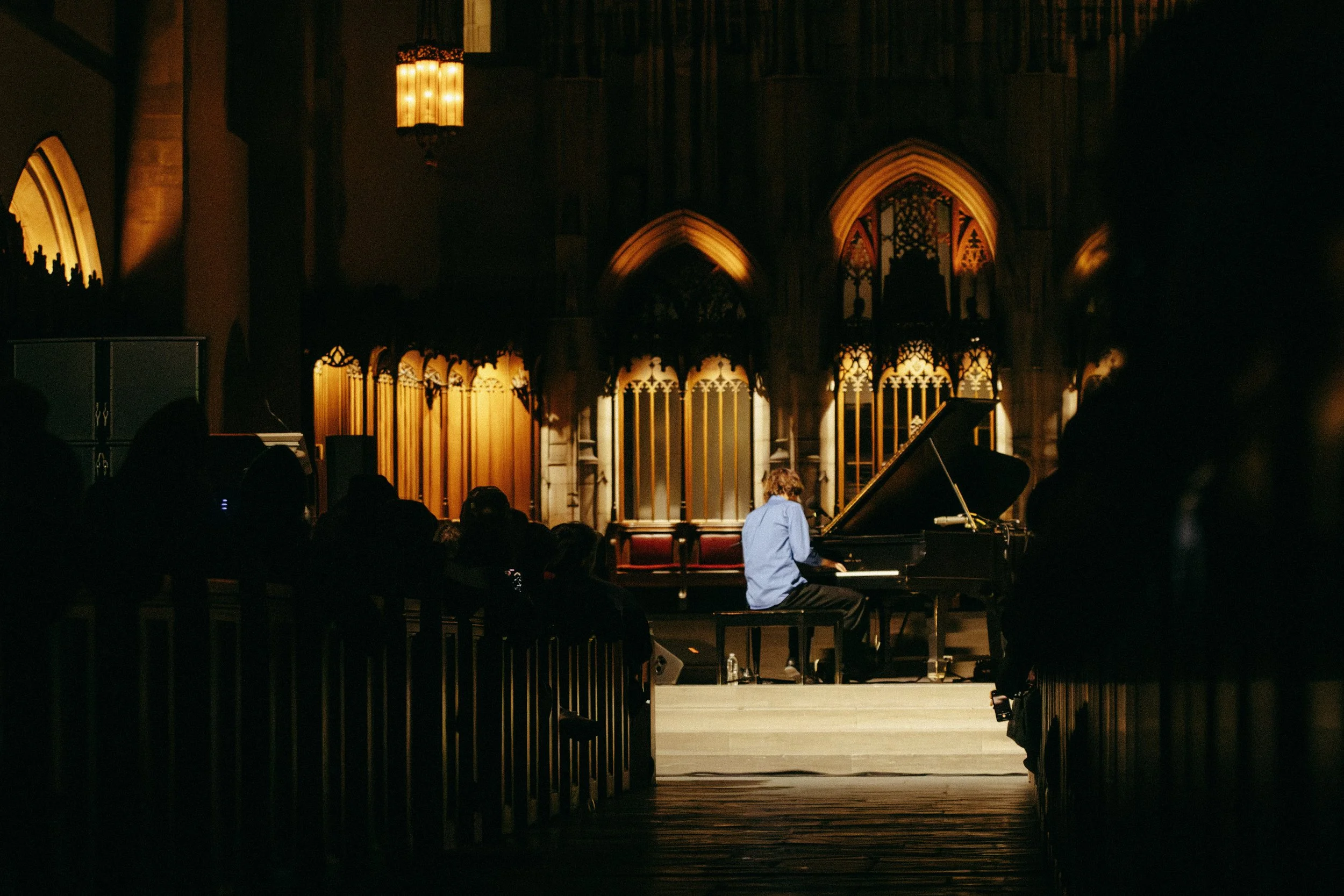
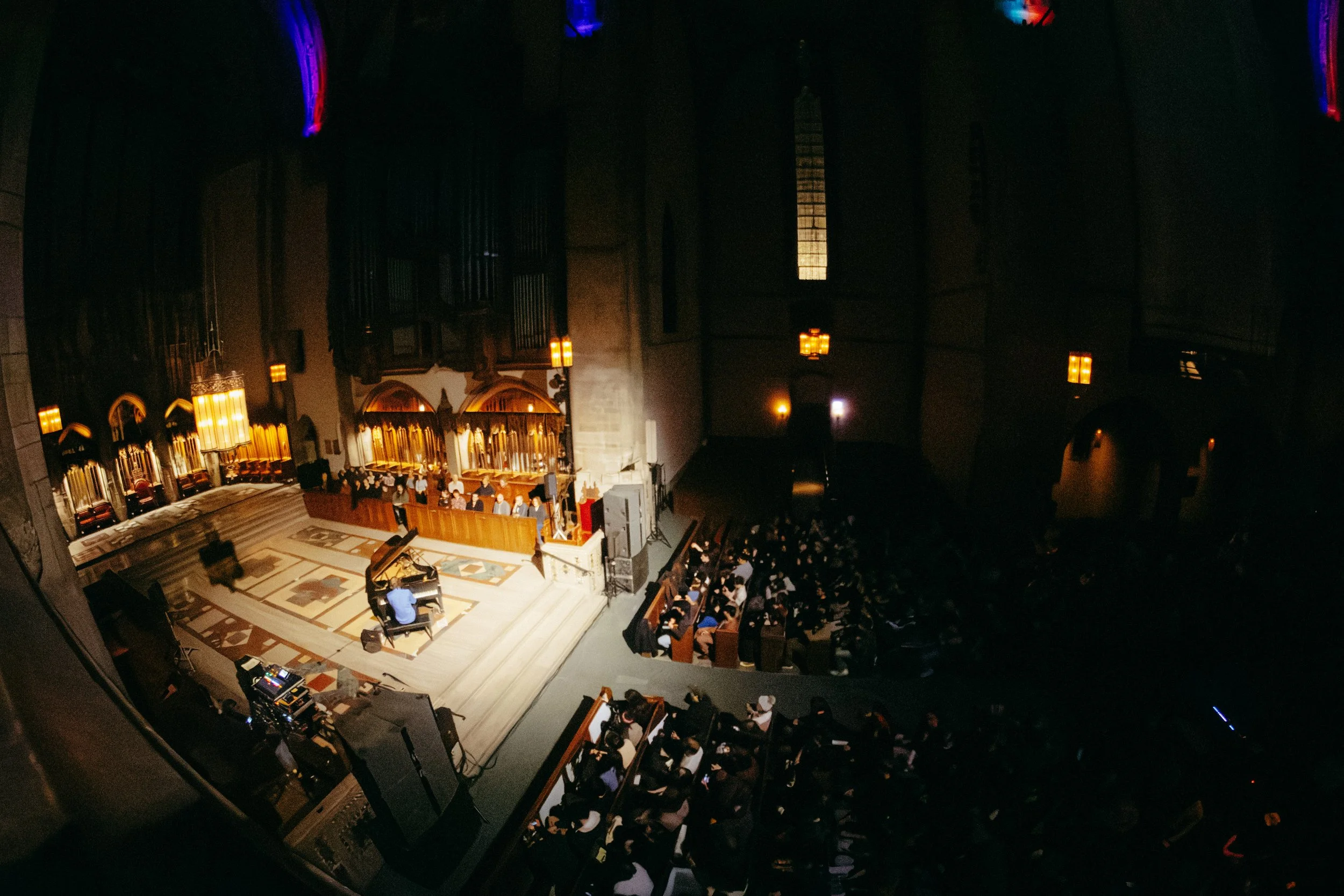
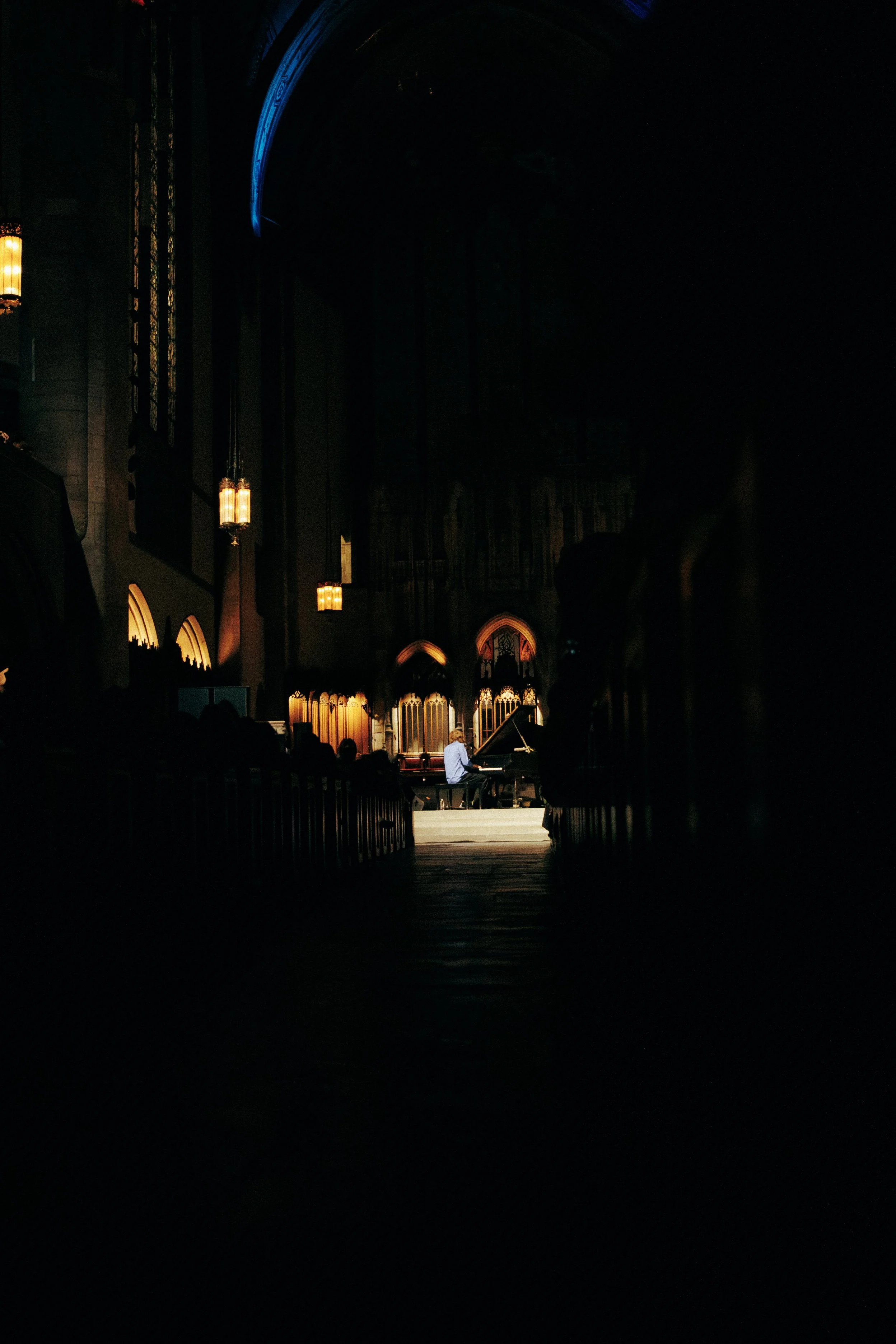
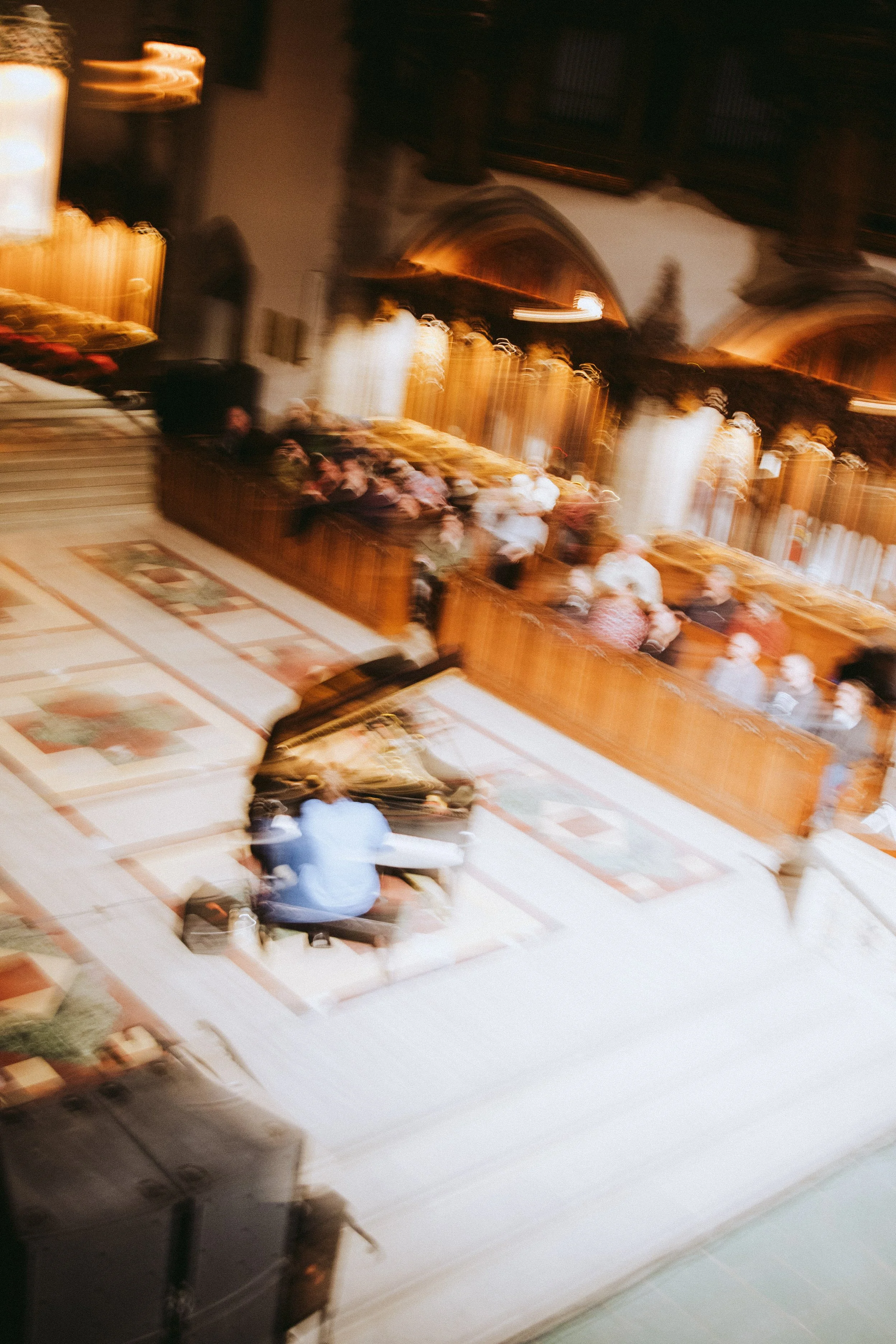
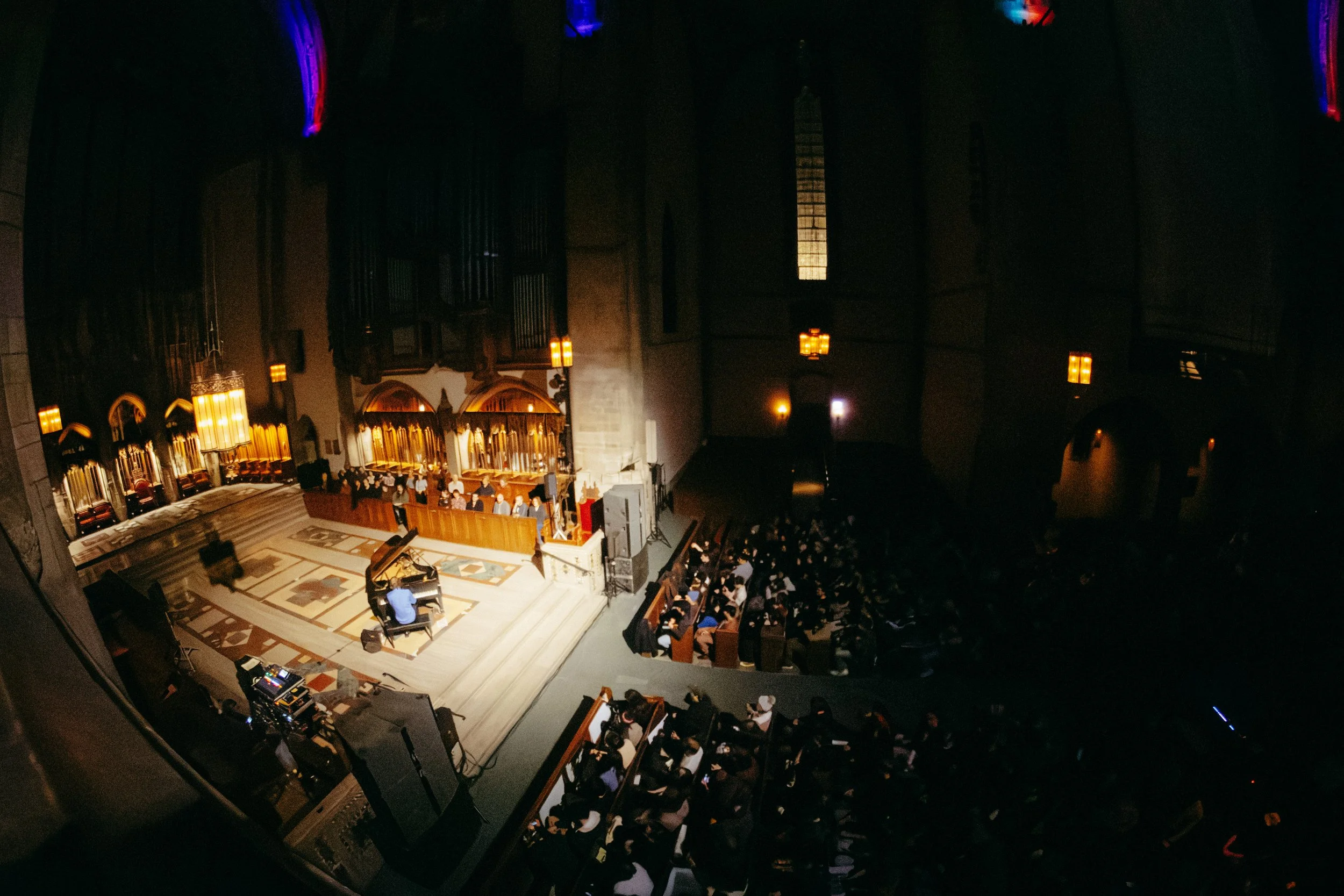
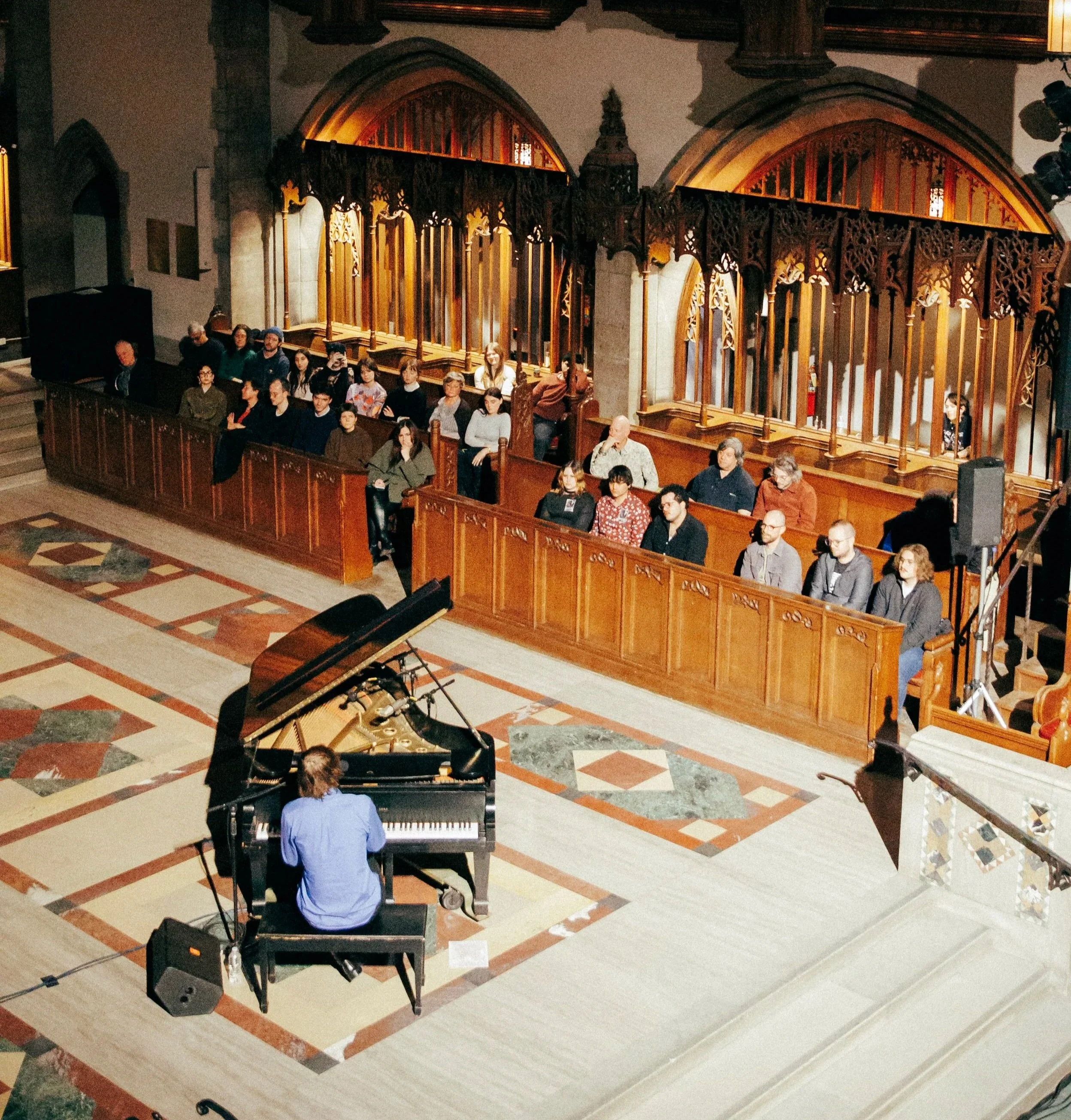
At University of Chicago’s Rockefeller Chapel, people gather for the first of two of the sold-out shows, one he’ll repeat the next night. It's suggested intimacy is due to the minimal production, the ultra-focused atmosphere and the dazzling echo of a sacred church. But over the course of two nights, more than 3,000 people will pass through the pews, a gentle reminder that this intimacy only exists because people want in.
Cameron’s debut solo album, Heavy Metal, released in December of 2024, is a dutiful mix of brightness and abrasion, filled with moments that bruise easily. The setlist pulls from that record alongside unreleased tracks, all seemingly held together by a consistent preoccupation with faith and the uncomfortable space between belief and doubt.
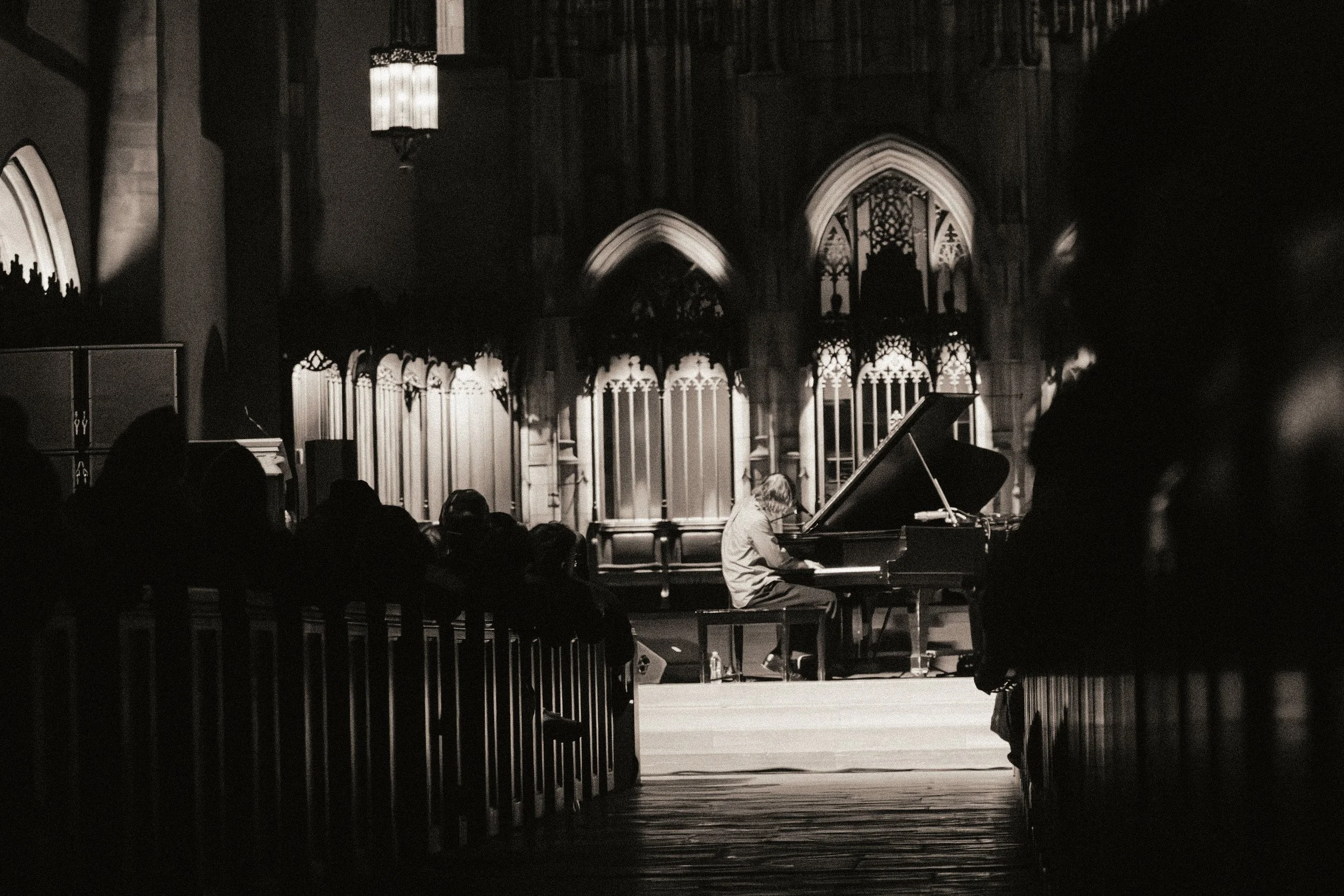
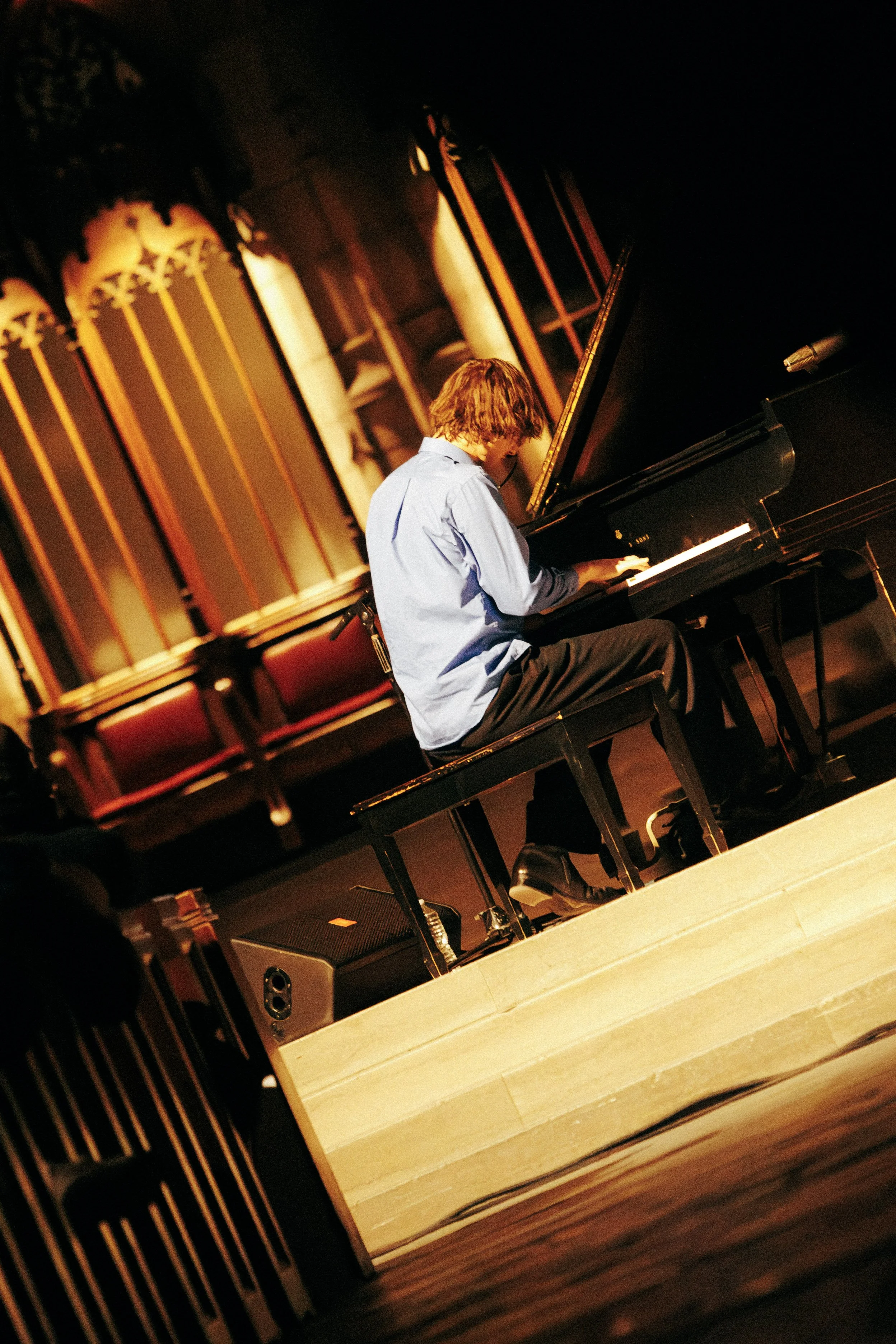
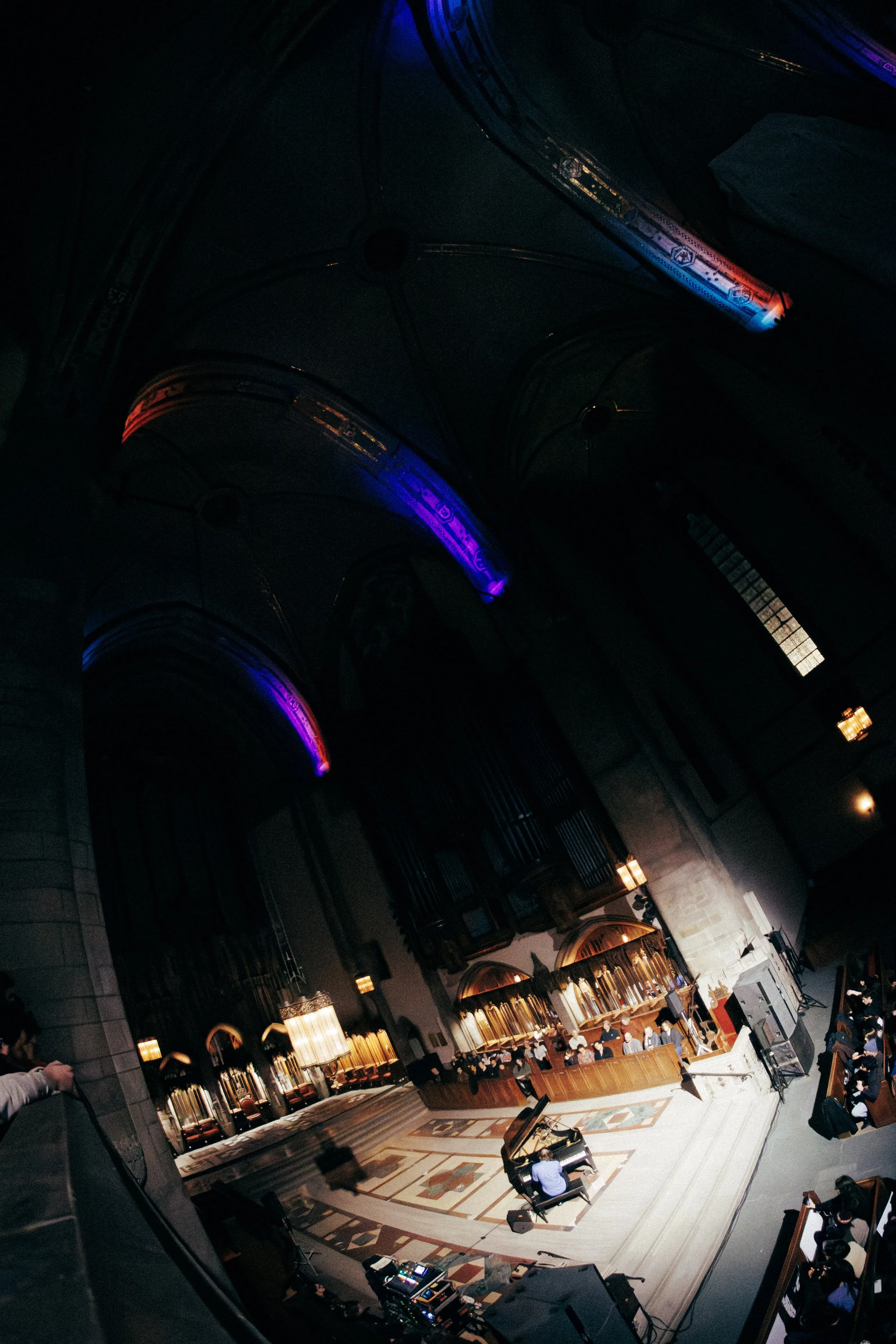
He’s been deemed a visionary for his venturesome musical production and his malleable vocal style, but here, under high ceilings and stained glass, the vision takes on its true physical form. He’ll arrive on the stage with no velocity, just a scratch of his head, a small wave to the audience.
Most of the weight in his songs rest on a consistent interrogation of himself, but also in a higher power. Minimal words are spoken, but over the next hour he’ll go on to sing, “It’s too bad what happened to Jesus, but Friday was alright” in the unreleased “Emperor XII In Shades” or drips sarcasm in “$0” with “God is real, I wouldn’t joke about this/ I'm not kidding this time.” The real prodding isn’t in the face of questioning God, it’s the refusal to pretend certainty. It’s tentative and exposed honesty in a chapel nonetheless, the very place that’s meant to hold that heaviness.
The space falls completely silent at times, when the sustain of the grand piano fades, people hold their breath or suppress a cough as not to fracture the brutal serenity in “Drinking Age.” Elsewhere, a wave of quiet laughter echoes when he’s holding a single piano key for far too long, or scratches his bench across the floor so it makes a horrendously intentional nails-on-a-chalkboard screech. It’s a recognition of awkwardness, but moreso a dare to the audience to sit among it.
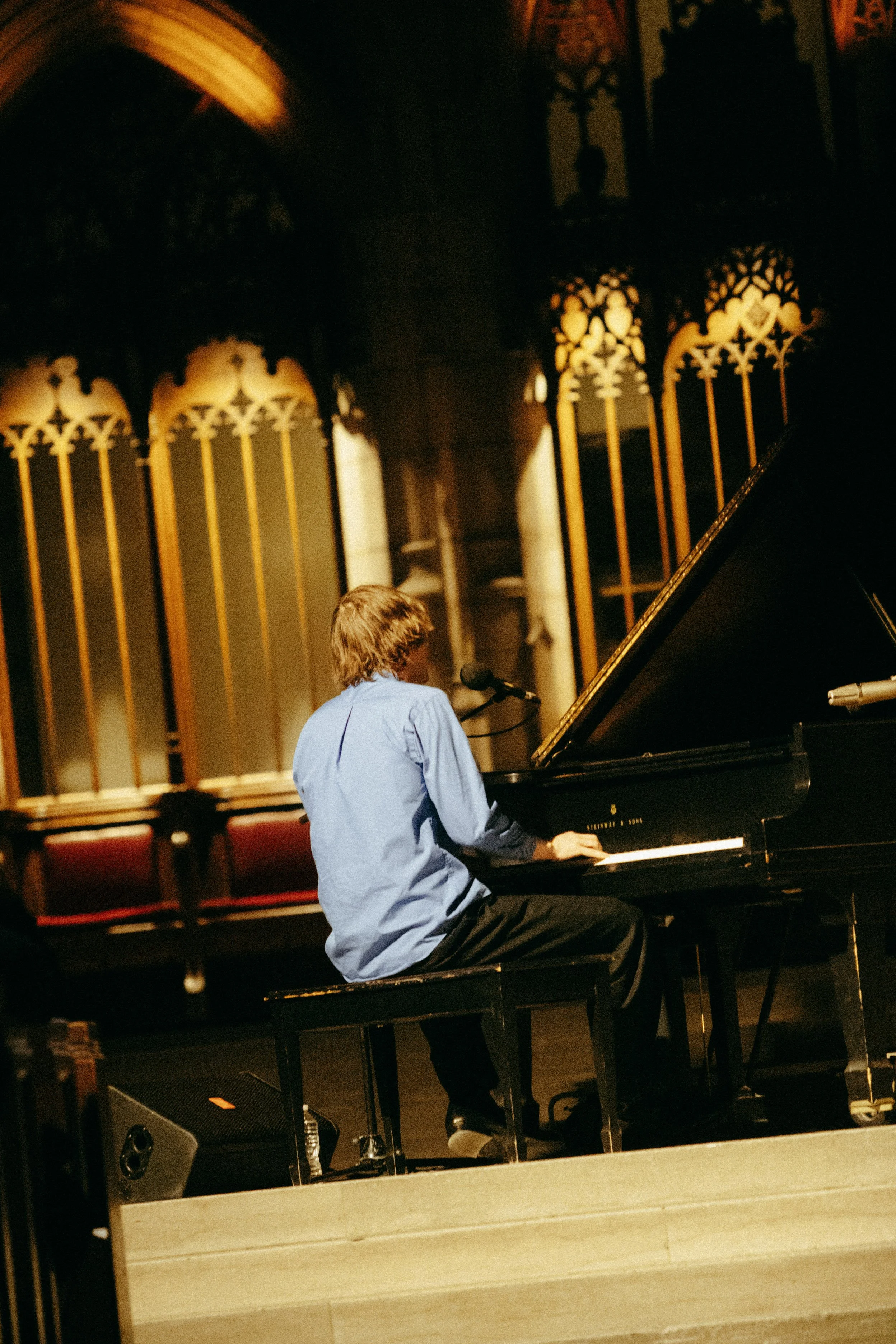
Not all of the tunes will be quite as painstaking. There are flashes of bright warmth like his rendition of “Love Takes Miles,” which is stripped of its original strings and drums, and “Nina + Field of Cops,” where the grand piano he sits in front of has its moment in the sun.
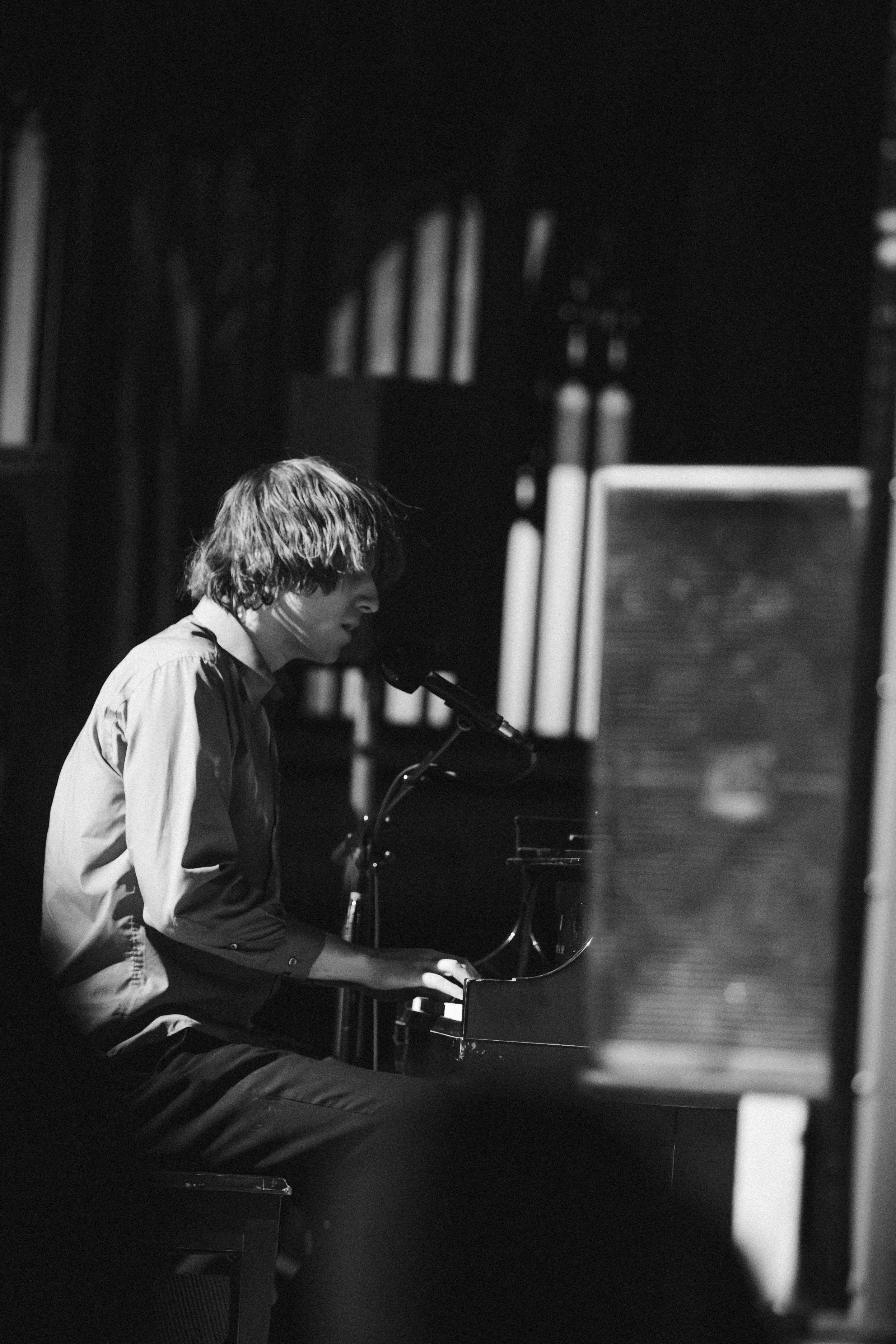
But there are some deep cuts, like in the unreleased “If You Turn Back Now,” where he sings, “You’re trying to know me but you won’t/ My heart is for those who leave me alone.” A painful sentiment of avoidance on a large scale, and it’s those moments that he holds the notes close. He’ll lean into the piano, as near as one could possibly get. He’ll bump into the microphone with his head multiple times to the point where you’re not sure what’s accidental. It’s uncomfortable. It’s revealing. But just as in-depth as he intends.
Cameron Winter will be touring internationally in 2026. Get tickets here.
Photos by Sloane Johnson.