
Lost in the Rhythm of Time: Temples’ New Album ‘BLISS’
Temples is back, three years in the making of their newest project, BLISS. The album as a whole is challenging in the best way, and showcases a collection of the band's strongest work yet. The production swerves just outside the yellow double line when driving lead singer and guitarist James Bagshaw’s vocals in an immersive, electronic way, but it’s perfect for all the points the lyricism tries to make. From its opening moments, BLISS establishes itself as something strange, hypnotic, and slightly unsettling. Across the album, the band blends alternative rock and hazy electronic synths into a collection of songs that could be heard in a club or a fever dream. It's an album built on movement, yet one haunted by the passage of time.
Upon first listen, you are transported into a world where time has stopped and you are floating in a sea of haze and euphoria. It’s like looking at a reflection of yourself in water. That strange moment that feels like hours, where all your deepest, darkest secrets seem to rise up to the surface and stare right back at you. That’s exactly how to describe BLISS.
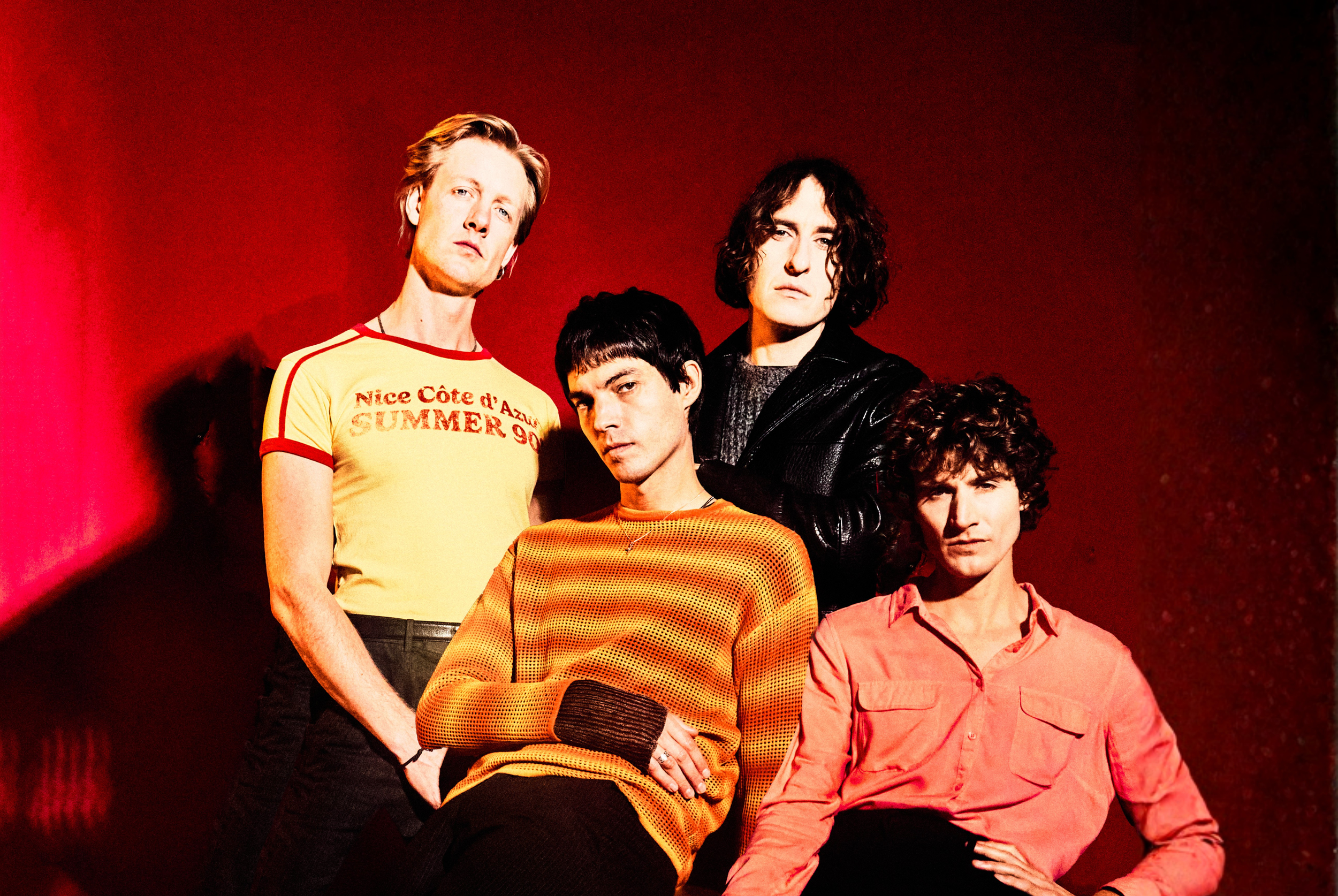
Band members James Bagshaw, Thomas Walmsley, Adam Smith, and Rens Ottink
Filled with fuzzy guitar riffs and an irresistible sense of rhythm, “Jet Stream Heart” serves as the perfect introduction to the record, immediately capturing the sonic atmosphere. From the moment the opening riff kicks in, the track feels both exhilarating and haunting. It's electric and impossible to shake, lingering in your head long after the song ends. There's a cinematic quality to it as well—like the soundtrack to a late-night robbery. Every element of the song feels charged with momentum, pulling the listener deeper into its hypnotic groove.
The lyrics only amplify that feeling. Lines like "Don't back down to the rhythm / Don't back down to the start / Ground control to deliver / Sound waves straight up to the heart" read like a call to surrender yourself completely to the music. Beneath the song's adrenaline-fueled exterior, however, lies a subtle sense of reflection. "Because the night came down from far away / It was a lifetime lost in yesterdays" brings forth a reminder of how quickly time can pass, often without realization. While the song thrives on movement and energy, there's an underlying awareness that every moment is fleeting. It's this balance between euphoria and unease that make the song such a compelling opener and one of the strongest parts of the album.
“Revelations” is easily the most unconventional track on BLISS and one of its most divisive. Opening with a haunting Gregorian chant, the song initially feels unsettling and almost out of place, creating an atmosphere that is eerie, mysterious, and difficult to fully grasp. Just when it seems committed to that direction, the band transitions into a Euro-dance moment that feels both bizarre and strangely captivating. The contrast shouldn't work, yet somehow it does, transforming the song into what can only be described as a dance floor sermon.
“Blue Flame” slows the album down for just a moment. Centered around the gradual fading of a relationship, the song captures that uneasy space between holding on and letting go. The line "We live alone together / Separate lives" illustrates how people can drift apart long before they actually say goodbye. Backed by crashing cymbals and a strong alt-rock foundation, "Blue Flame" burns quietly rather than explosively, offering one of the album's more vulnerable moments before shifting back into motion.
Songs like “Megalith” and “Vendetta” pair driving rhythms with sharp, memorable guitar work. Both tracks open with commanding riffs that immediately pull the listener into the groove, reinforcing the album's danceable energy while maintaining its moody atmosphere. “Megalith” is anchored by rough, forceful guitar strokes that blend '90s alternative rock with shimmering Euro-dance influences, emphasizing Temples’ signature psychedelic sound. Beneath it lies a meditation on staying the same, with the line "Can't help myself / I'm set in stone" capturing the realization that years of repetition have hardened into something difficult to escape. “Vendetta” approaches the past from a different angle, channeling its energy into confrontation rather than resignation. Its infectious riff and relentless momentum give the song a sense of pursuit, as if it's chasing down old grudges through flashing lights. Despite their different perspectives, both songs explore the tension between being trapped by the past and finding a way to move beyond it.
“Fantasy Realm” acts as the album's final reflection, one last dreamlike statement. The record grapples with the feeling of time slipping away, whether through fading relationships or the realization that life moves faster than we'd like it to. Here, however, that anxiety gives way to acceptance. "I'll follow you down to the end of time / Where the spirits you'll keep will surrender in light" sounds less like a fear of the future and more like an embrace of it, imagining a place beyond the pressures and limitations of everyday life. The song's atmosphere evokes a longing for something greater—an alternate universe where time no longer controls us and every fleeting moment can be held onto forever. Instrumentally, it serves as a fitting conclusion, allowing the album to drift away with a sense of peace and wonder rather than uncertainty, bringing BLISS to a thoughtful and satisfying close.
