James Eichman On His Debut Album, St. Catherine Street
And the people & places that inspired the album.
Nashville-based artist and multi-instrumentalist, James Eichman, has a diverse musical background from performing with other musicians such as Annie DiRusso, Emma Ogier, and Hannah Cole, all of whom have inspired and propelled him towards writing and performing his own music. After a string of singles and EPs released over the last two years, Eichman is gearing up to unveil his debut album, St. Catherine Street, at the end of the summer.
The album’s first single, “4am,” serves as an introduction to the forthcoming project, drawing listeners in with simple acoustic strumming, steady drums, and captivating vocals that carry from the opening to the closing lines. Following in the same vein, “Paper Plate” arrived as the next single.
St. Catherine Street is full of introspective, inquisitive lyrics and soft, melodic instrumentation. Eichman follows a highly individualized lyrical process, with each song driven by a commitment to the craft of narrative storytelling. His music explores fictitious tales supported by masterful acoustic guitar melodies. But at the heart of every song, it’s James.
Could you just give a quick overview of your musical background, especially for people who are not familiar with who you are as an artist?
Yeah, for sure. I started playing guitar when I was, I don't know, 14 maybe, and started writing songs around a similar time. And then for a couple years in Nashville I was just sort of playing in bands as a guitar player. I wasn't doing songwriting stuff and being the front guy. I was mostly in a support role in a bunch of different bands and continued along that route. But in the last year or so I've transitioned into pursuing my solo project and made a record. It's still all a pretty new thing. I'm very young on my journey.
Your debut album is coming out this summer. Could you start by talking a little bit about the concept of the creation of this album?
I started writing the record, I don't know, it's been honestly in total probably two years. At first I wasn't writing for the record, I was just writing and had a couple songs that took straight up an entire year to finish. And then I decided that I wanted to make a record. It was a thing I'd never done by myself and I was like, "I'm going to do this." That was maybe, I guess, in the fall of last year. I was like, "I'm going to finish writing it by January. By the end of the year, I'm going to have an entire record written." So I grinded and wrote three or four more songs. I had a bunch of tunes that made their way onto the record just because it's my first project, and I had old songs that I was like, "Oh, these are cool, I've never done anything with these," I finished them up, threw them on there, and then also wrote some more to fill it out.
Which songs were older and which were newer?
So “Daisy,” that one took a really, really long time to write. I would write a verse or something, and then a month later I would come back and write another word. Then two months later, I would come back and write maybe a chorus. It was literally like I was chipping away over the course of an entire fucking year, I swear to God. When I finished the song, I looked back and it was like, “Oh my God, this original voice memo was an exact year ago.” So that one's pretty old.
And then the first tune, “If I Talk Loud Enough,” was also an older one. I was going back through old songs and I was like, "Holy fuck, I forgot about this." It had just gotten lost in the depths of my voice memos and notes and stuff. I finished it up and changed a few things. So there was a lot of editing after the fact. When I knew I wanted it to be a record, I was going back in with the lens of knowing that it would all be a project working together. I was editing stuff to make it all fit. And then over the course of that process I kind of feel like I discovered some loose themes throughout the lyrics of the entire project.
Are the cover images for the released songs such as “4am” or “Paper Plate” going to hint at anything regarding the album?
They're all paintings from my uncle. My uncle's a really amazing painter and he has been really gracious in letting me use some of his work for my album artwork. And the way I'm thinking about them is they're just kind of snapshots of what the songs look like and feel like in my mind. He has so much work. His name is Noah Saterstrom. The music feels contextualized.
In “I Am Not the Person That You Knew,” some of the lyrics read, “When I see you don't think I’ll care, I can make do most anywhere.” Lyrically for this album, what was that process like of writing these songs?
I mean, some of them came quicker than others for sure. Like I said, “Daisy” was this big long thing, but “I Am Not the Person That You Knew” was pretty instant actually. I just sat down and was like, "Let me just write some bullshit, some stupid shit." I showed it to my roommate and he was like, "It's kind of cool." And I was like, "All right, yeah." I didn't really think anything about the song for a while, and then I came back across it and I was like, "Man, it's actually pretty good." So that one just happened.
There's often a thing that happens with me where if I don't think something's good when I'm writing it, I can finish it really easily. But if I think it's good or if I think it has potential, I get so stressed out that all my lyrics aren't going to be good enough or something. There's a little bit of creative magic that dies once you know that you're onto something cool.
Usually the way I work is I start with an initial line and that will just be a result of a bunch of just gibberish that I'll say within the melody. I'll just be trying stuff out. I'll land on a first line and then that will kind of be the inspiration for the rest of the story. And I really rely on that first line because I don't really pull from my own life directly too much in my writing. I don't have any idea what I'm going to write about when I start a song. And then the first line is like that inciting thing that lets me know where I should go with the rest of the line.
This is so interesting because every song is kind of like its own fiction narrative for you. How did you come up with that?
I'm just like, “what could this first line mean?”
Maybe you have an untapped career as a fiction writer.
I mean I used to write little books when I was a little kid, but I don't know. For me it's more fun to come up with fiction than write from my own life. You can do anything when you're writing fiction; you can make whatever world you want and then you automatically end up instilling your own emotion from your real life into that fiction. So that's what makes it real. Even though it's like these characters maybe don't exist in the real world, they still are very real because they all actually are me. They're just like fictionalized versions of a part of myself or something like that.
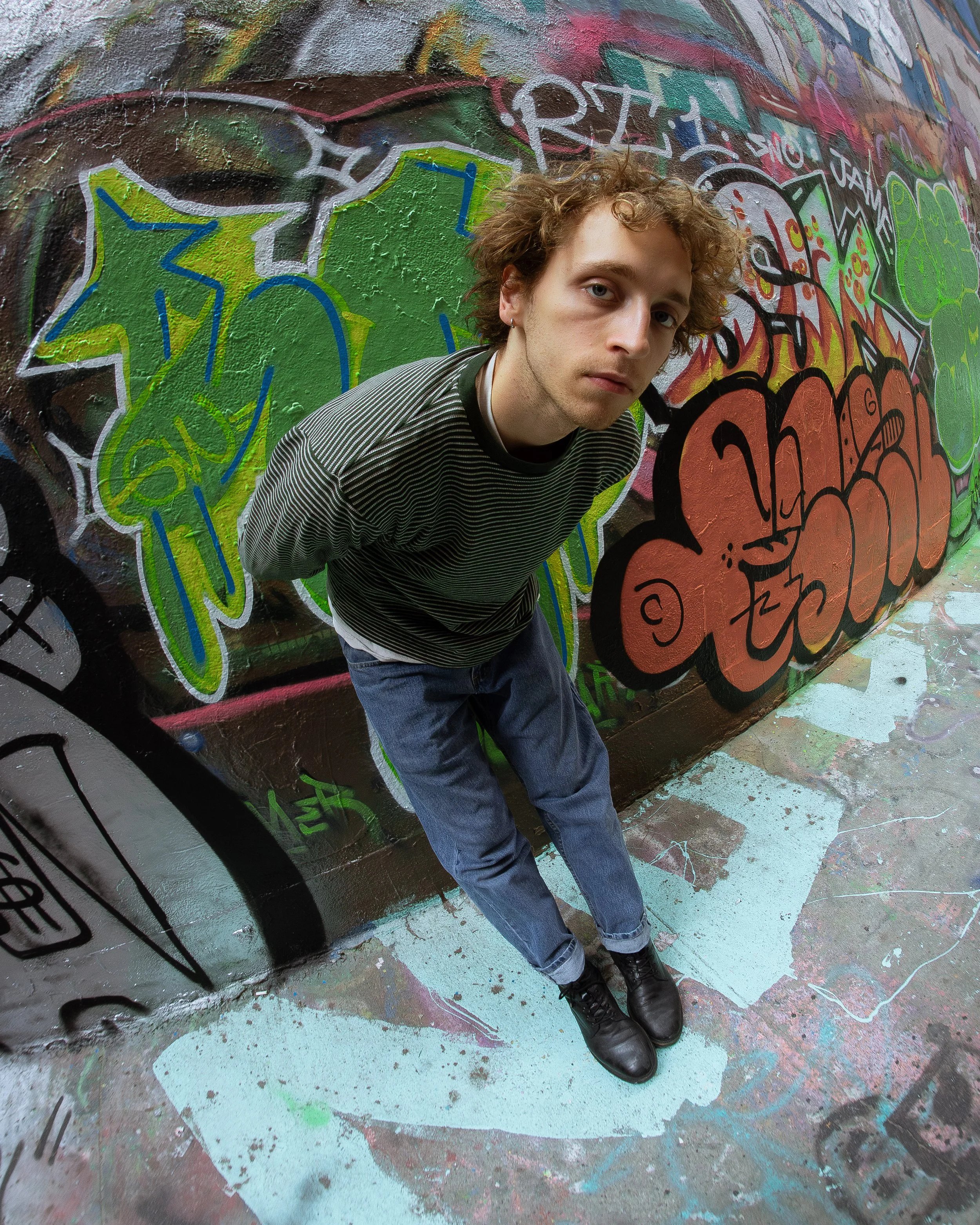
“On the Walls of My Old Bedroom,” is right in the middle of the album. It's the most upbeat song tempo-wise and the perfect opening for side B. It really hooks you right in there. I was curious structurally about the narrative storytelling. How did the track listing for this album differ from your previous releases?
I mean, it's different because it's just way more songs. Well, actually, funnily enough, my first EP that is out wasn't actually an EP. It was just a bunch of singles that I compiled into an EP after the fact. So there's literally no thought behind what the listing is; it's just the order that they came out. But with St. Catherine Street, I was totally laboring over it. Me and my producer, Josef Kuhn, were really trying to figure out what's going to be the best energy flow. And I was going back and forth, and it feels like a story when you're listening to the record. Basically the short answer is there was a lot more thought that went into the record. I was way more intentional with the listing.
Were there major switches that happened?
Yeah, actually, “On the Walls of My Old Bedroom” was initially going to be I think the second track because it was super upbeat. I was like, “Let's grab the audience's attention.” But then the ending is really emotional in my head. And so I was like, "Man, I can't blow the bag that early." It feels like it belongs farther towards the end of the record than towards the beginning. It was honestly a lot of just feel-based, like, "Oh man, this one really feels like an opener." I always knew that “If I Talk Loud Enough” would be the opener. I always knew that “You and I Both Know” would be the closer.
“St. Catherine Street” is the namesake song of the album. What was the inspiration behind that? Why did you choose them to be the same rather than being different names?
So I actually have a lot of words about this. Some context; I have a lot of family history in Southern Mississippi, and as a small child I used to take a bunch of trips to this small town called Natchez, where a lot of my family is from. It's super small, and I was always kind of really fascinated by this place. I mean, Mississippi has a very dark history. Obviously, there's a lot of evil energy in that part of the country, but it's also really beautiful at the same time. It feels like a really heavy place emotionally, and it's also that the air is thick and it feels just like you're weighted down by all of this emotion. It feels like it's living in the dirt or something. And so that actually became a really big inspiration for the record. After I knew that I was writing a record and I was making this project, I started to draw more and more inspiration from this place that has a bunch of, I don't know, it's a very special mystical place in my mind and also personal to me. So I was writing “St. Catherine Street,” but it wasn't called that yet.
What was it called?
It was called “Year After Year.” I was writing and I needed a street name. I was like, “Shit, this line, it'd be really cool if it’s a street name.” I was actually listening to an Elliot Smith song and he was like, “Division Street,” [Punch and Judy]. And I was like, “Oh fuck, I'll put a street name in my shit.” And so I was thinking and thinking and then I was like, "Oh, wait, what if I looked around in Natchez?"
And so my mom grew up in Natchez right off St. Catherine Street. It's a real place and it's also pretty fucked up. There’s a memorial of a slave trading hub there, unfortunately. Natchez and all of that part of the country just got some fucking horrible scars. And that was also a big part of the inspiration in “Paper Plate,” the line, “I don't wanna lie beneath the ground that's painted red and the air so thick and heavy, keeping me in bed.” That's totally about Natchez, a place that feels oppressive in its history that's so fucked up. That song is kind of about wanting to escape a place like that. My mystical impression of that part of the country really contextualized all these songs, and so I decided to call the record St. Catherine Streetbecause it felt like it was putting all these songs in a place I could look at them all as they existed in this setting.
“You and I Both Know,” you said you always knew that would be the album closer, why?
Well, that one, that song is also really old. I forgot to mention that. That was another one that I would come back to every couple months and I'd be like, "Damn, this song is fire." And also so gloomy and very much exists in that world that I was talking about. But I knew I wanted to end it. It feels like it's existential. It feels like a really heavy song to me, and it just feels like a closer. I don't even know any other way to describe it other than it feels like it is the ending of something.
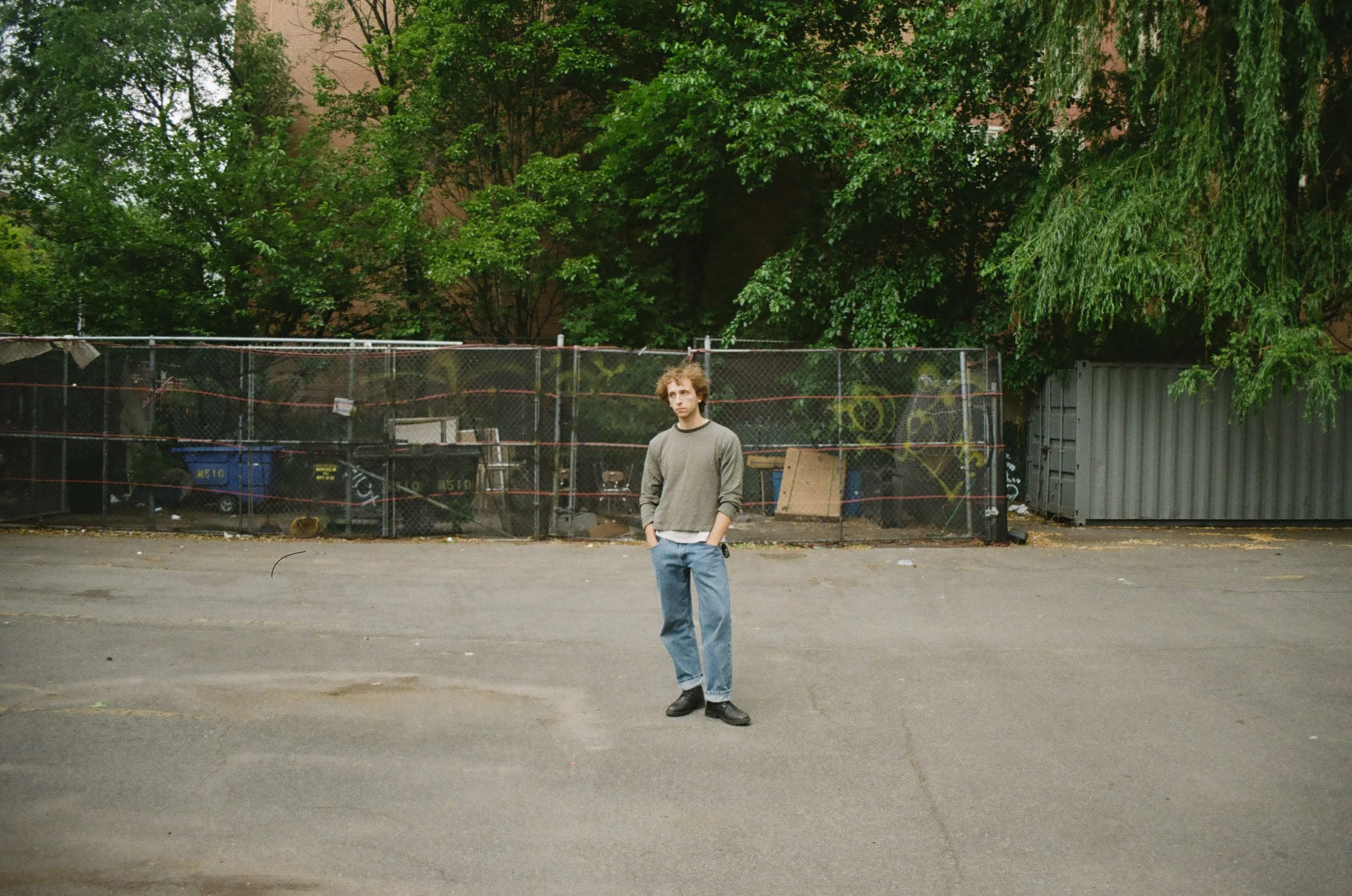
You released your first singles under your name about two years ago in 2024. What do you think are some ways that you have changed as an artist since then?
I think in literally every way I've changed as an artist, because when my solo project began I was just like, “Man, this will be fun.” I was making songs on GarageBand in between doing a bunch of shows and stuff with my other bands.
I kind of made a couple songs as a joke, but also I thought they were fire at the same time, and I was like, "Let me just put these out." And so I really just didn't think a whole lot about it. I didn't promote them at all.
Then I started wanting to take the project more seriously. When I released the Over The Scoreboard, the songs on there are more real and more serious, but I still wasn't giving it the time of day. I still was recording everything in a really shitty way and not promoting it at all. And it wasn't until I had a band that broke up and that kind of propelled me into making this my thing. It was a long time of taking a backseat to everything else I was doing.
And off of that, how does touring with other artists inspire your own music or fuel your creativity?
I feel like it is a really beneficial part of my process at this point because sometimes being in the same place, being in Nashville for long periods of time, I can start to just get in my own way. I just start to feel really stagnant and I don't feel super inspired and I feel kind of stuck, I guess.
So being on the road with other artists, it's really inspiring seeing what they're doing, and it's fun playing the shows. There's also a part of me that's like, "Damn, I want to get on my shit. I want to write songs." The song “Smoking Again,” I wrote in the van. So yeah, it actually helps my process a lot. I think it gets me out of my shell and mixes things up. A lot of the work with songwriting for me is just about finding ways to make it as fun as I can. And I think when I'm on tour I'm in a mindset that's like it's easier to get to that place if that makes sense. So it all feeds into everything else.
What is one of your biggest goals that you want to accomplish at the end of this year?
Oh man, I'm really just excited to share this project. That's been a goal for a really long time was to make a record. That's always been a really daunting task for me. My goal is just to offer the record to as many people as I can. Get in front of people. I want to do some touring. I'm doing some touring in July with my buddy Oscar Lindsey and just a couple one-off shows here and there. And I think I'll probably be doing some touring after the record comes out on my own. My goal is just to give the record the life that I think it deserves. I feel very proud of my record.
Find James Eichman on Spotify and Instagram. Listen to his most recent releases here!
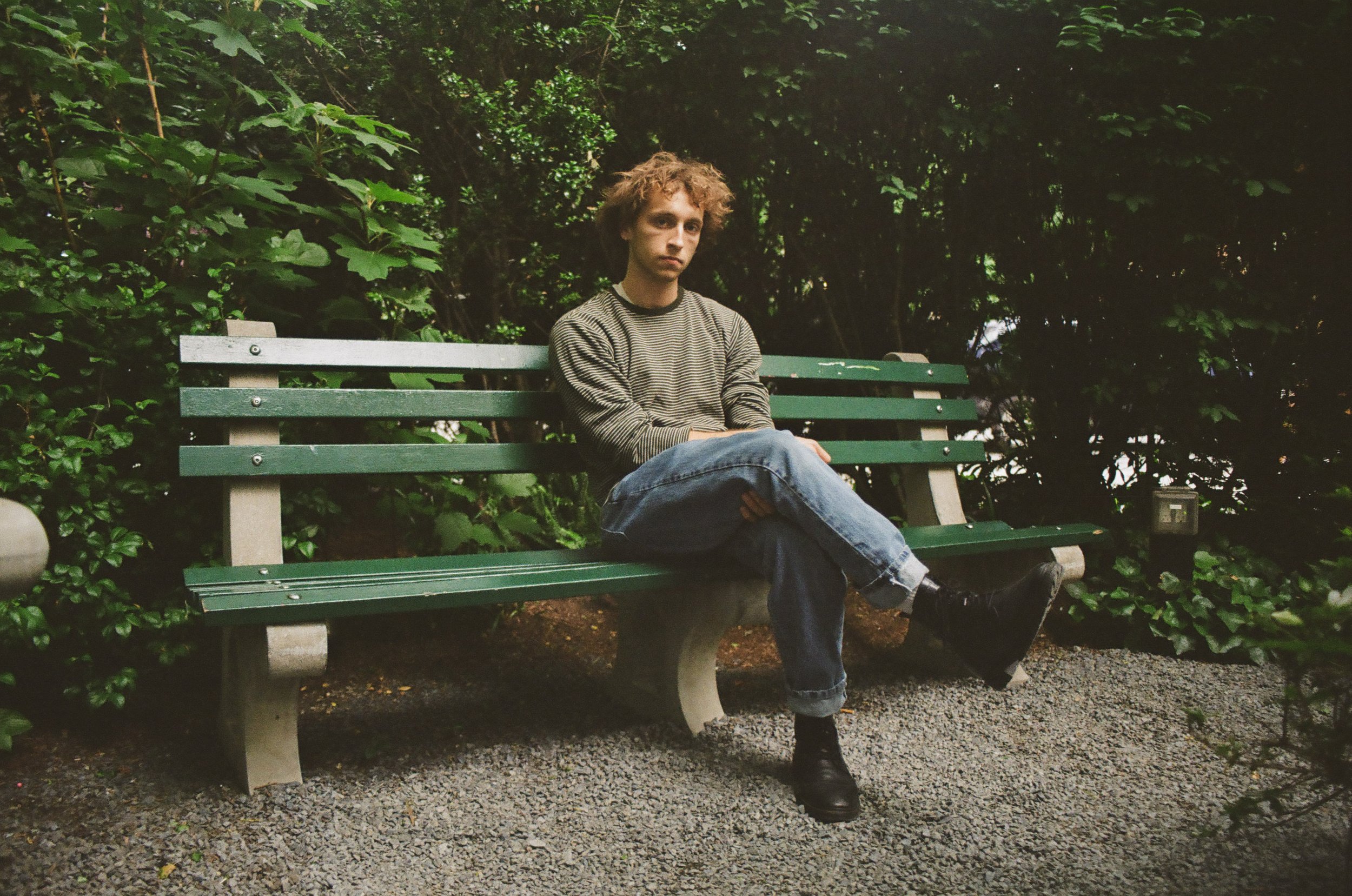
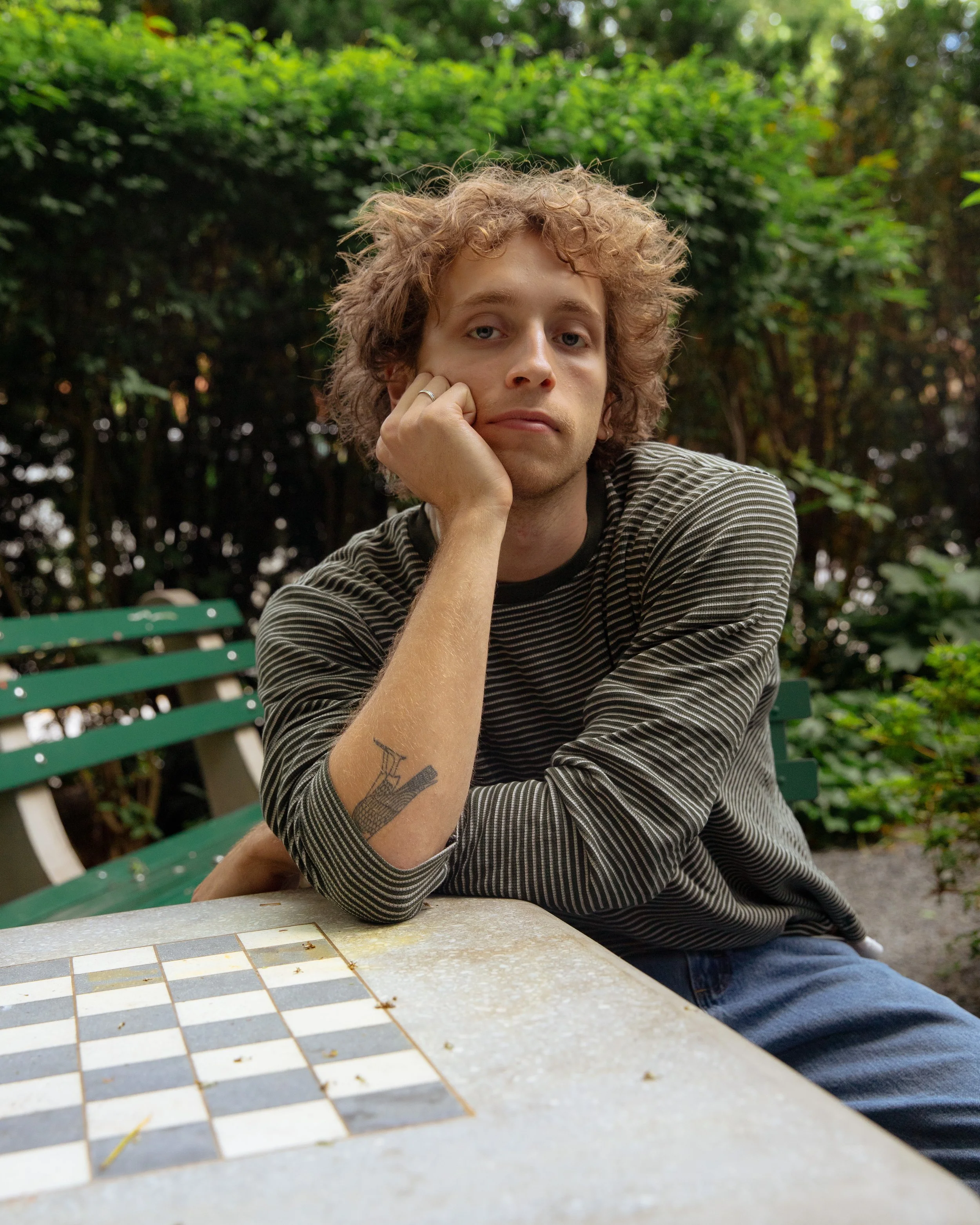
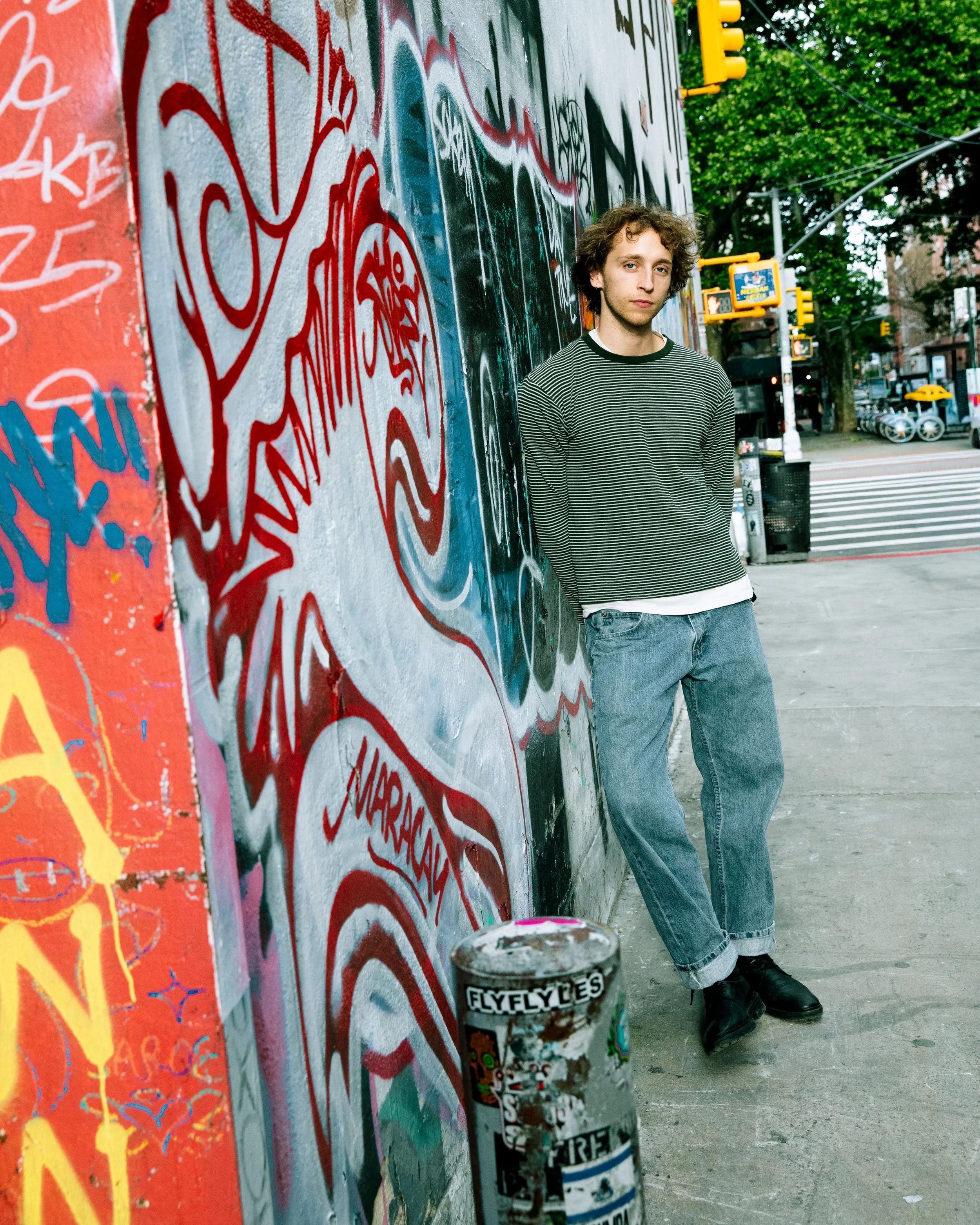
All photos by Tori McGraw (@afterr.hourrs)