The Rise of Keo
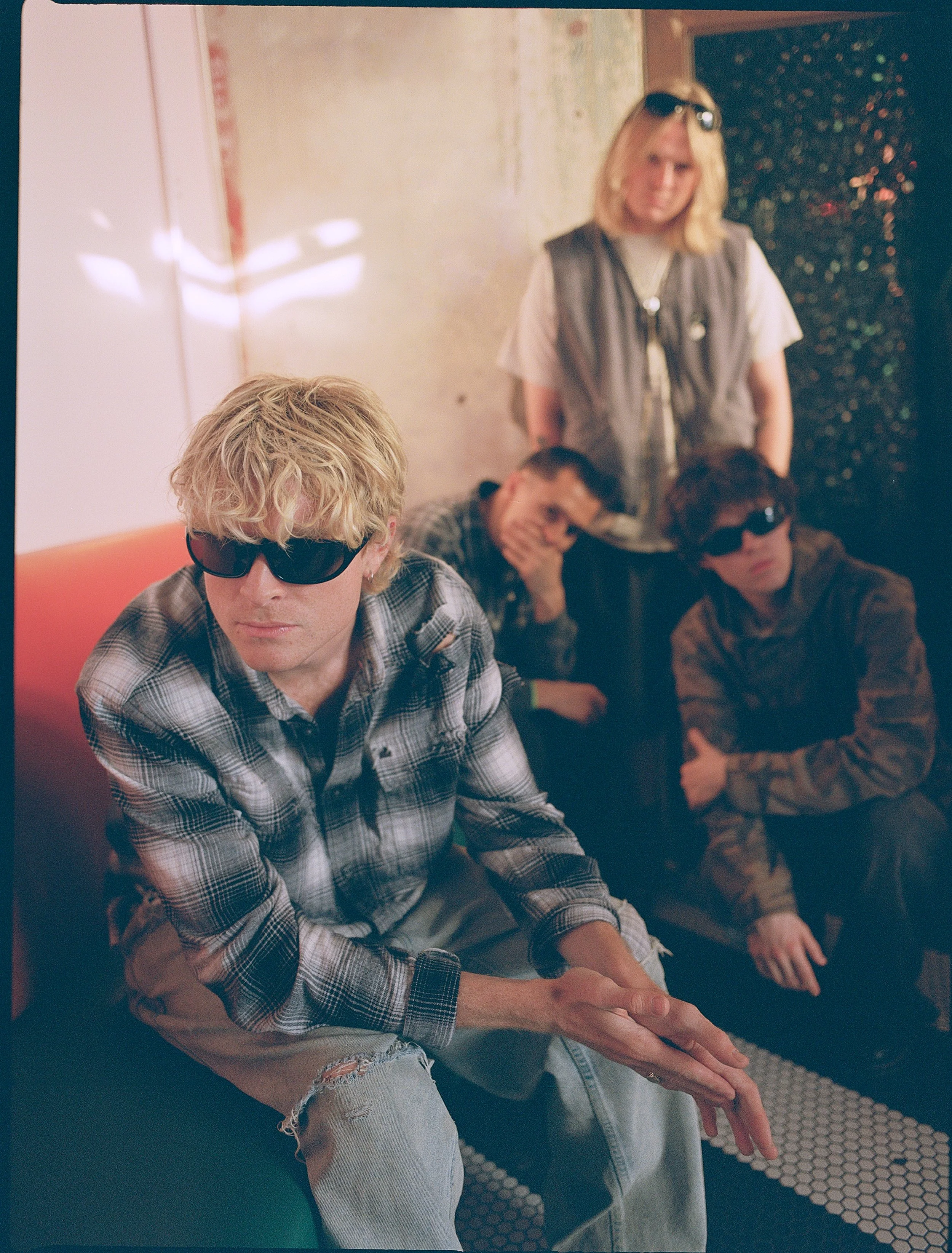
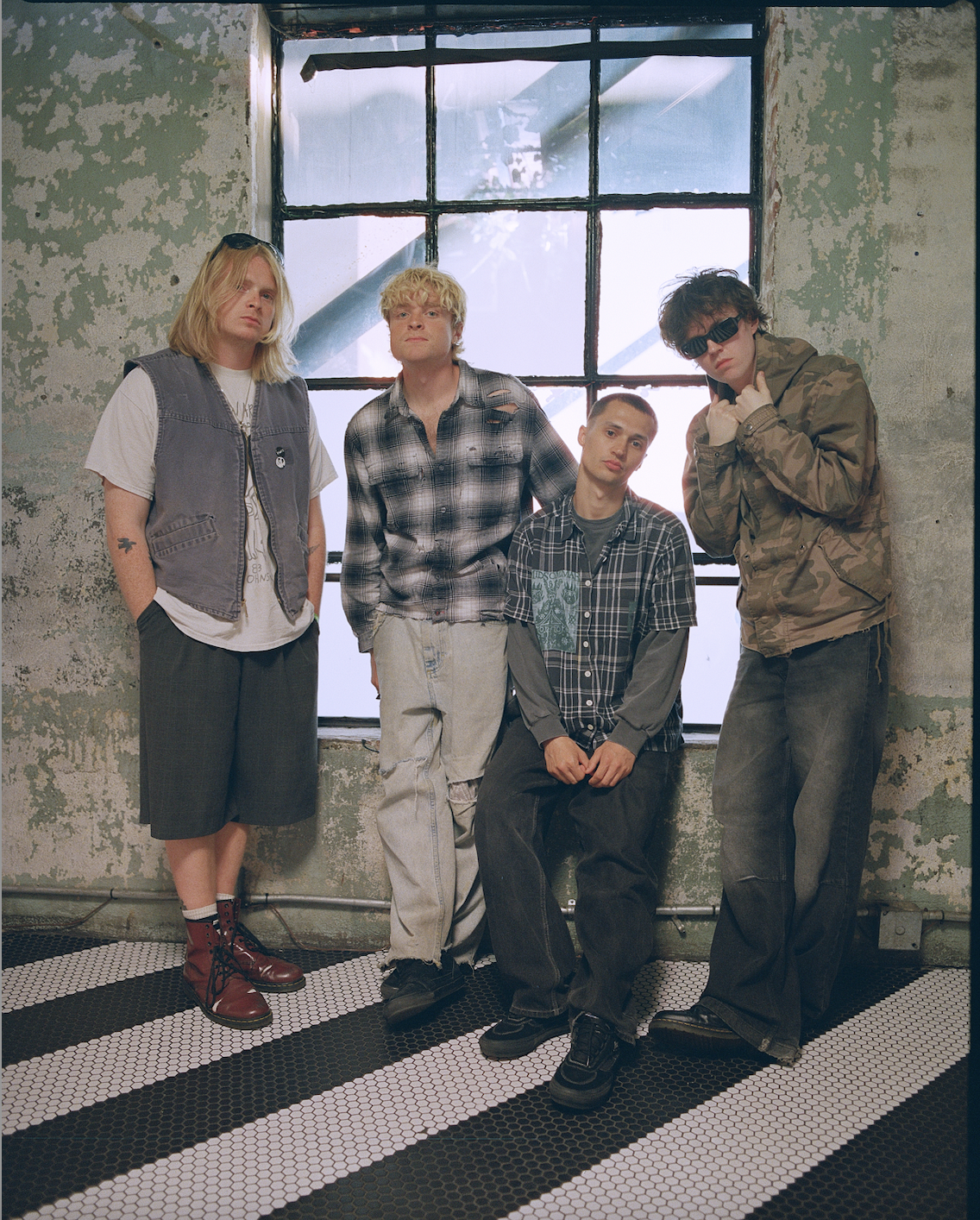
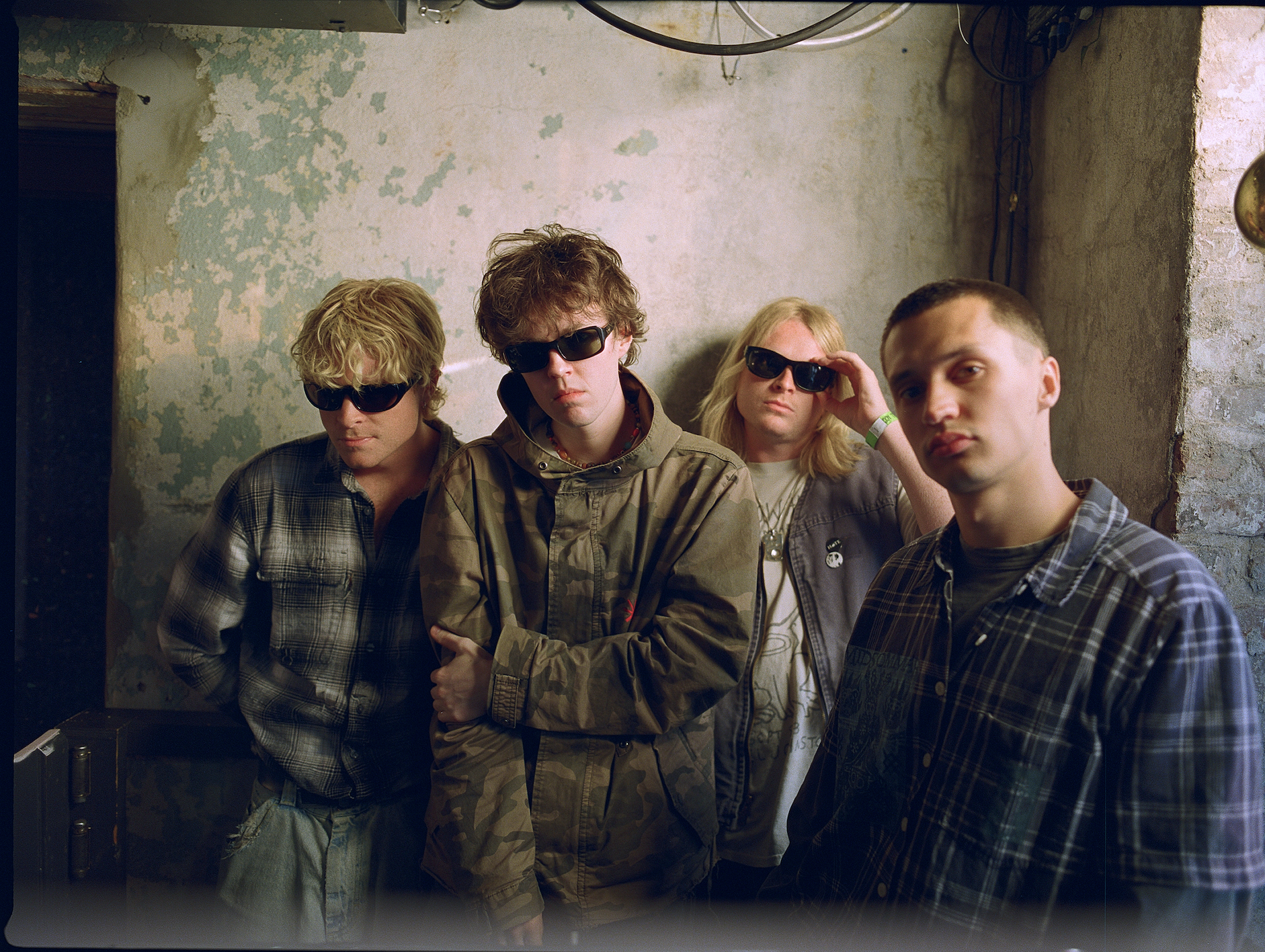
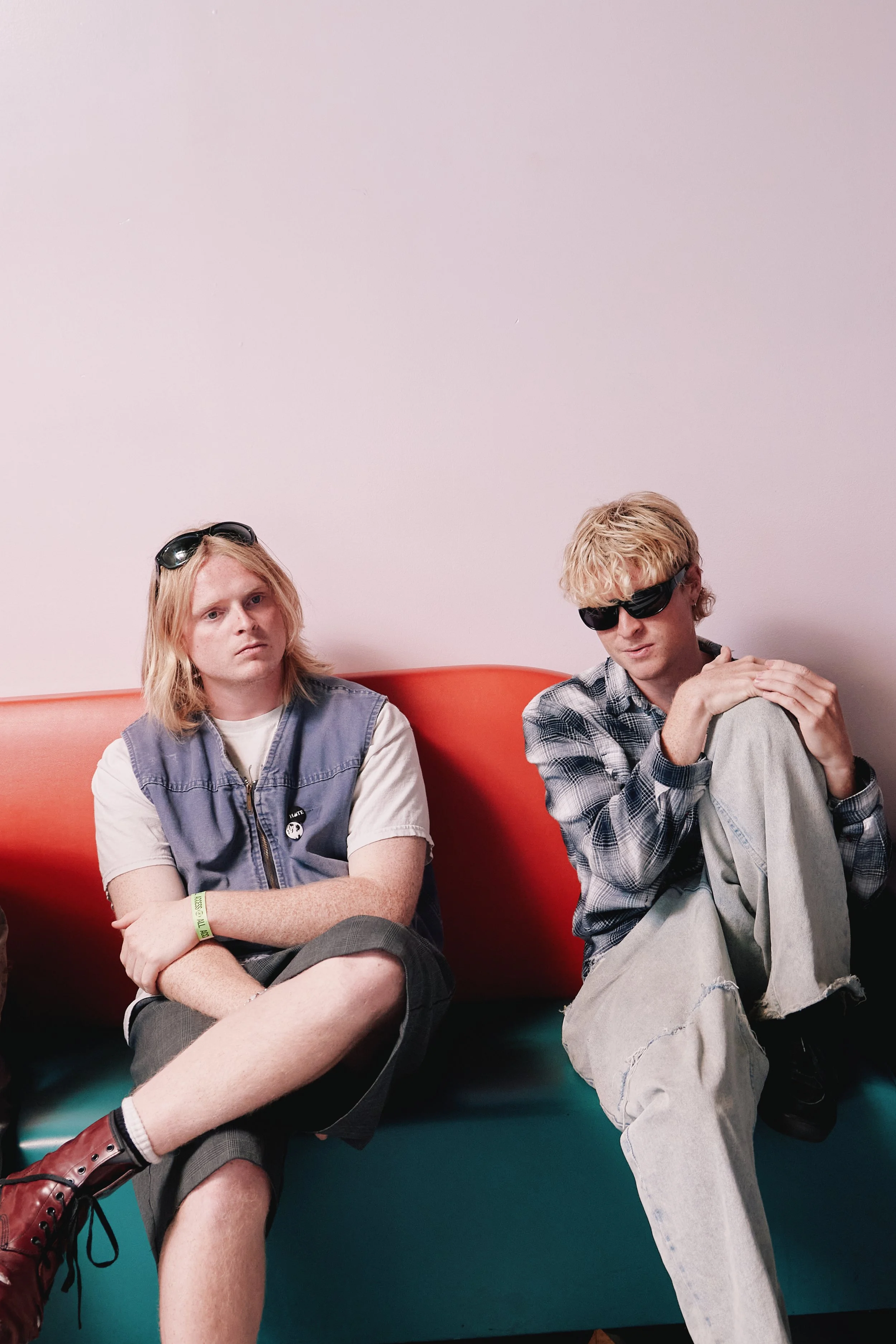
London based band Keo has accelerated into the rock world with impressive zeal and drive. Their momentum began through word-of-mouth praise of their electrifying live shows and a handful of releases on SoundCloud that caught the attention of soon-to-be dedicated fans, further fueled by social media. The buzz never seemed to stop as they continued pushing forward, culminating in the release of their breakout EP released in 2025, Siren, which solidified their place in the vast world of the music industry and while showcasing their ever-evolving sound. The group consists of Finn Keogh (vocals & guitar), Conor Keogh (bass), Jimmy Lanwern (guitar), and Oli Spackman (drums).
Signaling a new chapter for the group, Keo’s upcoming album, Put A Smile On For Me, is set to release this September. Unrelenting guitars and buoyant cadences are driven by the intensity of booming drums that seem to surround the listener. The simple yet effective lyrics are universal, and relatable to a multitude of emotional states. For example, Keo’s first single off their upcoming album, “That’s Me,” reveals the personal yet familiar inner thoughts of lead singer Finn Keogh. One verse reads, “And there's a reason that I'm built this way, but I'm just scared to see it through, and all the feelings that I can't explain, well I could pin 'em all on you.” And, as only the first release from the album, there’s much more to come. Keo’s Put A Smile On For Me is honest, raw, intricately crafted, and undeniably addictive to listen to.
We sat down with Keo ahead of their New York City show to speak about their upcoming album.
We're going to do a very quick elevator pitch as to who you guys are as a band. If someone doesn't know who you are, give them an insight.
Finn: I think the most emotionally heavy parts of people's lives are the bits that people can relate to within our music, and the uglier things that not everyone wants to talk about, maybe things that aren't necessarily trendy to say. I'd say that we're kind of super honest and quite vulnerable.
Conor: Emotionally driven rock music.
Oli: Alternative 90’s influenced rock music.
Finn: I think we sometimes feel a bit pigeonholed by the 90’s thing, but we definitely do draw a lot of inspiration from all over. The branding is quite influenced from the 90’s. There's also a lot of folk music in there as well.
I have a question about your last EP Siren. For “Thorn,” I thought that the lyrics were really interesting. It reminded me a lot of Emily Dickinson poems – very short, very direct, and having a darker hidden meaning in the words. I was curious, what's a typical lyrical songwriting process and does it change for each song?
Finn: It can change, but for the most part, I often write the things that I don't feel comfortable saying to my friends or my partner or my family, and I kind of trick myself into thinking that no one will ever hear it. And then I'm like, “I'll think about this later.” But I'll just say the most honest thing that I don't want anyone to hear. It all happens at once really, like the melody, the lyrics and the chords. It's kind of all just one big expression. I think that the best lyrics happen to you and you don't really control it; they just fall out. If you're an ambitious songwriter, you can kind of try and try and write songs. And for me, it just never seems to happen the same. I feel like I've never written a song in my life sometimes and then other times it'll just fall onto the page.
Going off of that, your upcoming album Put A Smile On For Me, is coming out this fall. It is very distinct, very melodic, punchy but also sonically mature. Let's talk a little bit about the first track that you released, “That's Me,” a really raw introduction into a new chapter. There were a lot of recurring themes that I noticed in the album – growth, emotional exploration. So what is this first release going to foreshadow to listeners about the album?
Finn: I think it's just very heavy emotionally, and I don't mean necessarily like sonically. Obviously it's quite heavy, but it's one of the most honest songs on the record, I think. And I don't think what I'm saying in it is particularly admirable or trendy. It's kind of me calling myself out on maybe times that I might have been slightly immoral without meaning to be or whatever. And I think that's kind of why it’s the first single, because lyrically it's very self-deprecative as a record, hence the name Put A Smile On For Me. It's a bit of an analysis within myself and the relationships I've been in. So yeah, I think with the lyrics on that one there's no hiding what I'm saying. What about you guys within the instrumental part of that? Do you think it foreshadows instrumentally?
Conor: I feel like we grew a lot, especially since that EP. We grew a lot as artists and musicians and also as a band and as people and I think that comes across quite well.
Finn: It also was something I wrote in that room in the studio, Bam Bam Studios. Well, the recording you're hearing isn't that recording, but I wrote it and we recorded it within the hour that I wrote it in the first version. It kind of feels like it belongs to that record, doesn't it?
Regarding “Thorn” and “Fly,” both of those have priorly been released.
Finn: In some aspects, yeah. “Fly” was on SoundCloud.
Why did you guys choose to redo them and add them onto this album?
Finn: Well, this is a great question because it was a hard push and pull between making the most cohesive in the moment world, that world being a record, and making it a debut album. Because a debut record I think should be kind of somewhat the story of how you got here and what happened up until then. And “Fly” and “Thorn” felt like two very heavy lifting songs within our careers, I guess so far. And I just think it almost felt in many ways in the writing process for me, like a second album and those kind of solidified it as a debut record.
Conor: I also think when we did the EP which “Thorn” is on, we were under a lot of time constraints and we were working with a producer and that changed a lot. And I think that we all came away from that thinking we could have done it better.
I immediately heard the changes within the first note of the upcoming releases.
Finn: “Thorn” is actually half a step up. I don't think I'm ever going to feel like I nailed something.
Well, does anybody?
Finn: No, but sometimes you perfectly don't nail something. Does that make sense? So therefore you did. I don't know. It's kind of perfectly shit.
Conor: With “Thorn” I think we had this one original demo.
Finn: Yeah, we had this demo from maybe three or four years ago and it's been quite hard to let that one go. And the label told us to put “Fly” on the record. Fine, you got us. We wouldn’t have put it on the record if we didn't think it was right.
How did your instrumental process differ for this album than from the EP in the past?
Finn: Something me and Jimmy have spoken about that I find quite interesting is it was the first time we started to reference ourselves. So instead of going, "Oh, we want to sound like this record or we want the drums to sound like that or this," we kind of were going – especially the song “Hands” on our EP – we started drawing from our own music, which I think made it even more unique. And songwriting-wise, it was the first time I've been able to go away somewhere residentially for a long period of time and have the financial freedom to just write for days on end and not worry about if something really, really strong came out of it. I kind of said to myself, as I was saying earlier, that I'm going to write things that I don't want to ever leave this room because I don't want to upset my folks, my parents, or my partner, or my friends. Obviously I was kind of lying to myself, but that was kind of freeing to act as if no one would ever hear it, and it allowed for it to be very therapeutic, and if you have a therapist, no one ever hears what you say to them. So it kind of felt like a similar thing.
Jimmy: There was no pressure. I don't know, we kind of just fucked around for a week and set ourselves challenges and we were going to leave with a body of work. It would just be for us, an album for our own listening.
Conor: I also think where we did it as well, going away to this place that kind of felt like it was in the middle of nowhere, just us four and an engineer.
Finn: Self produced as well, which I think makes it even more honest. We could have so easily gone with a big producer. We've never produced a record before. I didn't want it to be anything else but 100%. Even if that makes it a little bit undercooked or whatever.
Jimmy: I think that's the thing with self producing, you've got to take full responsibility for what that body of work ends up being. I think you can live with that a lot better than if someone else has done it and didn't quite get it right.
You have this playlist that is 16 songs that you guys have said stuck with you over the years. And it's right here. So I was hoping that you could each choose one and quickly explain why they've stuck with you or how they inspire you creatively.
Finn: I've got to go with “River Man” by Nick Drake because my dad would play that in the car when I was growing up, and it kind of only hit me, maybe when I was 15 how powerful that song was. And I kind of was like, “Oh my God, he's been playing this all these years and I didn't realize.” I felt like I found it again on my own. Nick Drake and John Martyn and well, originally I was into a guy called Ben Howard when I was really, really young. He was from the same area as me, and I really liked his acoustic guitar folky picking patterns, and from that I discovered Nick Drake and John Martyn, which is where he was kind of pulling from. But yeah, Nick Drake has just kind of perfectly encapsulated how important mystique is, and I think it's really important for artists to let the fans kind of fill in the gaps for themselves, because I guess nothing's ever as kind of beautiful when you know the ins and outs of it.
Conor: I’m kind of split. It’s not the Nirvana song I would have picked to go on the playlist, “All Apologies.” In Utero, I remember when I was like 14, 15, I kind of got into the 90’s kind of side of rock and that really spoke to me in a much more honest way and in a way that I felt understood me a lot more. It kind of set me on a journey about finding out everything I could about those things. Kurt Cobain, diving into the Seattle scene and then that took me into The Smashing Pumpkins and the Pixies and it kind of unfolded a whole new world of music. So I would have to say “All Apologies" Nirvana.
Jimmy: I'm torn between the last two on this playlist, “Gagging Order” and “Voodoo Child.” Hendrix is one of the first things that really got me into guitar. I'd probably go with Radiohead because I've had about eight or nine years of listening and taking inspiration from every single album they've done in some shape or form.
Oli: I'll probably go with Sun Kil Moon or Jimi Hendrix. Sun Kil Moon, these guys showed me Ghosts of the Great Highway. And I bought that for my dad for Christmas and it was an emotional moment. He actually cried when he opened it and listened to it.
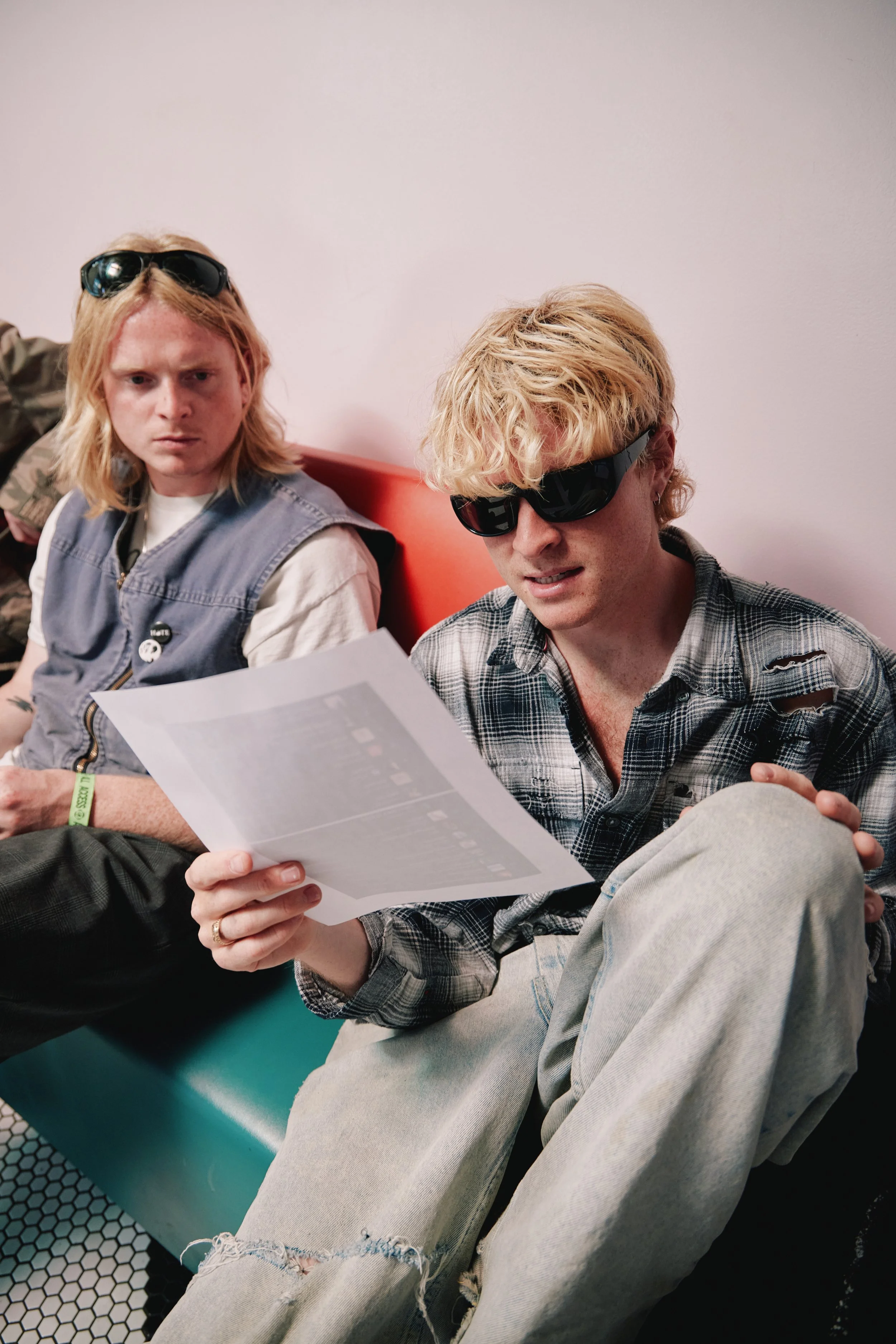
You talked about this idea of “soundscaping,” which I'm going to bring back to self-producing your record. How was this idea of soundscaping your record put into practice with this upcoming album?
Finn: Bleed is what they call it within the sound engineer world, but just basically doing everything technically wrong.
Jimmy: It came out of those demo sessions and we just set everything up to track ourselves live just as quickly as possible, us in a room. That was a 10 day stint when we recorded 14 songs. It came out of that and there was just magic in those takes where we weren't thinking.
Finn: I like it when you put your headphones on and you're suddenly in the room with that band at that moment. What [is normally done] is close mics, where you put the amps in their own isolated boxes and the drums are in a booth and the vocals are perfectly taken after the tape, it becomes such a product, like a prepared product. Nothing is authentic when it's overly prepared. What we wanted to do is just for you to hear it in like 360. So that's what you're hearing. Most of the vocals on the record are live during the take, which is quite unheard of.
Jimmy: The whole record we kind of set ourselves, not the challenge, well I suppose it was a challenge, but like we'd allow ourselves to build on top of a good live take. But the live take kind of had to stay. Sometimes it took us days to get the right live take of one.
Finn: Took us a week to get that first song you liked. Week well spent.
Lastly, what is a goal you guys want to accomplish by the end of the year?
Finn: I just hope people like the record and I hope it reaches people. I hope people feel understood. I know it's cliche, but it's literally the only thing that fucking matters to me.
Conor: I hope people find something in it like in those songs we were talking about on the playlist. I hope there's a young fan out there who sees something similar in this album as we found in those songs.
Jimmy: I don’t know, I want to focus on enjoying the journey really.
Oli: I think whenever I think reaching a goal is going to satisfy me, it never really does. I want to be happier in the moment.
Finn: But yeah, that's a great point actually Oli just said. It's surprisingly fucking difficult to enjoy the good parts because I think artists are just naturally overthinkers, like it goes hand in hand. You can't have one without the other. Instead of enjoying the journey, we often worry about the future and making that as good as it can be.
Find Keo on Spotify, Instagram, and their website.
Listen to their latest single off their upcoming album, “That’s Me.”
Photos by Natalie Piserchio