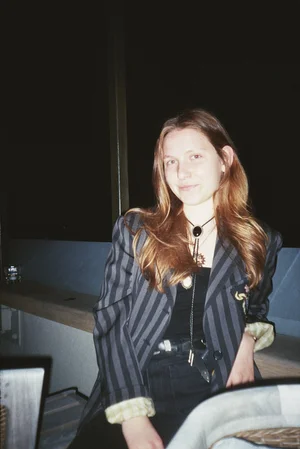
Gus Dapperton released his third studio album, 4 Dear Life. The album marks a creative fusion of his musical interests, bringing together his various projects and exploring a range of sonic directions.
4 Dear Life features collaborations with several artists, including Ledbyher, A-Trak, spill tab, and hard life, as well as Gus’ own alias project, Loose Goose. Across its eleven tracks, the album blends his distinctive songwriting with elements of electronic and indie-pop. Ultimately, 4 Dear Life serves as an emblem of Gus Dapperton’s sonic journey, shaped and developed over the past decade.
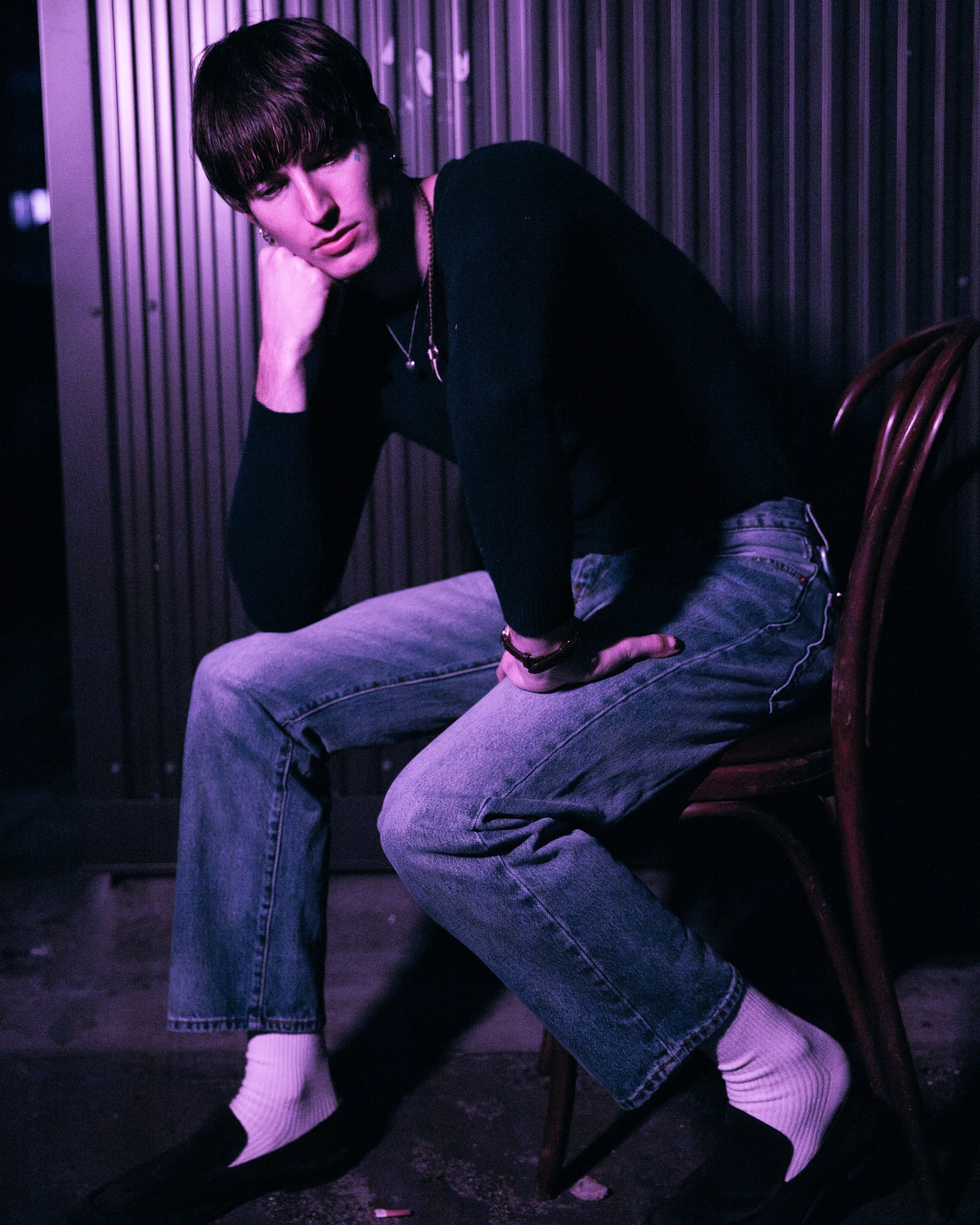
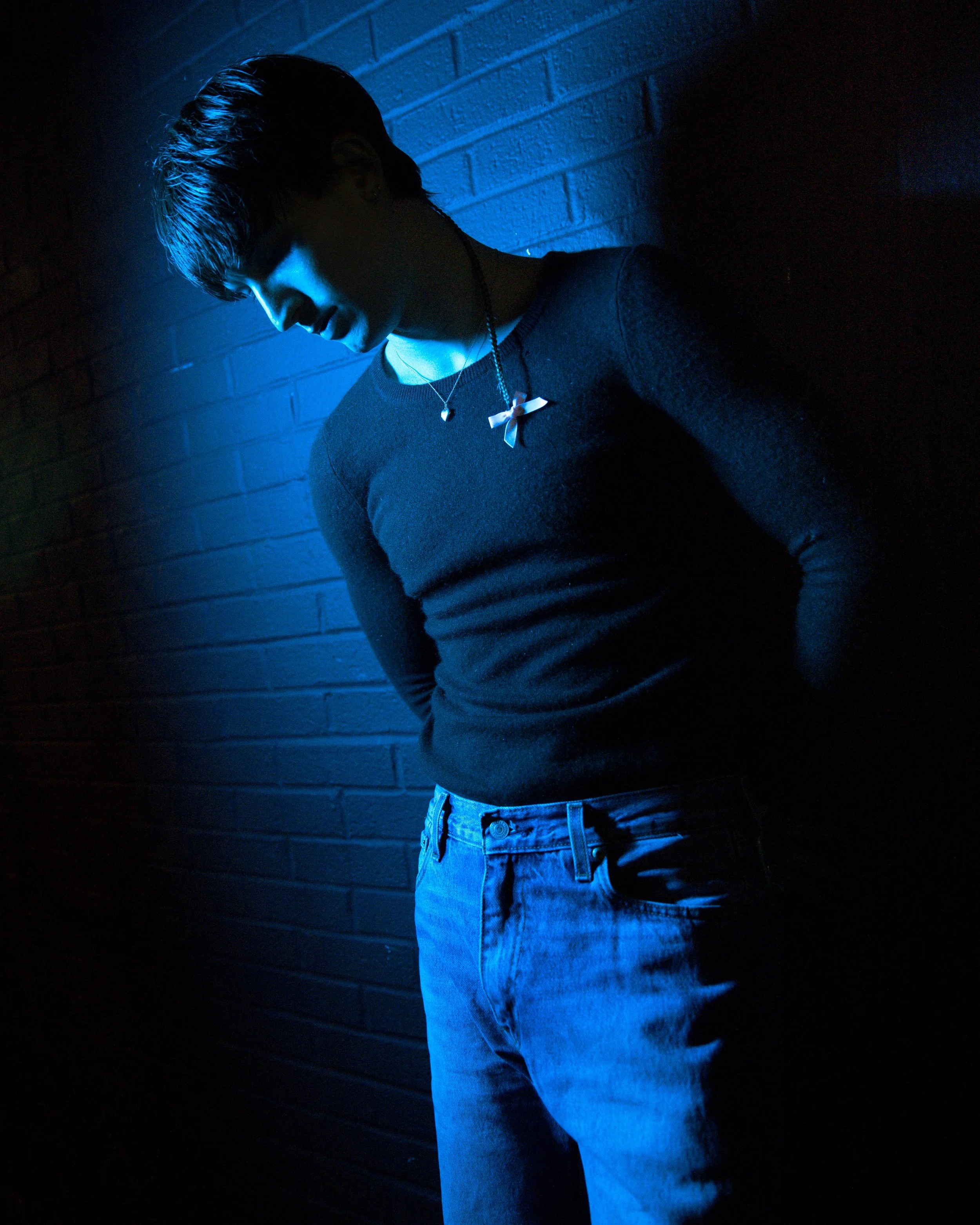
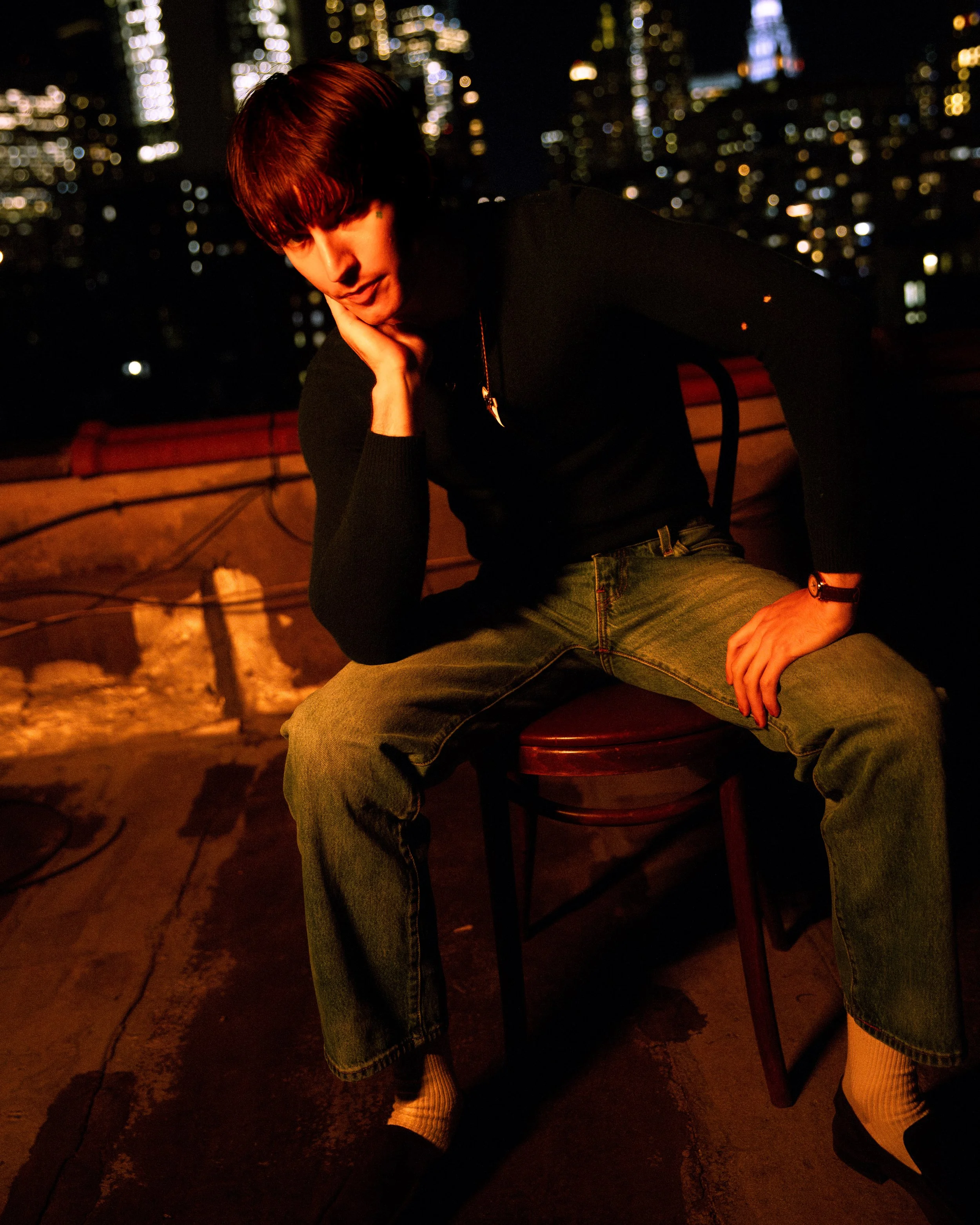
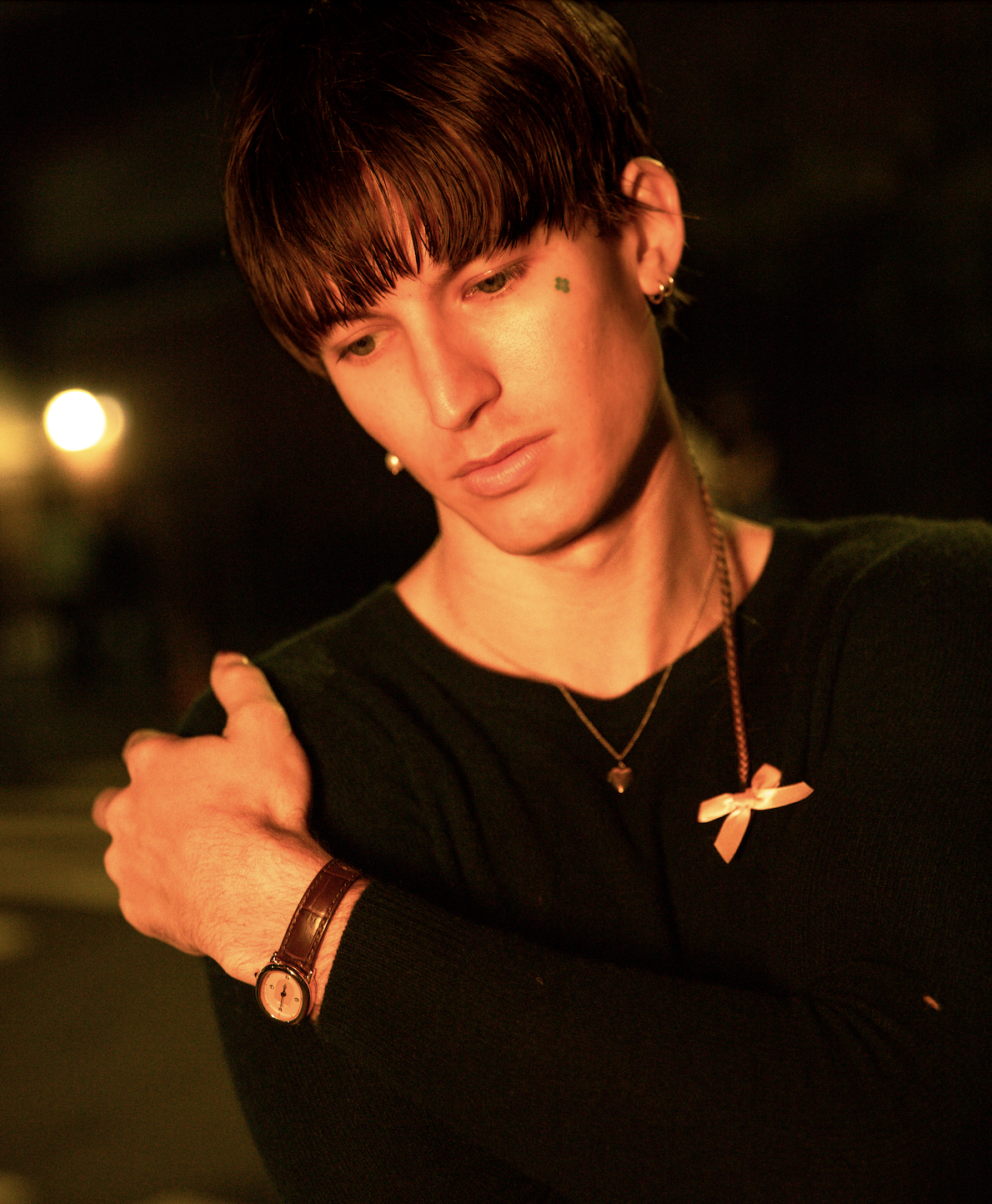
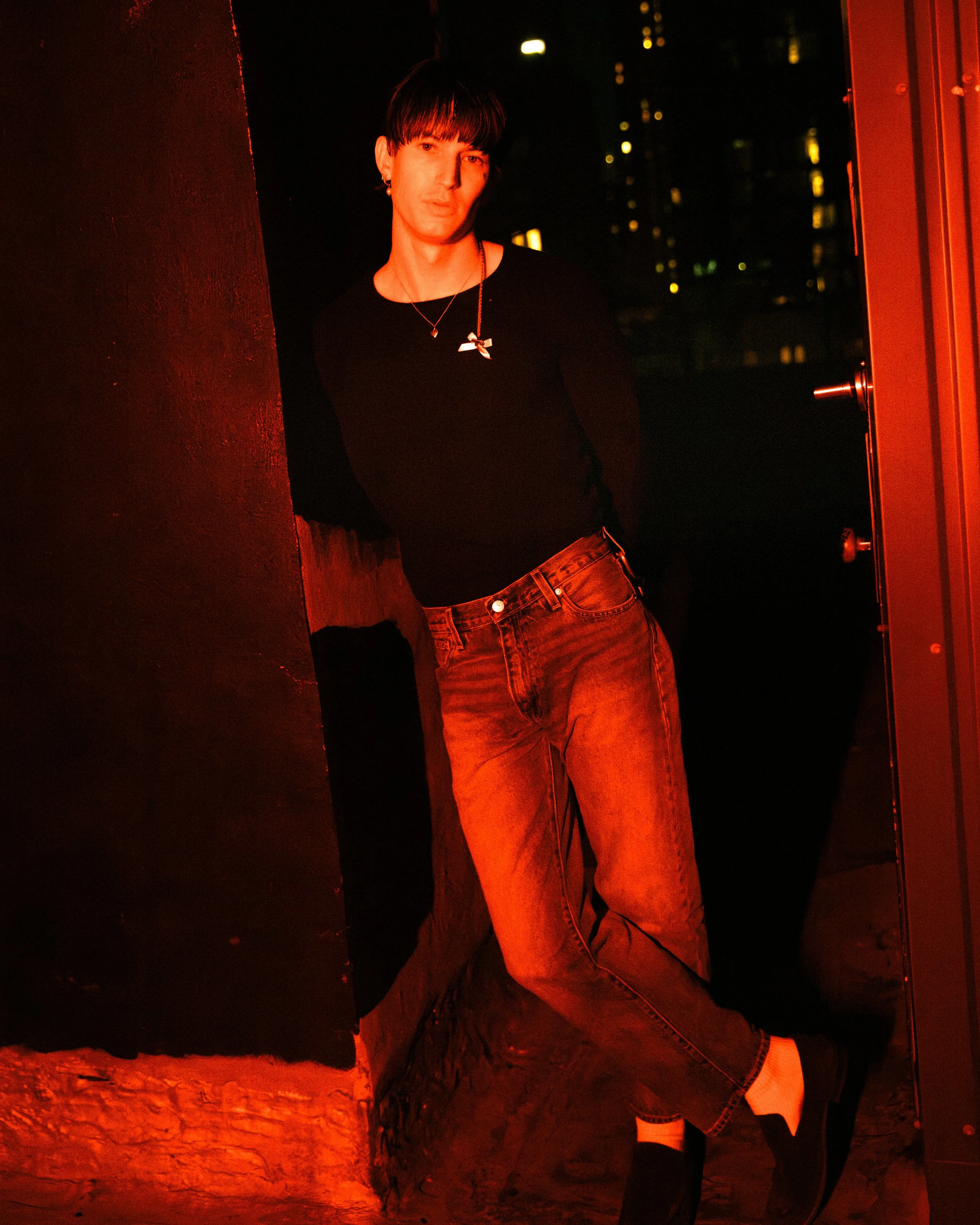
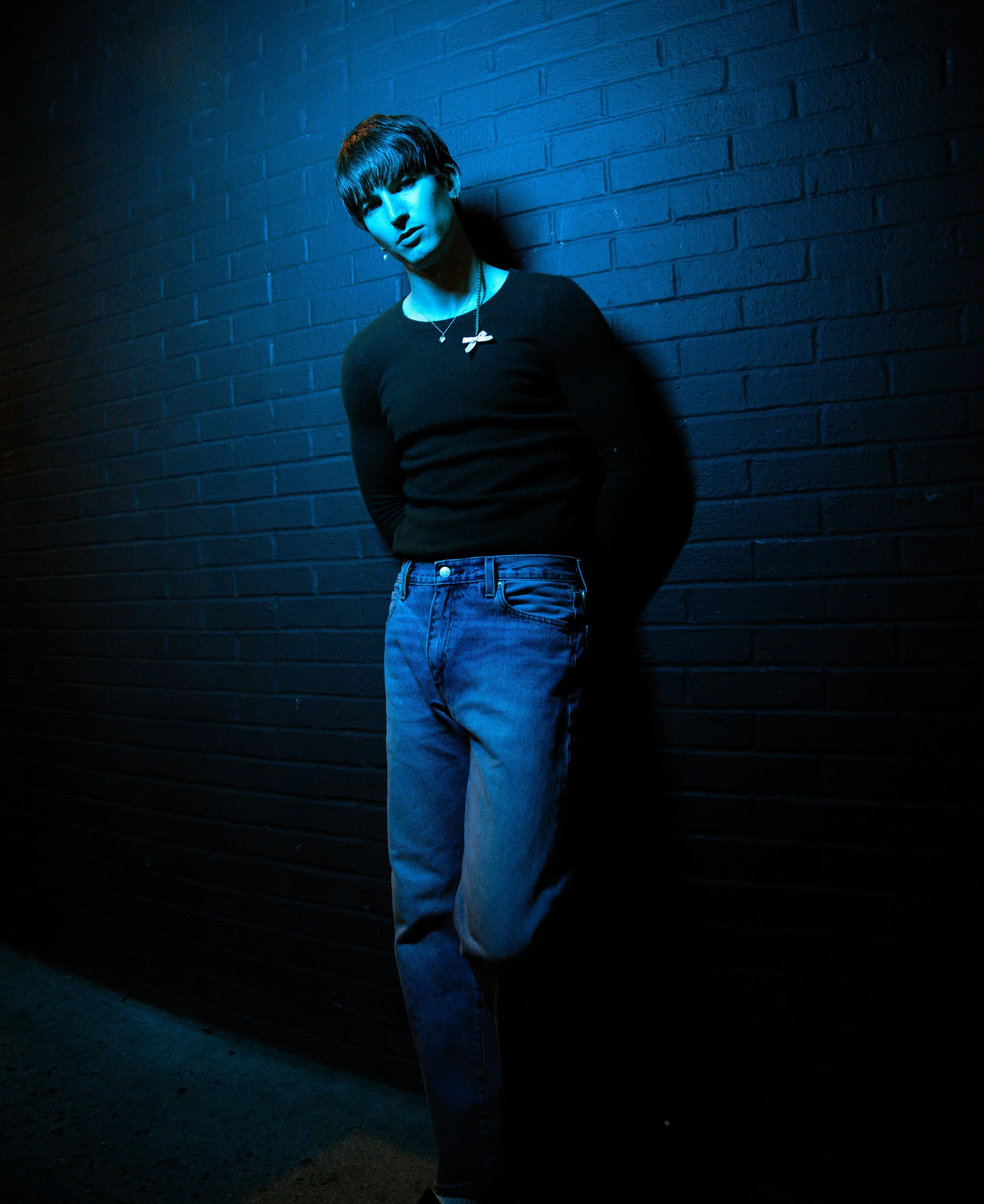
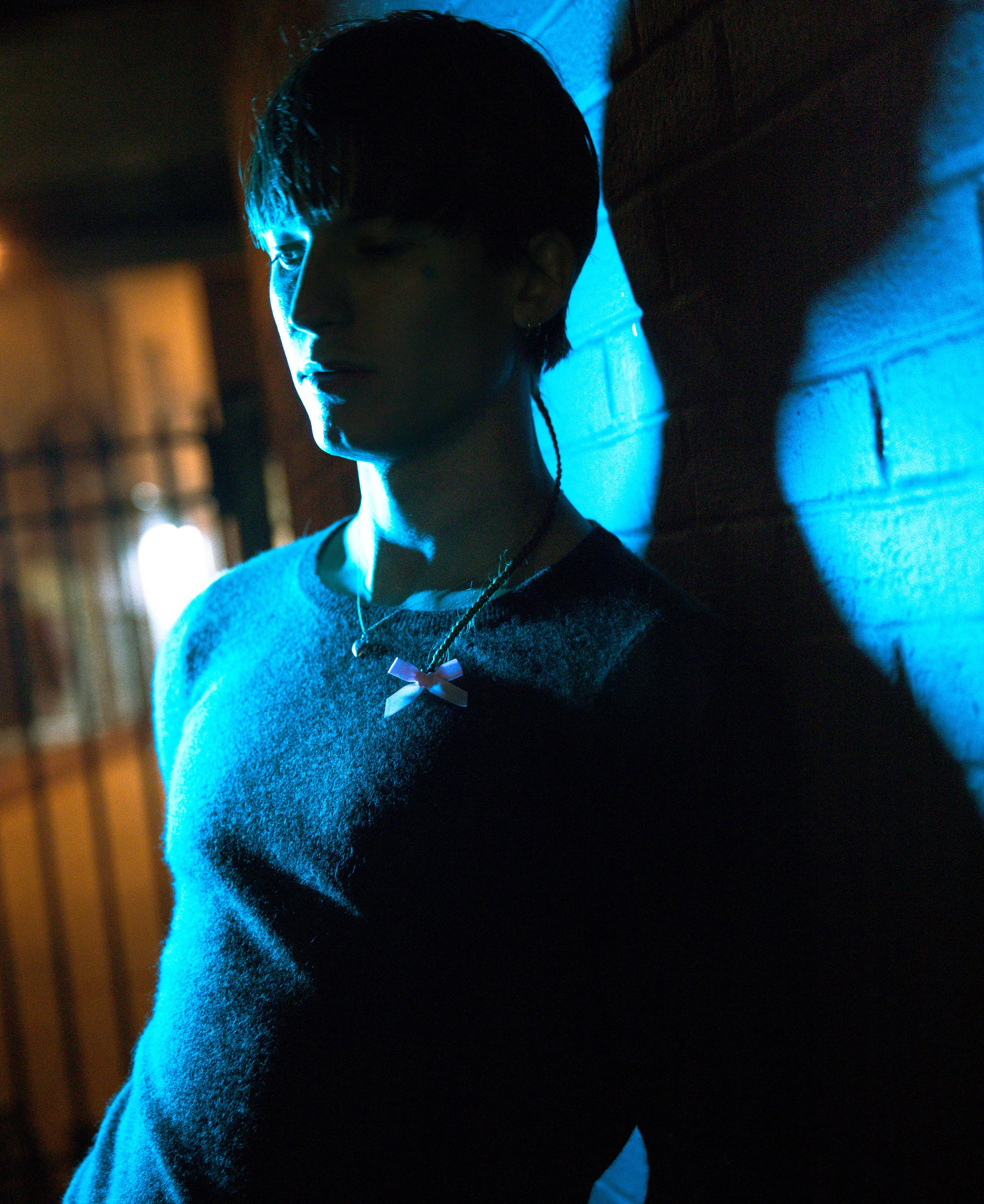
We met with Gus at Dimension 70 a few days before the release of the album. Gus with his diamond face tattoo, was sporting a small pink bow clipped at the base of a small braid coming out from the back of his head. We sat down to speak about the process behind 4 Dear Life.
For people who don't know, can you give a brief musical background into who you are as an artist?
I started making music when I was 14, and I made several different types of genres, from indie rock to more hip hop stuff to more electronic stuff, and now I'm kind of still doing that. On this record in particular, it's really a mix of several different genres and whatnot. But yeah, I just started making music, hopped into GarageBand when I was 14 and really fell in love with producing. Producing is probably my favorite part of it still. I started touring in 2017, 2018 with my band, which is comprised of my good friends from back home and my sister.
On 4 Dear Life, you said that this album is, "your attempt to find hope in times of struggle. It's his way of dancing while the world is on fire." Also, you said online that this is your favorite album you've ever made. Talk about the early stages of the album, the creation process, and the timeline.
It's funny how this one came about compared to other ones. This one sort of came about from me trying to get as far away from my previous projects as possible. I've been doing music for the last 10 years as my job, and so there have been some things that have been traumatizing, and I've learned a lot. And so I think I had related a lot of album rollout processes with this trauma or exhaustion from other experiences I've had. My last album came out in 2023, and since then I really just wanted to step away from music for a bit. I went and made a film with my friends, which was super fun because I still wanted to be creative, but I didn't really want to be on the clock with music and making a new album. When I'm on the clock, it feels forced or something, or there are expectations, or there's due dates, and when those are in the back of your head, it never really influences my music-making process in a positive way. It can only really lead to me rushing or making something I'm not proud of. I made this film, and then I made a side project where I was making primarily dance music called Loose Goose.
So I did those two things that are the most separate from my last albums as possible. And then my sister and I had a talk this past January and she's like, "You can just do all of it together. You don't have to keep them all separate." And she was like, "You're so weird because you're not proud of all the stuff you've done and you feel like you've tainted a part of your artistry maybe with the last album because it didn't all look exactly how you wanted it to." But she's like, "You just have to take those as learning experiences and learn from your mistakes." As soon as she said that, everything clicked and this album does sound like there's a million different things happening on it, but it feels cohesive in the way where I've sort of brought everything together.
So that's why I'm really proud of it. I'm proud of it because everything on it sounds unexpected, whereas I think all my music in the past maybe sounds more expected. I'm excited about how much I love this one and how experimental some of the things happening in it are, but how still me it feels.
“Holding on,” “She Got The Funk,” and “Down Like This” were released a year ago under your other project, Loose Goose. Why did you choose to put these on the album and is this an extension and development from that specific project?
Yeah, I mean it sort of is. And I think in my head I wanted originally to make a whole Loose Goose album and I was going to pull these over. But what ended up happening was they just all sort of came together in this one thing. Some songs are more Loose Goose leaning, and then some are Gus, and then some are both, and then some sound like things I used to make when I was in high school on SoundCloud. Doing something outside of the box led me to come around and just keep making things outside of the box. I think sometimes I used to be too precious about cohesiveness in a different way. This album's cohesive in an experimental way, whereas I used to box myself in too much.
And regarding the timeline, how long was the process of working on the album?
I wrote 75% of the record from February, literally in three months, which is the shortest amount of time I've ever made most of an album in. But from the end of January to April, 75% of all the songs came about. It was really a great experience because it was such a fluid creative time for me. I told my managers and stuff, I was like, "Just don't even text me for the next month." And I just locked in and made the best use of my time. But because I already knew I was feeling very creatively stimulated and I was like, "Okay, I just need to keep going until I can't go anymore.”
Well, you're talking about these other projects you worked on, like the film. Do you think that helped rewire what was happening in your brain and expel more music?
Absolutely, because I mean, my biggest song, “Prune, You Talk Funny,” I wrote when I didn't know how to play the guitar. If you looked back on it now, you'd be like, "Wow, the theoretical shit behind that is really, really in-depth and deep." But the best songs come from really not knowing what you're doing. And now I know so much of what I'm doing that it was becoming a weakness in my mind. I'm thinking about, "Oh, I'll go to this chord because this chord I always go to and I like it.” I shouldn't be thinking that way. I should be challenging myself to go to things that I wouldn't normally go to. So doing the film rewired my brain, like you said, because I didn't know how to make a film. It felt like I was back in middle school, high school, just literally plucking around on the computer. When we were out there making the film, it was the same thing. I was learning along the way how to do it. And it also just helped me get it back into the DIY mindset of it all.
4 Dear Life is your first full album in the last couple years. How did this process differ from the ones prior? Is there anything about that process you really feel like you've taken a new turn on?
I try to kind of start in a different place every time I make a song or every time I make an album. This album, I was starting from a very rhythmic place, almost starting with drum loops and things. On my last couple records, I would start on an acoustic guitar and almost write the whole thing on an acoustic guitar and then go back and produce it. Whereas this one, I was kind of starting from either basslines or drum loops. That's how I used to create back when I first started, I would sample a lot of old drum breaks and things. I found myself doing that more on this record, which was fun because it inspired new melodies and new chord progressions and new parts that I probably wouldn't have ventured towards if I was still making it from a more acoustic place.
“Take Me Out To The Disco,” “Place Beyond The Pines,” and “Twyla” are interesting sonically because they are less dancey, and a bit more melodic compared to some of the other songs in the body of the album. Did the songwriting process for this album differ when you were writing more melodically versus more dancey? Do these songs all start the same and then you add layers on top of that in the production?
“Twyla” started differently because I wrote that one a few years ago, sort of with the intention of making a more folky acoustic album. And then I ended up sort of adapting that song to this project because I just knew it needed to be on there, but something was off about it.
Why?
It just felt sentimentally right for it and melodically, like you said. But yeah, “Take Me Out To The Disco” and “Place Beyond The Pines,” those started from drum loops as well. “Take Me Out To The Disco,” I started with that kick drum, which is so silly, but sometimes when you get the perfect tone of the echo, it'll spark something. I just started singing with a vampire voice or something on it, and that was the inspo for that. And then “Place Beyond The Pines” started with the drums and the bass line and then the guitar parts. “Twyla” is probably the only song I wrote on this album that started on an acoustic guitar.
Do you feel like the production and songwriting worlds are separate or do you find that they really blend together?
I feel like those blend together. It's funny, my partner has asked me this a few times when I'm stuck on something. She's like, "Well, what do you want the audience to feel?" And I've never thought about that because making music, I do it by myself. It's supposed to just be therapy to me. And then I share it in hopes that I inspire other people. Like what I was saying is, getting back to the place of no expectations so that I can really just make it as a release for myself, not thinking about how people are going to feel or take it. But you share it and then hope that it relates to people and they feel seen.
“Queen,” you said that it is the song you are the most proud of. Why? And how did the process of writing this song feel more cathartic than some of the others?
Yeah, this song is definitely the most cathartic, maybe that one and “Twyla.” That is another super introspective song that I wrote without thinking it's ever going to be released. But then really you show it to your friends and family and they're like, "Oh my God, this is so impactful and it makes me feel something." I think other people will feel that way too. I'm proud because that's the first song I've ever made that's inspired by anger. All my other songs are inspired by depression, romance, jealousy, heartache, whatever. That's the first song to me that's purely about anger and then also sort of triumphantness in owning who you are, which is just a perspective I've never really written about. I think I always try not to bring the outside world too much into my work.
I can't even say I'm that proud of this in terms of my thought process because I really just wasn't even thinking. I just strummed and started singing and it was done in 15 minutes. I was proud that I could receive it and do it. But honestly, I really love the production on that one.
Each album has its own distinct visuals. Are you in charge of the visual aspects? And in your mind, does that translate at all to the storytelling of the album?
Absolutely. I'm pretty obsessed with the visuals, only because I think it's sort of irresponsible to not go really hard with them if you're doing them. If you know you're putting 100% into the music and then you put 50% into the music video, to me it's kind of irresponsible. So if I'm going to make one, I go extremely hard on it. As soon as I was done with the album, I was just chock-full of mood boards and all these things. But yeah, I had a different idea originally for [“Queen”]. I thought that because it's one of my more vulnerable songs, one of my more introspective songs, that I should just be in it and make it really simple. So yeah, I directed that one. The crew was just my parents, my sister, and my partner. My dad was helping take all the clothes off. I've been directing all these videos. Again, shooting that film kind of taught me how to do all these from a really DIY perspective and place. So I've been really trying to show this cinematic through-line in all the videos too. I think once more of them come out, they'll really start to feel like a part of the same world.
Four songs on the album feature other artists. How did you choose who you would like to feature and why?
Yeah, good question. I like making music with my friends. Sometimes people ask me, "Who's your dream artist to collaborate with?" And I don't really have one because I kind of just like being a fan of my dream artists. I prefer making music with people once I get to know them. So spill tab is one of my good friends. We've been on tour a few times. hard life, is another one of my great friends. And then Ledbyher, we just started getting to know each other online, and I was really excited to have her do a verse on that one. A-Trak too, we have known each other for a while and were supposed to do something back in the day that never panned out. He has a studio right down the street from me. So they all felt pretty effortless collaborations.
It's interesting that you say that because earlier you were talking about how you do songwriting and production solo. How do you balance between collaborations and then writing solo?
Well, the songs I still make by myself. Then I get to a place and I'm just like, "Oh, this would sound really good with a rap verse or a female vocalist." So then I still have the skeleton and the mold of it, but those people bring it together at the end. And even with “Holding On,” I felt like it would sound good if the drums sounded more house or something. I was like, "Oh, I think A-Trak’s style would work well with this."
Were there any songs that were particularly hard to finish or that you revisited?
I mean, “Twyla” and “Ca$h Out.” Those two I wrote the longest time ago. “Ca$h Out” is the only song I've sort of reproduced a few times, like the drums and everything. And again, both of those songs, I always was like, "These are supposed to be on this album." And so it took a while to figure out the vibes for both of those songs. “Ca$h Out,” I think I wrote the summer of 2023, and then “Twyla,” I wrote maybe in 2024 or something. But I have tons of old songs and demos, and I always knew that those were special songs to me. They just really came together at the end.
When you play live, how do you balance satisfying some fans of older hits while being able to showcase your new music that resonates with you during that time?
Really good question. I mean, we play so much. We try to play a few songs from every project. Now it's getting to the point where we have so many songs. We're pretty good at mixing the old songs in with the new songs. And sometimes there's a lot of comparable old and new songs, like, "Oh, I can see the through line between the song that I made 10 years ago and then what I'm making now." It's actually kind of fun to put them back-to-back and transition them with each other. We used to have what we had called the merch bucket, and we would have a raffle and kids could write down any song they wanted to hear. We would just take one out during this one segment on stage and play whatever song they said, even if we didn't really know how to play it. This next tour, I'm playing pretty much every song off the new album because I really love all of them, but we'll be playing tons of the old songs.
Does your perspective of your music change when it goes public and you see people interacting with it?
Most of my life I've been writing on tour, or releasing on tour. So I'm kind of just always traveling in the midst of rolling out albums or I'm all over the place. This one I've been to make and roll out just being here in New York, which has been awesome. But I've been able to fixate a little bit more on the whole process of it coming out. And I think before I released the first single, I was really nervous to start releasing some of this music. And as soon as I put out the first one, all the nerves went away. I think like I said, maybe with my last album, the vision didn't come to life exactly how I imagined it. And as soon as I put out the first video, I was like, “The vision came to life, great.”
You've been releasing music for over a decade. How do you think you have evolved as an artist and how your sound has evolved with you?
On this record, it's evolved back to where I started in this really great way where just everything is combined now. I used to have all these different SoundCloud accounts. But now it kind of feels like all my SoundCloud accounts combined. I feel like I'm creating by putting myself less in a box. I think in the past I'd see other artists I look up to really have these defined sounds. And I like so much music. It feels more authentic to just make songs that have a blender of everything I've ever listened to.
What is one goal you have for the rest of this year?
My goal was to do a good job rolling out this album, and I feel like we've sort of been doing that the whole time so far. So I'm really happy with how it's going and I just can't wait to have it out.
Listen to 4 Dear Life on all streaming platforms. Find tickets to Gus Dapperton’s tour here.
Photos by Tori McGraw (@afterr.hourrs)