
In a society with so much ache and conflict, music is one of the most healing things we have. An escape, a comforting hug, and a way to express. That’s what Marie Dresselhuis does with her music. Marie is a singer-songwriter from Canada whose music can be compared to the likes of Carole King or Sara Bareilles. Known for her intricate piano melodies and devastating lyrics, she has gained praise and recognition from many great artists of our time, and is even set to go on tour with Tiny Habits this month. Her newest release, “Leave The Music,” is an open commentary and is one that many should hear to receive its truthful message.
I asked Marie to explain not only the song’s intentions and creation process, but also what makes her the artist she is.
What was your introduction to music? When did your fingers first hit piano keys or pick up a guitar?
Both my Mom and Dad have been avid music makers since their teens, so naturally my childhood home was perpetually scattered with sheet music, brass instruments, drums, and tin whistles. My Mom started teaching me piano when I was about six, but honestly, even before that, my first musical love was singing. Especially singing with people. Whether it was around the dinner table, in my high school music room, or in church pews, the human voice, and the knowledge that I had and could hone one of my own, has been a steadying force for me. When the house got too chaotic, one of my four older siblings would put me in front of a camcorder and I’d entertain myself for hours improvising songs. Guitar came much later, in high school. I taught myself to play the same year I first saw Tori Kelly perform live. I wanted to learn those cool shapes she used (bar chords: I later gained the vocabulary for it).
What’s the story or inspiration behind “Leave The Music”? Every song is open to interpretation, but what does it mean to you at this stage of your life? Has the meaning evolved?
Making music from my own human hands and brain, as uncoordinated as they are some days, is the best way I know how to hope for the world, especially in times like these. When AI “artists” are hitting the Billboard charts and when the lines that define what is acceptable AI usage in creative industries shift and blur. I have yet to meet a musician who even remotely aligns with what Suno AI’s CEO, Mike Shulman, has said about “the majority of people” not enjoying “a majority of the time they spend making music”. I am highly wary of technological advancements made under the assumption that the ideal of the modern human is to make every possible facet of life run more efficiently. I believe that our humanity is most enabled when we insist on inconvenience and lean into our inefficiency. In lyricism and musical arrangement, I wanted “Leave The Music” to be an honoring of one of the most mysterious, laborious, and worthy pursuits in the human experience: the creative process.
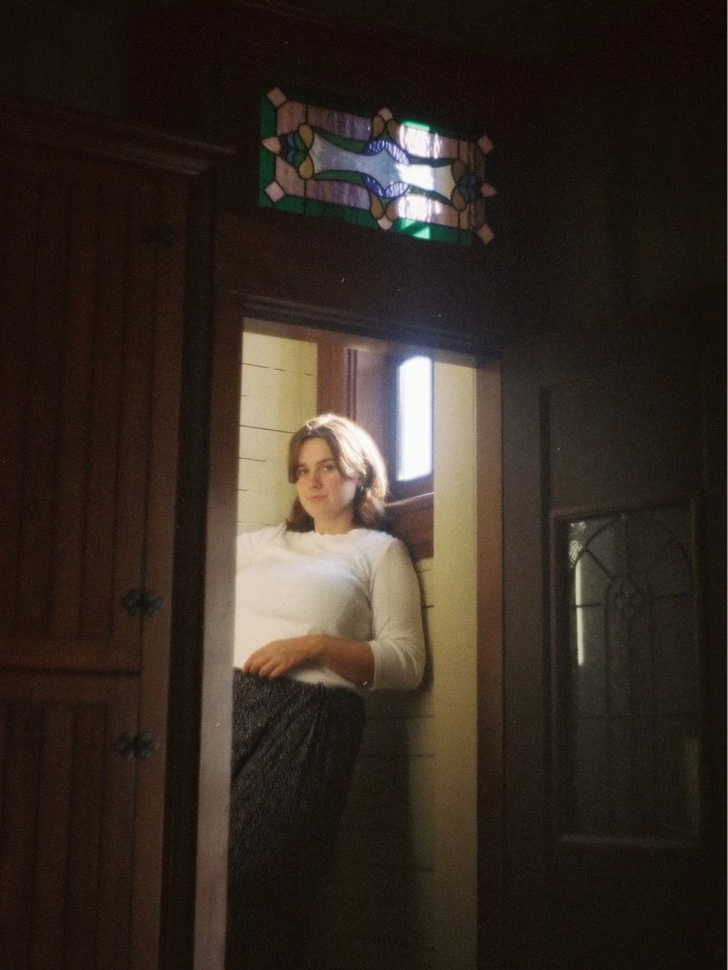
Photo by Raunie May
This song sonically has a bit more going on production-wise than your previous releases. You typically hear piano in your songs, but this includes drums, guitars, and more. Could you tell me a bit more about the vision you had while creating this song?
I wanted the studio recording to capture the ruckus of comrades playing together in the same room. My piano ballad album is coming, but it will come when the time is right - when I get the itch to rent some pencil condenser mics and retreat to my childhood piano for a week of solo recording. I am currently embracing live tracking with my friends because I have a lot of ways I still want to grow there. There was a world where this song went a “pretty route” as a piano ballad with sweeping strings because I know that is what some folks are especially excited to hear from me, but my musical gut led me to this particular soundscape. The wonderful thing I’ve found is that people are gracious and will always find ways to relate to what you create if you’re creating it from an authentic place.
Where do you typically draw from in regards to your storytelling? Are they usually personal experiences, and if so, are you writing to process your feelings
I often think of my thoughts as a string of Christmas lights, permanently in a ball, and you refuse to throw it out because maybe one more manic de-tangling installment next year will do the trick. Making music is the manic de-tangling. Making music is also the hope/delusion saying “don’t worry: next time. You’ll get it next time.” So I suppose I write about what I want to understand better, and I write to hone my ability to see the world with gentler eyes. It’s funny, but I tend to see a thing more rationally and kindly when I sit down and take a couple of hours to say it over my favourite chords. Huh!
Does your songwriting process tend to start instrumentally or lyrically first?
A bit of both! I like to have some semblance of a lyrical idea or theme that informs the musical heart of the song. Then I spend a hunched-no-water-break 30 minutes trying to find the right instrumental to honor that idea. I usually don’t start writing words & melodies until the chords sit right with me.
You’ve hit the road with some incredible musicians like Jacob Collier and Jensen McRae; do you take inspiration from those you’ve opened for, and who are some of your biggest influences?
Very much so! Yeah, this year has been absurd. I’ve gotten to open for so many people that are woven into my musical tapestry: Jacob, Jensen, Leith Ross, Ken Yates, and now Tiny Habits next month. It’s a given that all of these folks have shaped me artistically, but now, having gotten to connect with them in more of a friendship way, I am even more inspired by how they choose to go about their artist projects in the ways and at the pace that works for them. I’ve never really gotten the point of needing to feel rushed or panicked in my career in order to be “successful”. I count it an immense privilege to be surrounded by people who live into the sacred relational and emotional weight at the core of making music. Also, I have a debt of gratitude to the anointed musicians who go by the names of Sergei Rachmaninoff, Ray Charles, Jason Robert Brown, Jackie Evans, and Ryan Beatty.
You are soon to go on tour with Tiny Habits—Yay can’t wait! What are you most excited about, and what should fans who are about to be introduced to you for the first time know about you before they go?
I’m stoked to figure out what sort of orienting rhythms I’m gonna get into as I’m visiting all of these new cities (this is my 2nd tour ever and by far the most packed.) I hope to find myself sipping in as many cafes, napping under as many willows, perusing in as many public libraries as is within my capacity. I’m also gonna try to collect a leaf/piece of foliage from every city to compile in a journal when I get home!
One thing folks should know about me is that if I’m at the merch booth, it’s cause I wanna meet you! I’m a relatively chill person (self-diagnosed), and I love it when people say hi afterward! Also, if my guitar goes out of tune, it’s the guitar’s fault.
Looking forward to the next year of your career, what are some things you hope to accomplish?
Okay, in no particular order:
Someone plz bring me on tour as their keyboardist.
Actually, this will be in a particular order cause specifically, I dream about that previous one so much.
I’ll be releasing my sophomore album next year (date extremely TBD), but yay! My friends & I are tending to these new songs with such care, and I’ll be extremely jazzed when everyone can be brought in on what we’ve been making when the time is right.
I hope to make space in my life to take on more songwriting & piano students!
I will finally begin making choral arrangements of my music. Amen.
You can see Marie on tour with Tiny Habits this November in a city near you and find her music wherever you listen!
This interview has been edited for length and clarity.
