Krooked Kings On Their Latest Album, In Another Life
Alternative-indie band, Krooked Kings, began releasing music in 2018. But now, the group has marked a new chapter of technical songwriting and euphonious instrumental arrangements with their fourth studio album, In Another Life.
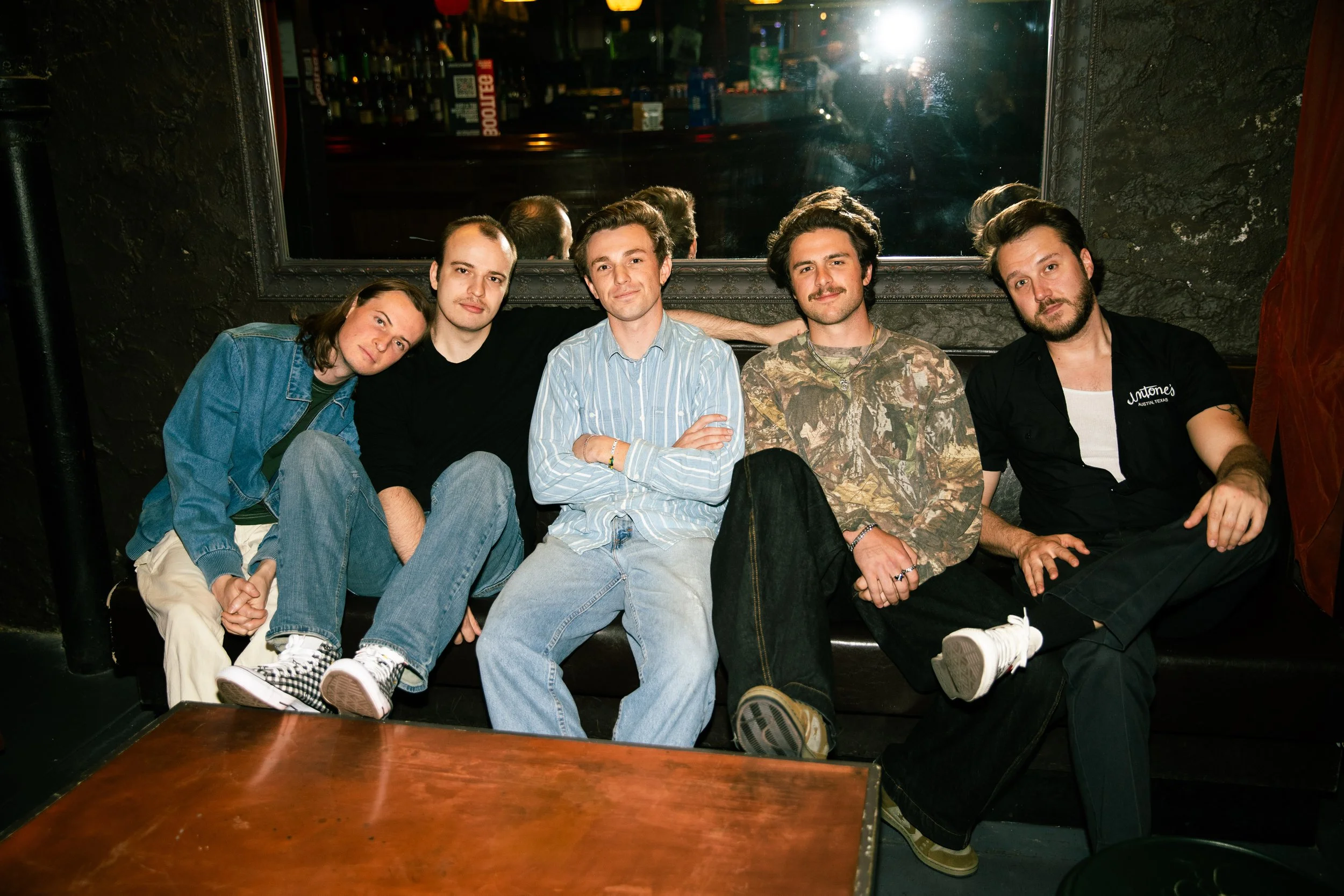
The band includes Oliver Martin (vocals and guitar), Paul Colgan (guitar), Matt Monosson (bass), Dave Macey (keys), and Quinn Casper (drums). Their album takes listeners through a track-by-track narrative of twists-and-turns full of life changes, coming of age realizations, and personal growth. The melodic album ends with the gorgeous namesake closing song, “In Another Life ft Eleni Drake.”
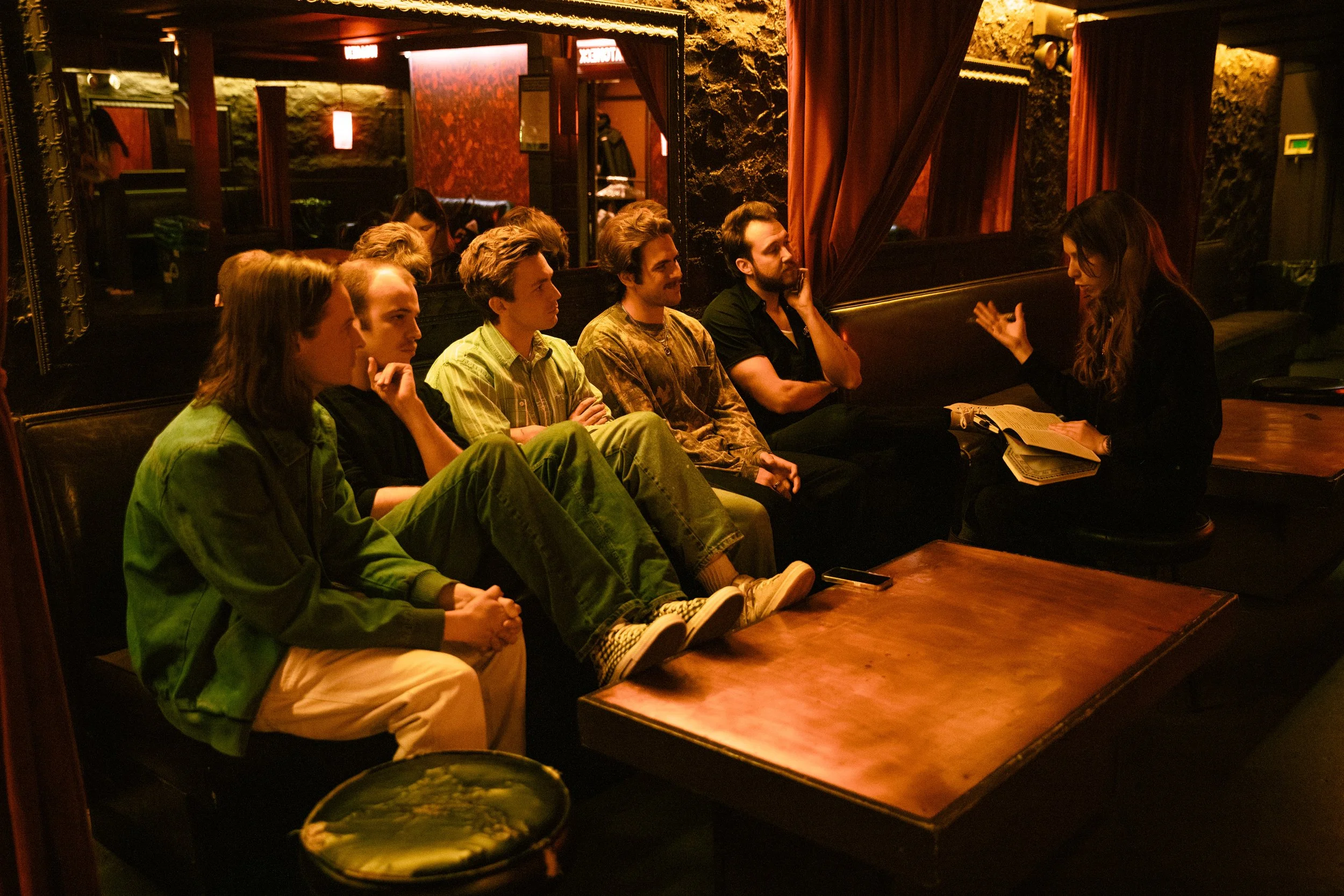
I sat down with Krooked Kings ahead of their show at Bowery Ballroom to speak about In Another Life.
Starting off, you released your first single in 2018, but you said that this group didn't fully form until about 2020. Could you give a brief synopsis into how this specific group developed?
Oliver: I guess in 2018 or so, I started playing guitar and singing and wanted to play gigs locally. But I didn't really play music growing up, so I didn't know any musicians. But my brother was friends with Paul. And he played guitar and he was really good. So I was like, "Hey, want to play some shows?" And that was kind of how he originally joined. Then the rest of us knew each other in college. We kind of started gigging around. We had a few people in and out. Matt and Dave joined around the same time. And then Quinn was the final piece of the puzzle in 2020.
Paul: Stuff started really happening after Quinn joined. We went on our first trip to LA to meet a record label. What? Like a month after you joined?
Quinn: Was it a coincidence or was it not? We’ll never know.
You’re like the Ringo [Starr] of the group.
Quinn: Sure, yeah. I'm the worst drummer in the band, but I keep us together.
Let's talk a little bit about your newest album, In Another Life, which is 10 tracks. You said that working with your producer, Yves Rothman, was more like a workshop experience rather than needing to develop material quickly. Specifically for this album, what was that creation process like? And how did it differ from the ones in the past?
Dave: This one was just a longer process. The other ones, we kind of did them really quickly. I feel like the turn-around for them was like a month. It would be two weeks of recording, basically. But this one took, I don't know how long, a year.
Quinn: There's a lot of back and forth between Salt Lake [City, Utah] and LA. When we were there, we were working hard for three weeks at a time or whatever. But then we’d go back home and kind of sit on everything, hear back the mixes or the demos. We had a lot more time to really sit and think about everything I'd say.
Matt: I feel like one thing that was also different was that this producer really wanted us to have a big batch [of songs] to pick from. And so we came into it with like 30 songs, and all songs that we felt very confident on. He really wanted this to be a really hard decision between if this song makes it or not. So I feel like we had a bunch of ideas that we brought to him, where in the past it was like, “this is the album we already have.”
Quinn: Also, real quick, kind of a fun fact about that is out of the 30 [songs] or whatever the number was, I'd say like three of them made it. That was kind of like maybe a worthwhile mention is so many of the songs ended up kind of getting canned. We grabbed pieces and little parts from songs and kind of Frankenstein-ed them together.
“Parking Lot.” I thought this was a really great listen and is also currently the most popular song on the album. I was curious about the track listing. If you look at it as side A and side B, “Ugly Love” closes side A, and then “Parking Lot” opens side B. It's kind of this nice hook in the middle of the album when you're listening from start to finish. What was your intention specifically with the track listing?
Paul: For the most part we just wanted to make sure all of the songs flowed well into each other. I mean the most important part for me when I'm listening to an album is that it feels like one seamless project. There are these standout moments in these songs, but they all kind of fade one into another and kind of tell a story throughout. But I feel like “Parking Lot” was the perfect pick-me-up for side B. You just hear that snare crack and it just goes in right on it. This is completely unintentional, but I feel like some of the songwriting feels like it maybe tells the story of, you know, a love kind of coming to its end. And then you have a “Parking Lot” as like the kind of refreshing new thing going on I guess.
Quinn: Someone did point out the other day that “Drinking’s Not Enough” is track two and that “drinking’s not enough,” the lyrics, [in “Damage Control”] returns.
Similarly in “Fix This,” I interpreted the song as moving forward from a lot of past traumas and healing with some of the lyrics.“Pastor preaches with a loaded gun, had my wings clipped when I was young, Icarus without a sun,” But also in “Ugly Love,” you mention an “angel without its wings.” For you guys, what does your songwriting process look like?
Oliver: I think this album was a lot different, for the same reason than our prior one, just because we had so much time. I feel like lyrically, before we were working on such a small schedule where once we kind of had lyrics that we thought fit, it was like basically locked in. And then this one was almost to a monotonous or annoying point. Yves, the producer was very like, “We could beat it, we could beat it.” So I guess with that, I don't know, I would say there's like a lot more imagery based [lyrics], trying to paint a picture. I think we were doing broad strokes on the first album, or I guess the first few, and we really wanted to get more specific and more in the emotive aspect of it. So I would say that was a big difference between the prior and this one. This writing process, I mean it was really just meticulous honestly in terms of lyrics. We also had a few co-writers come in and help us, so that was fun.
Paul: We run into the demo-itis too. It's like the first time you put pen to paper it maybe starts to feel like that's it. But [Yves] kind of pushed us past it. I feel like we're better for it.
“My Friend Max” is very melodic and has captivating guitar licks during the chorus. I thought that it is maybe a bit more of a sonic outlier compared with all the other songs on the album. Do you feel like these new releases, which seem to maybe be signaling a new chapter, have been more fulfilling in their process than the other music that you've put out in the past?
Paul: I'd say definitely, it feels like a completely different direction for us. And I think for a long time we've kind of been saying that we want to expand our sonic palette. I feel like this record has the full spectrum of what I think we're capable of.
Matt: I feel like one thing is Yves Rothman, our producer, really wanted to capture our live sound. The previous records were a little bit more bedroom plug and play. When we first met him, we were doing a session with him and we started playing. And within 30 seconds he stopped [us] and came in and was like, “Whoa,” which was like the first time that happened to us. He really wanted to capture that live sound and make it a little bit more Americana timeless with the layered guitars and stuff.
Oliver: We didn't record everything live in a room, but for demos, we all were together recording them live, which was really cool. And then after we had those demos, we got more specific with layering each instrument. But it was definitely very different from our previous records.
“Rancher's Daughter” was first released as a single in 2025 before teasing the album singles in 2026. You said that you had a lot of music that you pulled for this album, so why did you choose to include this song on the album?
Matt: We've had it for so long, and I mean, Oliver and Dave wrote it in a session and they showed it to us and it was a really cool track. I just don't know if it would have been better on the past two records. It sounded more like this Americana sound. And so I feel like we brought it to Yves and he really liked it and so we worked on it.
Paul: I feel like you were talking about outliers. That one to me feels like an outlier. And it always was kind of in our catalog where it is an awesome song, but none of us knew where it belonged. And I feel like as the album kind of came together, it just became more clear that it had a place.
Oliver: I also think Yves was just really excited about that one because he had heard it when we teased it on Instagram. We were kind of contemplating releasing that as a single, just outside of the album, probably like two years ago. And then I think once he heard it he had a vision for the song, which we didn't really have. The song in its original form was close but it wasn't quite there.
What was his vision for it?
Quinn: Adding a bridge.
Oliver: Going off what Matt and Paul were saying, just making the song sound a lot bigger. Like that one was also just written in two sessions. I think he was just like, “Oh, I really love this song. I know where it needs to go.” And I think all of us were kind of stumped as to where it needed to go.
Was that the hardest on the album to finish?
Quinn: That one went from like, our favorite song to fuck this song. It was so many iterations and trying to figure out. Then I think we finally got it. Now it feels like a good moment on the album.
The last track on the album is “In Another Life ft. Eleni Drake.” I thought it’s so beautiful. It's the closing song and is also the name of the album. So did the song inspire the album name or did the album name inspire the song?
Oliver: Other than “Rancher's Daughter,” that was actually the first song that was written for the album. We actually went back and forth on album names a lot.
So what were some of the contenders?
Oliver: I don’t know if there ever was a good one, but we really did go back and forth for some reason about it. I think we all liked In Another Life. But I think Yves wasn’t crazy about it the whole time.
Matt: He was always trying to beat it. He's like, "Can we beat it?"
Paul: I think we were also kind of iffy on the name too, but I don't know, I feel like the more we sat with the album and listened to it, the more In Another Lifejust kind of fit all of the themes. And in the end we couldn't beat it.
Quinn: I was never trying to beat it. I was always "This is it. " But I was like, if someone else comes up with something better, I'm glad to hear it.
Dave: I was trying so hard to beat it.
Quinn: Dave’s a hater. But I was always like, "Yeah, this is fucking dope." And here we are.
What is the goal for the rest of the year?
Oliver: I think we want to do some more writing probably once we get home from this tour. It's kind of funky because I think with our previous records, we had batch songs so quickly and then finished them where we had so much time to write. Whereas this one I feel like was encompassing for us for a year-and-a-half, where it's all we were focused on. So we weren't really writing new material. It was almost all this material we were editing and working on. So yeah, I'm pretty excited just to start writing some stuff just in Salt Lake with the guys and see where it goes.
Matt: I was going to say kind of that, but we had like a whole bunch of business stuff fall through while making this record. So I feel like a lot of us had to juggle more work and music, which was kind of hard. So I'm excited to spend a little bit more time writing and more of my energy into the actual band.
Dave: And I'm going to get buff.
Quinn: That's part of the band's plan.
Dave: But I need to buff and then I'm going to get ripped.
Quinn: Linear process.
Find Krooked Kings on Spotify, Instagram, and their website.
All photos by Tori McGraw (@afterr.hourrs)