
Searows Enchants Austin Crowd on “Death in the Business of Whaling” Tour
Austin, Texas - April 24, 2026
On the second stop of his North American headline tour, Searows brought his mesmerizing talents to a sold-out Scoot Inn in Austin, Texas on April 24. Having gained traction with his 2022 debut Guard Dog, Portland-based artist Alec Duckart, under the alias Searows, has carved out a space for music meant for deep feelers, the kind that feels like hearing rain pattering against a windowpane before witnessing the rainbow that follows. The record’s poignant, slowcore sonic aura made way for a live set that felt subtly expansive, each track unfolding with a kind of delicate intensity that held the outdoor crowd in a stunned stillness. Duckart excels within the indie-folk tradition he inhabits, crafting songs that evoke deep introspection, vulnerability and warmth amid haunting production, acoustic arrangements and metaphorical storytelling. His voice resists containment, moving effortlessly from whispering confessionals to striking, full-bodied belts that feel as if they physically expand to fill the room.
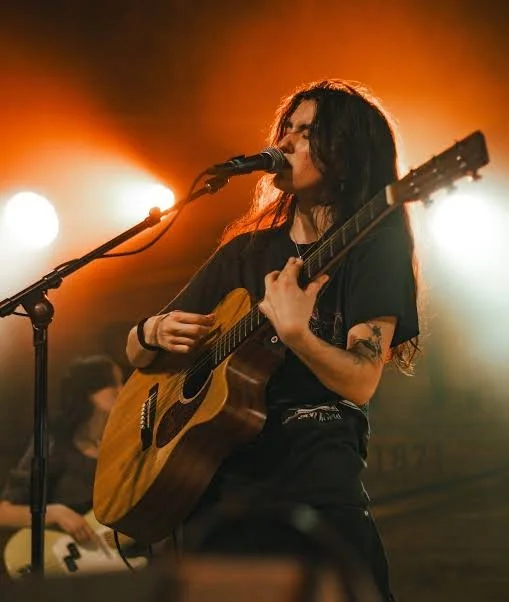
Picture via @saerows on Instagram
North Carolina-born and Los Angeles-raised alternative folk singer, songwriter and producer Jordan Patterson opened the evening with an acoustic performance showcasing her melodic, soulful and slightly unsettling vocals. Her decisive, raw and vulnerable sound moved through themes of grief, self-inquiry and spiritual longing with striking emotional honesty, perfectly laying the groundwork for the night ahead.
Warm orange and red hues washed over the space, mirroring the set’s comforting energy as the faint humming and atmospheric soundscape of album opener “Belly of the Whale” echoed throughout the venue. Excited cheers erupted as Searows took the stage, carrying himself with a tender softness and quiet stoicism that set the tone for the rest of the set. Duckart’s live vocals retain the dynamic delicacy of his studio recordings while introducing a heightened sense of raw immediacy, his hushed, breathy tones feeling just as enthralling as the more powerful rises of his voice. Duckart’s writing leans into stark, visual imagery and gut-wrenching self-confrontation, qualities that stand out on “Kill What You Eat.” Its symbolic and exposed lyricism cut even deeper in a live setting, with a palpable ache bleeding through every note. Lines like “I want my body back” and “It’s not really all that much / I’m cutting out the heart of a fish I caught” land with devastating clarity, reinforcing the album’s recurring nautical motifs and its unnerving meditation on survival and self.
“Photograph of a Cyclone” continued to carry that weight, its catchy melodies and beautifully blended vocals swelling alongside building drums and banjo that stretched Duckart’s acoustic foundation into something more textured. Amid the new material on The Death in the Business of Whaling tour, Duckart dipped into his earlier work, starting with “Martingale” from his Flush EP before moving through other fan favorites across his catalog. Devastatingly cathartic “Dearly Missed” showcased Searows’ heavier sound as that captivating ache broke through once more. Explosive, crunchy electric guitars complemented his raw vocals, honest and pleading with each word seeming to fall from his mouth and land before him under its weight.
The wistful titular track from Searows’ first EP, End of the World, fully encapsulates the depth and sincerity of his artistic expression in a bittersweet representation of minor personal conflicts that feel colossal. His piercing vibrato, paired with slight guitar distortion, elevates what begins as a Phoebe Bridgers-esque vocal landscape, building into an emotionally charged crescendo reflecting the number’s gradual unraveling. The evening softened without abandoning its emotional release with “Coming Clean” and “Dirt” before transitioning to “In Violet,” a more upbeat yet cinematic moment, with its crisp acoustic guitar, dynamic vocal peaks and lush ambience. The moody and brooding style in “Hunter” begins with quaint, finger-picked acoustic guitar that later swells with added percussion, bass, and guitar distortion. Duckart surprised the crowd by breaking out deep cut “Keep The Rain,” boasting impressive range that proved once again he’s fully feeling every single word to the point that the audience cannot help but feel it with him. Gasps emerged with the first notes of well-known “House Song,” its gut-wrenching melodies and instrumentation creating an alluring, dreamlike depiction of the overwhelming nostalgia that follows transitioning into adulthood. Album closer “Geese” allowed Searows’ Austin visit to come full circle as he sang of emphasizing self-acceptance using the wild geese metaphor of “flying towards something” and influence from poem “Wild Geese” by Mary Oliver. “You do not have to do good / But you cannot do nothing.” Steady drums and bass lines supported Duckart’s impressive falsetto-filled wails as he left it all onstage.
The sun set over Austin as the show’s emotional impact hung in the air. Some fans stood teary-eyed as others immediately started debriefing the experience with their friends. Duckart’s restraint and release paired with his aching, symbolic storytelling continues to work in his favor as an artist who gets his points across without overindulging or failing to deliver a gut punch. His voice can command a room to silence in an instant while his lyricism creates the space to process and feel fully and earnestly.
